In mid-May 2024 we traveled to Europe for an extensive trip encompassing visiting friends and family, cycling in the Altmühltal with Mecklenburger Radtours, and Weissler/Hein family history research with Robert’s cousin Wolfgang Weissler in Poland and Czechia. This page discusses the family history part of our trip.
For all the trip photos, click here. Click any photo on this page for a larger version.
We began with a strategy meeting with Wolfgang in Rothenburg o/d Tauber prior to the start of our cycling tour. Wolfgang last year visited several sites featured in (great-grandfather) Adolf Weissler’s family history, including Osoblaha (Hotzenplotz), Głubczyce (Leobschütz), Mysłowice (Myslowitz), and Chorzów (Königshütte). We wanted to see these sites ourselves and also to expand our data on the extended family. Our plan was to spend two days in Głubczyce (Leobschütz) and from there visit Osoblaha (Hotzenplotz), Krnov (Jägerndorf) and the archives in Opava (Troppau). After that we planned to drive on to Chorzów (Königshütte) and from there visit Bytom (Beuthen), Gliwice (Gleiwitz) and Mysłowice (Myslowitz). As time allowed we might visit Prudnik (Neustadt) and Biała (Zülz).
After the cycling concluded in Regensburg, we spent a couple of days in Prague, giving us a chance to refocus from thinking about cycling to thinking about family history. We reacquainted ourselves with the sights (along with many, many other tourists), and were able to meet with Julius Muller, a researcher we had engaged to visit archives. Leaving Prague we joined Wolfgang in Głubczyce (Leobschütz), Poland to start our family history research in earnest.
Regarding the extended family, it is tantalizing. We knew about the many family ties between Heins and Weisslers. But also there was the distinguished Deutsch family, with three brothers who were rabbis: Israel, Abraham, and David. David married Jettel Weissler (3rd ggf Nathan’s daughter); Israel married Bertha Hein, sister of Rabbi David Hein of Hotzenplotz whom Adolf mentions. Yet the precise connection of Rabbi David Hein to “our” Heins in Hotzenplotz is unknown. What could we find?
Arriving in Głubczyce, after surviving bad directions to the hotel (Wolfgang first was directed to the post office; we went down a short dead end road and had to back out) we walked from the hotel to the “Ring” (Rynek) in the center of town, with Wolfgang identifying points of interest that Adolf had described. These included his Gymnasium (school, a Franciscan monastery), a park, and a street lined with leafy lime trees. Adolf’s grandparents Abraham and Rosalie Hayn (née Königer) had a business in the Wankersche Haus (no longer exists, precise site uncertain). The running of the business eventually passed to their daughter Rosalie (Adolf’s mother), who married Salomon Weissler. They moved to a building at the Ring (south side) and Breite Strasse; while Wolfgang had identified the building in an old photograph, it too no longer exists. But still, one can see the proximity to the school Adolf attended, and walk in the footsteps of his parents and grandparents.
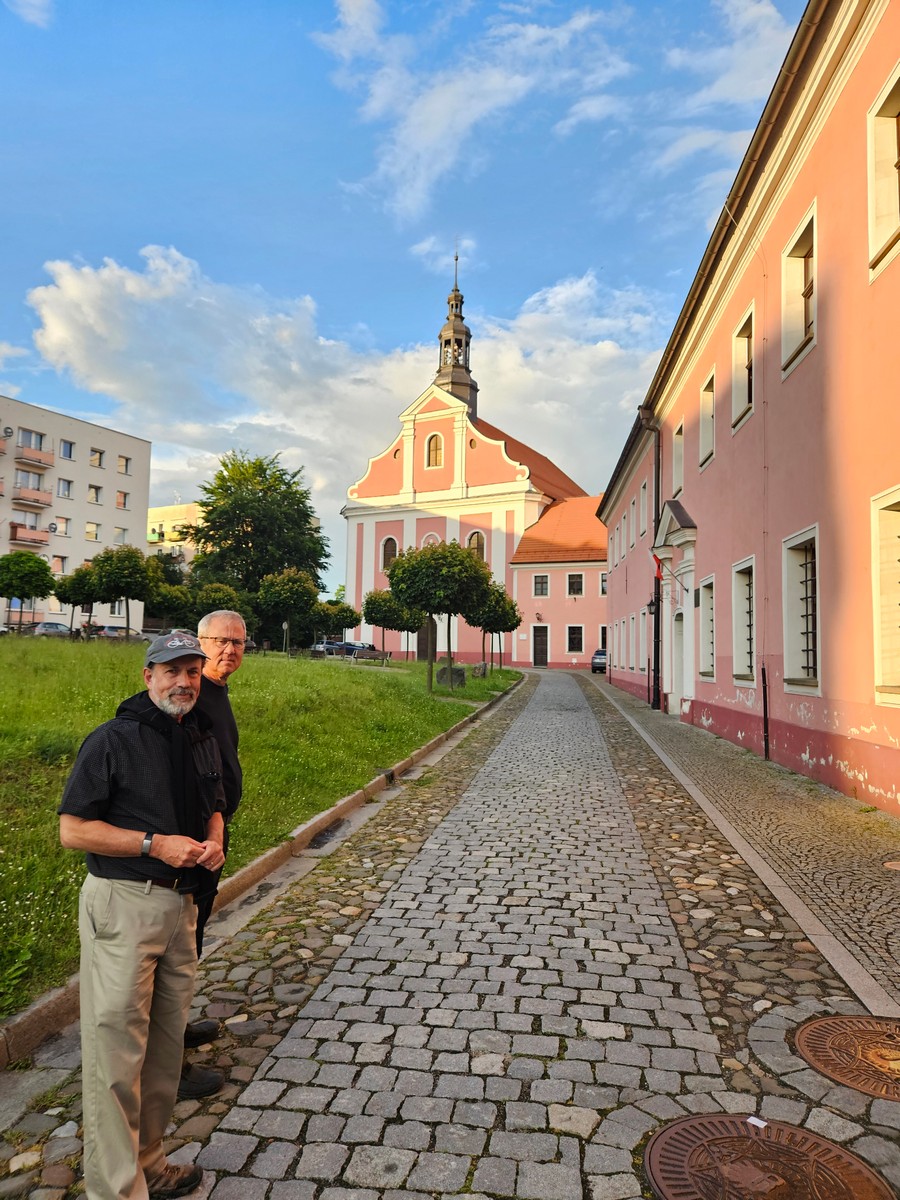

The next day we made our way to the Czech Regional Archives in Opava. Julius Muller had identified two sets of documents about Hotzenplotz: Familiant book of Osoblaha (1788-1807), and Marriage permits of Osoblaha (1817-1848). The archives were expecting us and had the materials ready (under the name Liza Weisslerová), and the very helpful archivist, J̌iři Peterka, also suggested other materials, including maps of Hotzenplotz and land records.
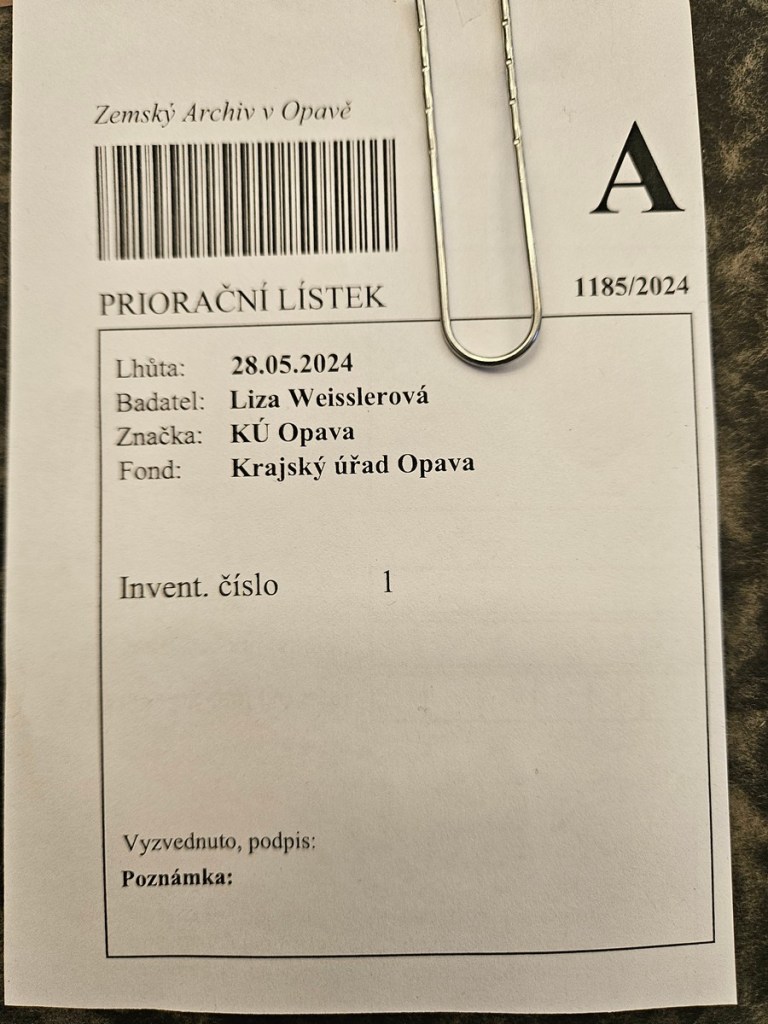
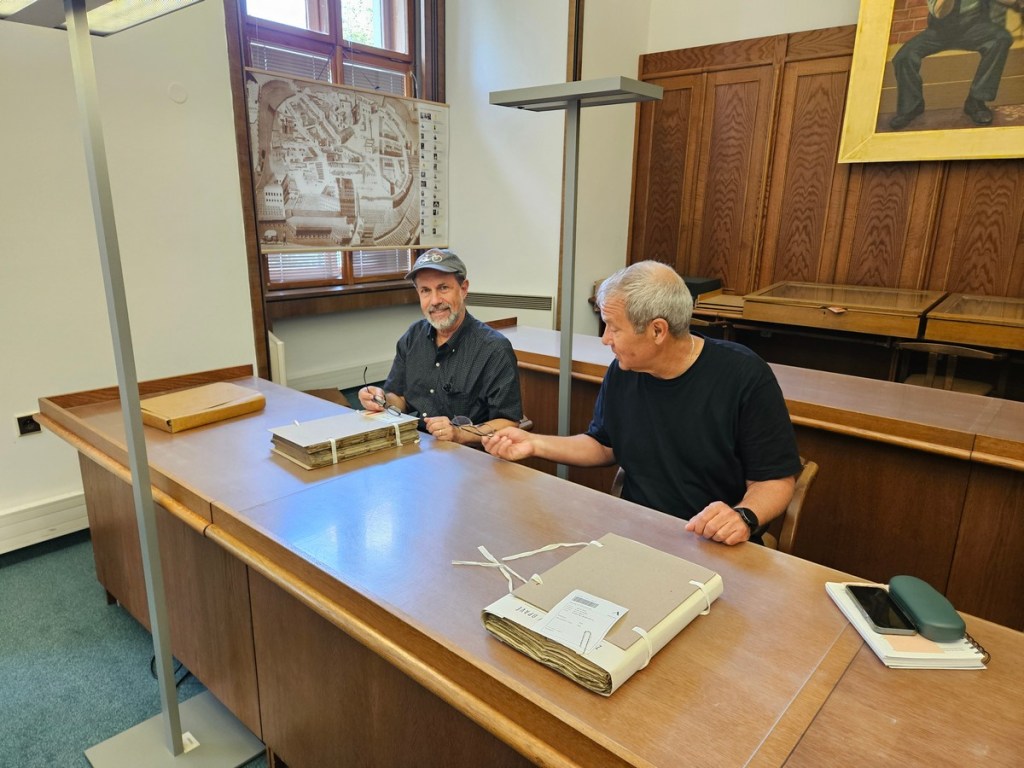
The Familiant book unfortunately was not as useful as we had hoped. Other such books we had seen not only included the head of household but all family members and ages in the same house; this one only listed the head of household and from whom he obtained the household, and it was definitely a puzzle. Still, we copied the entire book for later further review. The marriage permits were not a register, but pages and pages of nearly unreadable narrative, so while the time period covered was perfect, we gleaned no information. (Liza subsequently asked Julius Muller in Prague if we could re-engage him to review those documents.)
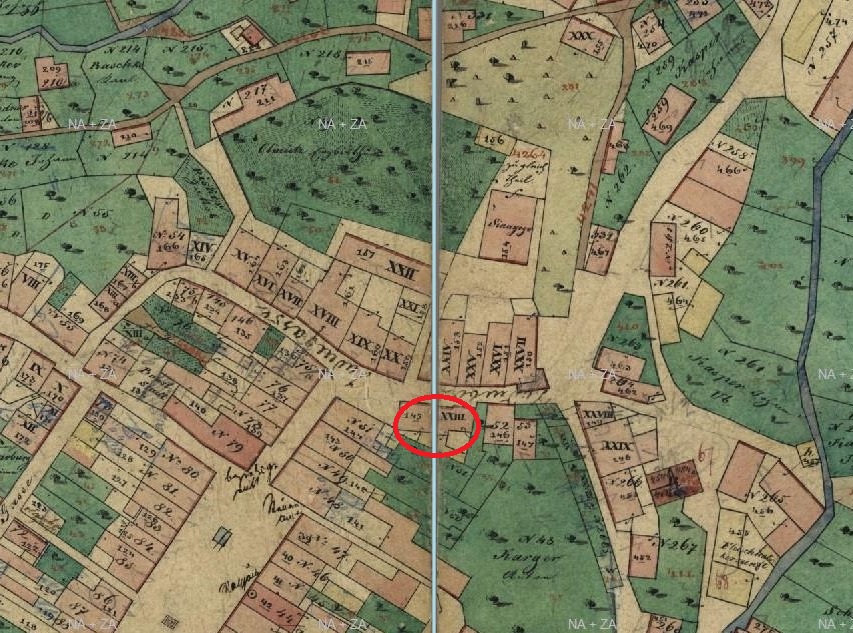
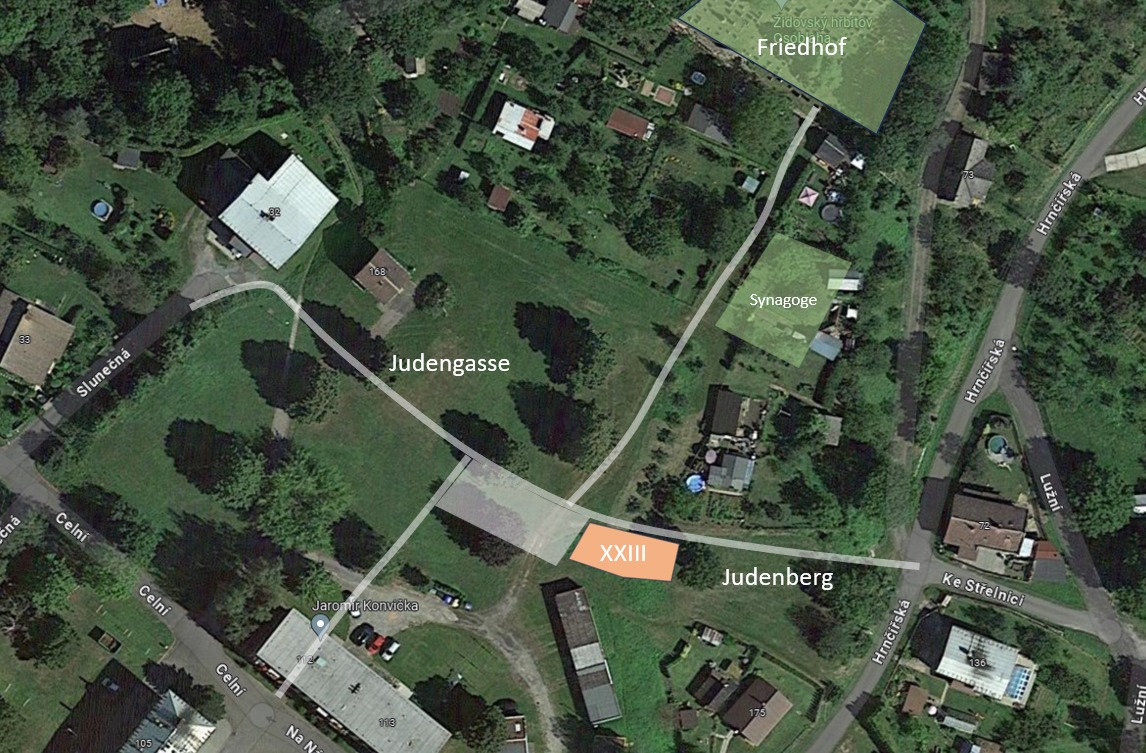
The maps and land records, however, were quite interesting, and it was determined that the Hein house – Adolf says “on the ‘Judenberg’ [Jewish hill]’ to the right, the second house” – was house #XXIII. We also identified a house shared by both Hein and Berl families – #XXVII – which may explain a later connection between those two families.
Leaving Opava, we went to Krnov (Jägerndorf). According to cemetery records, at least two Heins were buried there, Samuel (son of Joel, d 1817), and Amalia (relation unknown, d 1841). The Ring in Krnov was charming with beautiful Art Nouveau buildings; clearly some EU money made it here. We made a brief visit to the synagogue, and were helpfully told where the old cemetery was located, on the way out of town. At the cemetery we did find Amalia’s headstone, but not Samuel’s. The cemetery records also include many Berls, which again may tie in with the Hotzenplotz house #XXVII.
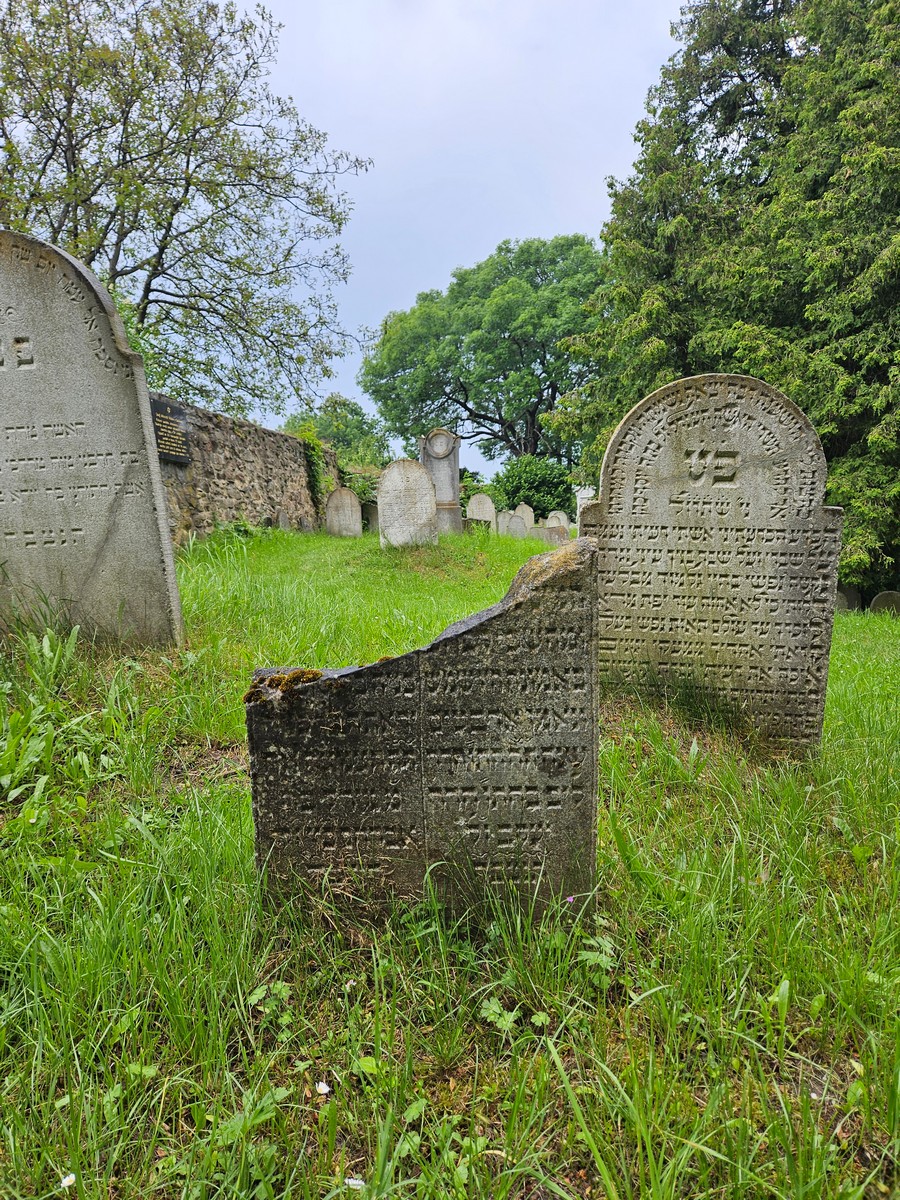
We finally made it to Osoblaha in the late afternoon, when (predictably) it started to rain. Still, we managed to go through the cemetery thoroughly, finding for ourselves the Hein headstones described on chewra.com, and took our own photos. The cemetery was somewhat overgrown, and we all got a bit soaked, but we were happy to confirm the double headstone of Leopold Hayn (“Leib Schames”) and his wife Marjana (Mirjam/Mirl) Kohn, the one that Adolf described in his family history over 100 years ago.
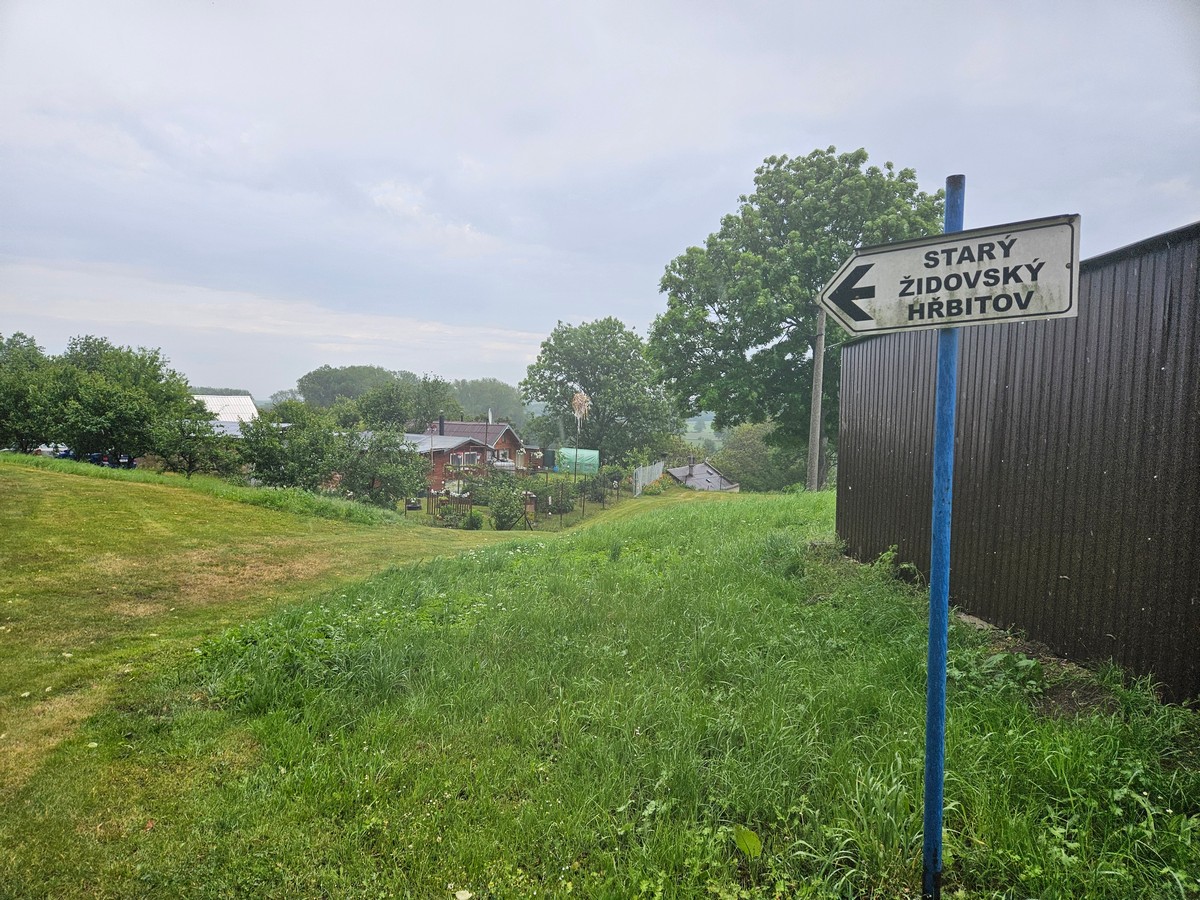
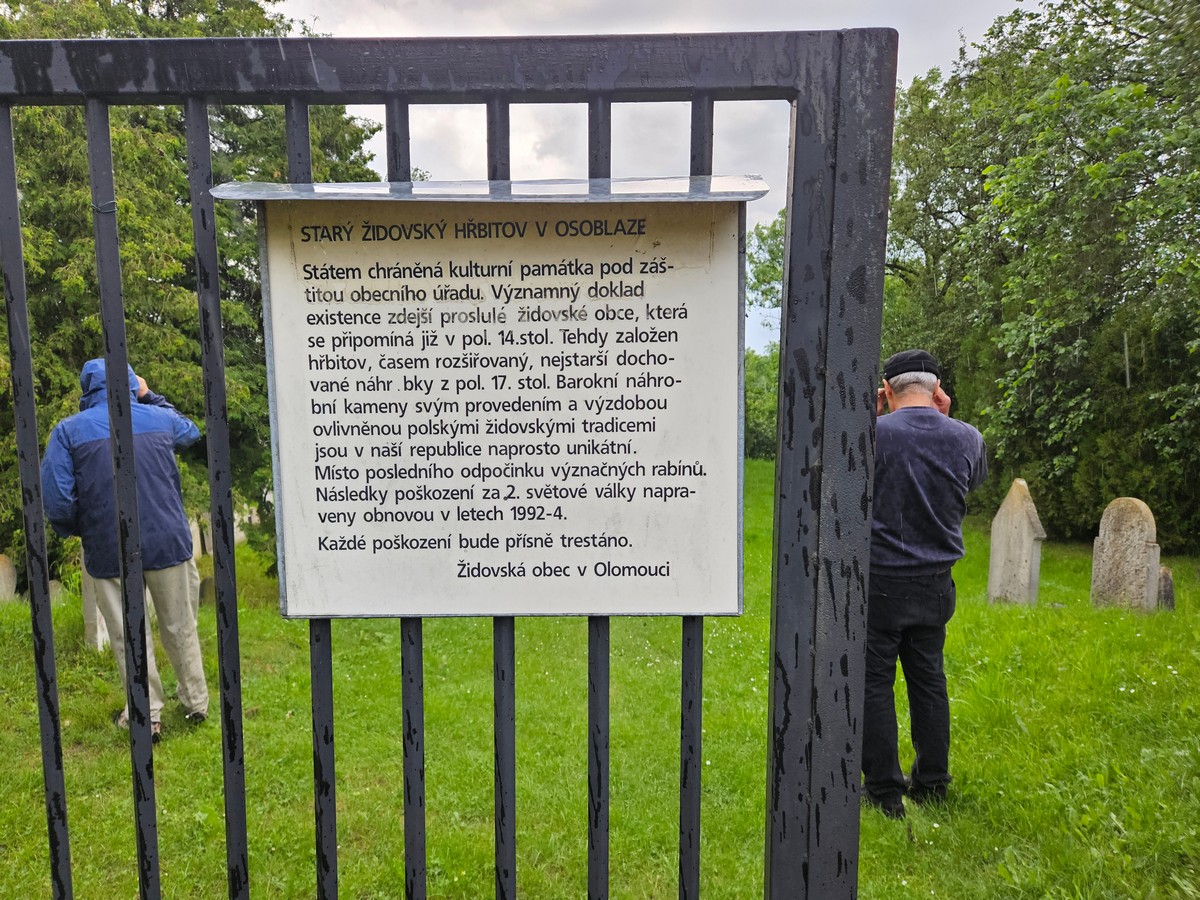
Despite the weather, we drove further to see Prudnik (Neustadt) and Biała (Zülz) – the Deutsch brothers were born in Zülz – but didn’t stop…could yet revisit on another trip, in better weather, to have a proper look.
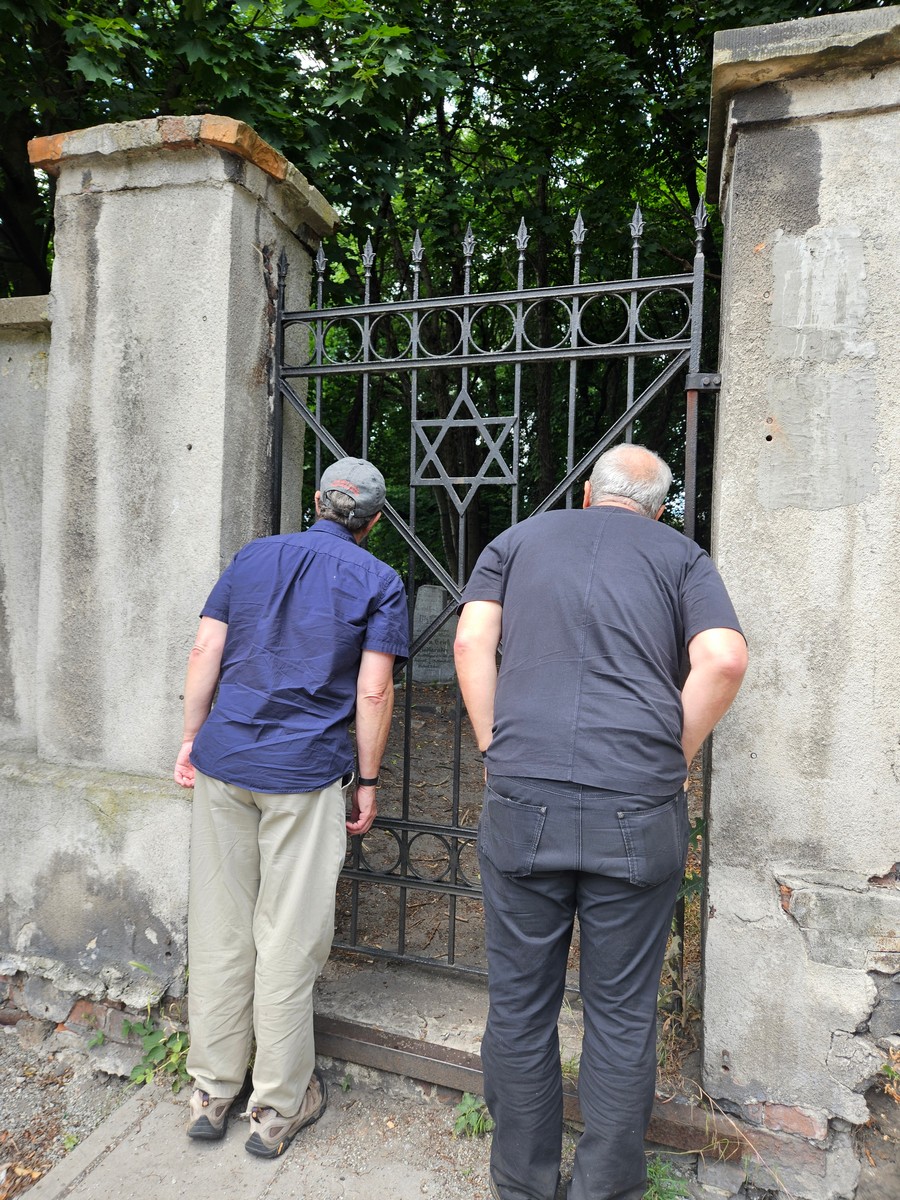
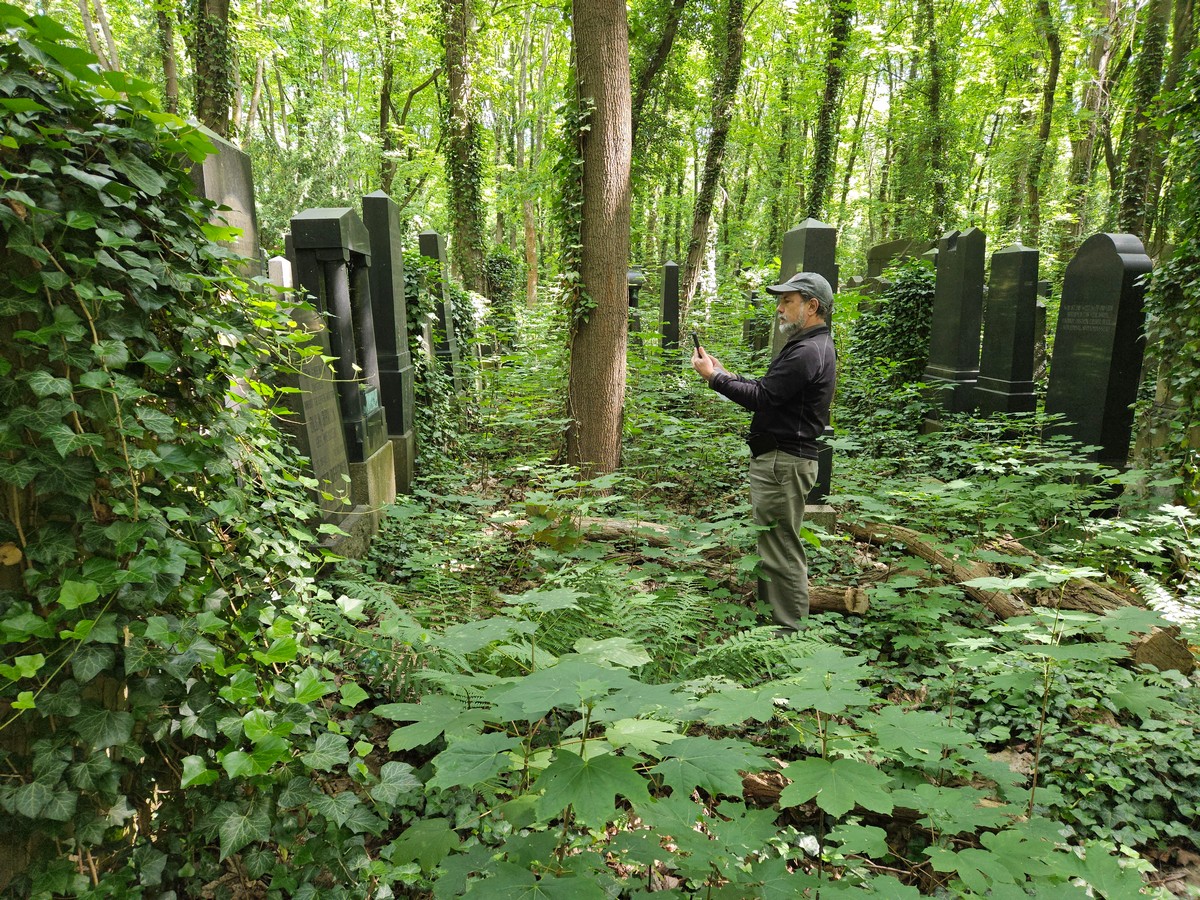
The next day we were due to move on, back to Ostrava-Svinov to drop off our rental car, proceed with Wolfgang to Katowice airport to get our next car, and all drive to Chorzów. The weather had improved and we had time before leaving, allowing us to visit the site of the “new” Leobschütz Jewish cemetery – a very overgrown site where we had to squeeze through a barely open rusty gate and tromp through the greenery (a machete would have come in handy), only to see a few piles of broken headstones and concrete. (The old Jewish cemetery, where we might have hoped to find ancestors, was long ago destroyed.)
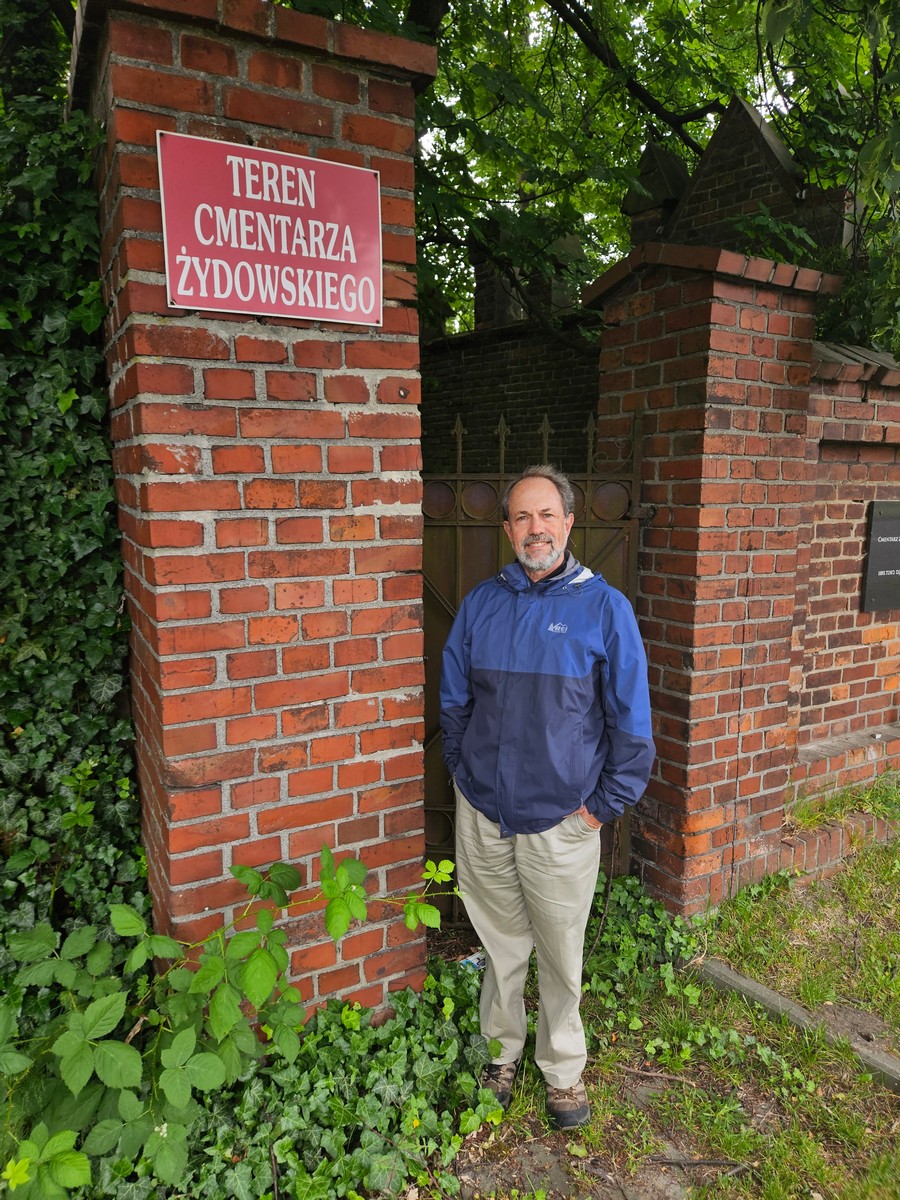
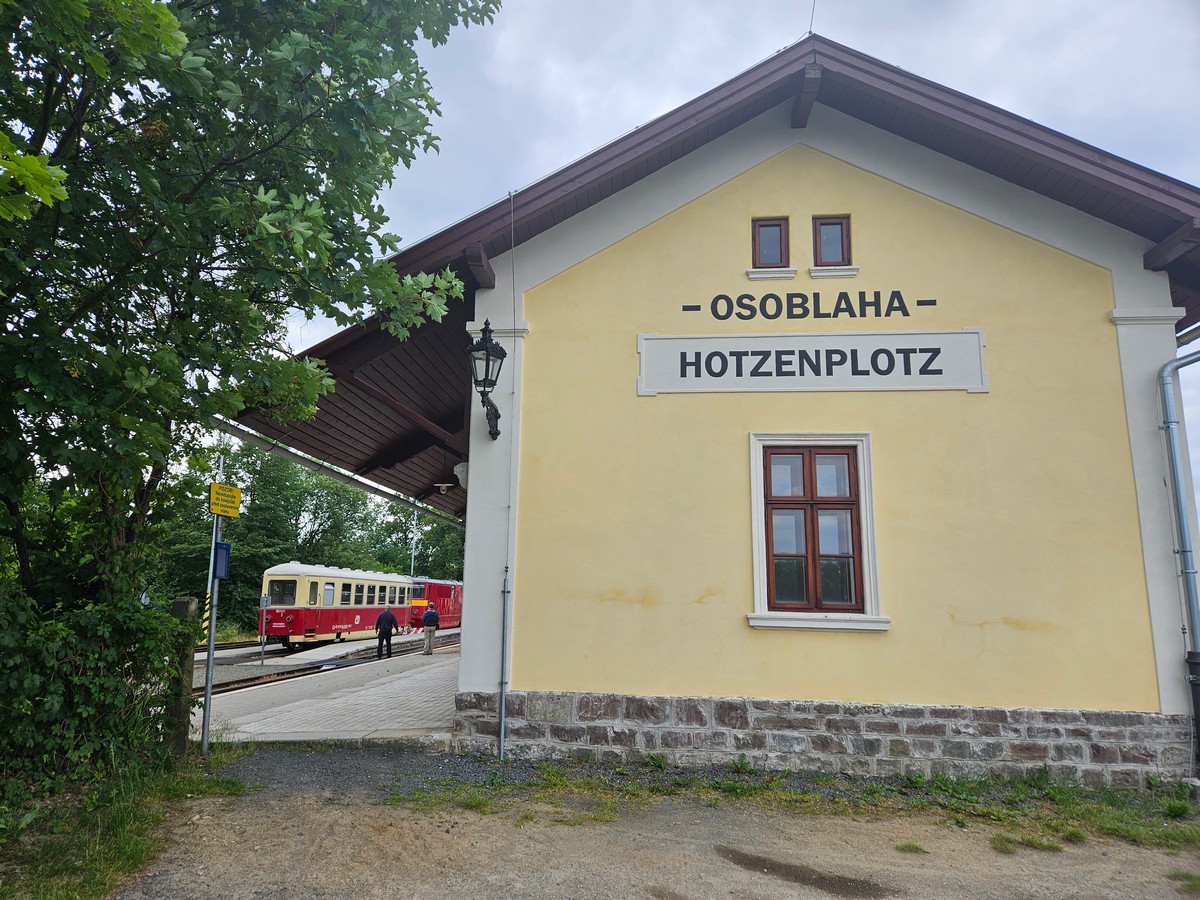
We then revisited Osoblaha, first visiting the charming train station, then back to the old cemetery. We were able to better orient ourselves to understand where the synagogue would have stood outside the cemetery, and to agree on the location of house #XXIII and the Judenberg, which took time only because the road Judengasse on the map no longer exists. Later Wolfgang created a new map, an overlay of the old streets atop a current satellite image, allowing us to visualize where the houses and synagogue would have stood.
Lastly we visited the small museum in Głubczyce, which had only a few things of genuine interest to us. One in particular was a death notice from 1909 for Franziska Hein (née Marschall), who was married to an Eduard Hein and had several children – none of which were in our tree, so no idea how they connect, yet.
We arrived in Chorzów (Königshütte) in the late afternoon, and strolled from the hotel to the Ring to get a look around and have an early dinner. Nearby on Wolności street, formerly Kaiserstrasse, #9 is where Adolf and his family lived and he worked a few years. It is likely that his son Otto (Robert’s grandfather) was born there, possibly also sons Ernst and Friedrich, but we cannot be certain as the date the family moved there is not precisely known.
Reviewing the restaurant options that afternoon, we saw a Mexican restaurant called Kartel. We thought that name was in pretty poor taste actually but then decided to go there. We will call it the best Mexican food in Chorzów! (And actually it was very good.)
The following day (May 30) was a little difficult as it was a holiday – Corpus Christi – therefore many things were closed. We visited Mysłowice, hoping maybe the “new” Jewish cemetery would be open, but the gates were locked. There was a number to call to get a key, and at first the person who answered hung up on Liza, twice! As we walked away, she received a text message in Polish with an apology of speaking no English or German. Several exchanges of messages later, with both sides using Google Translate or equivalent, we arranged to meet the next day at the cemetery at 15:00.
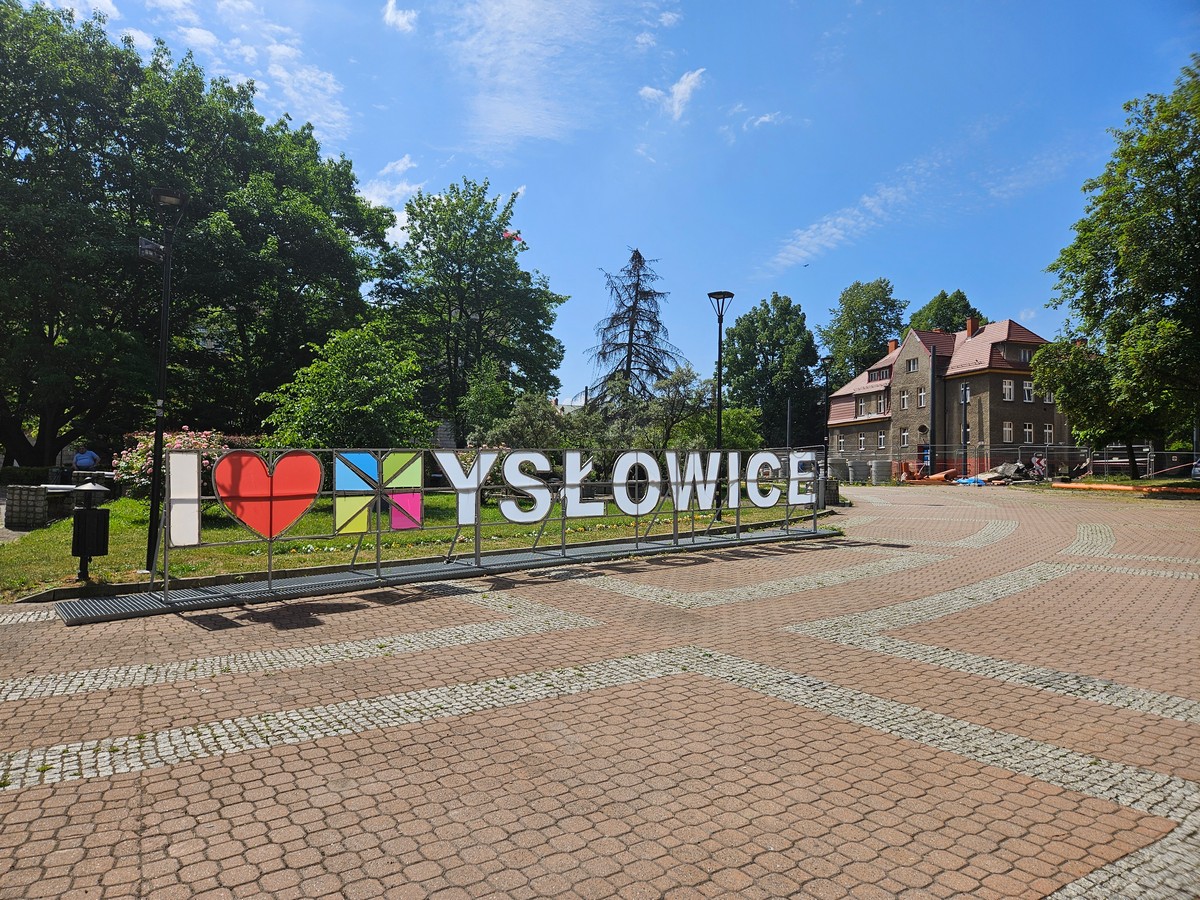
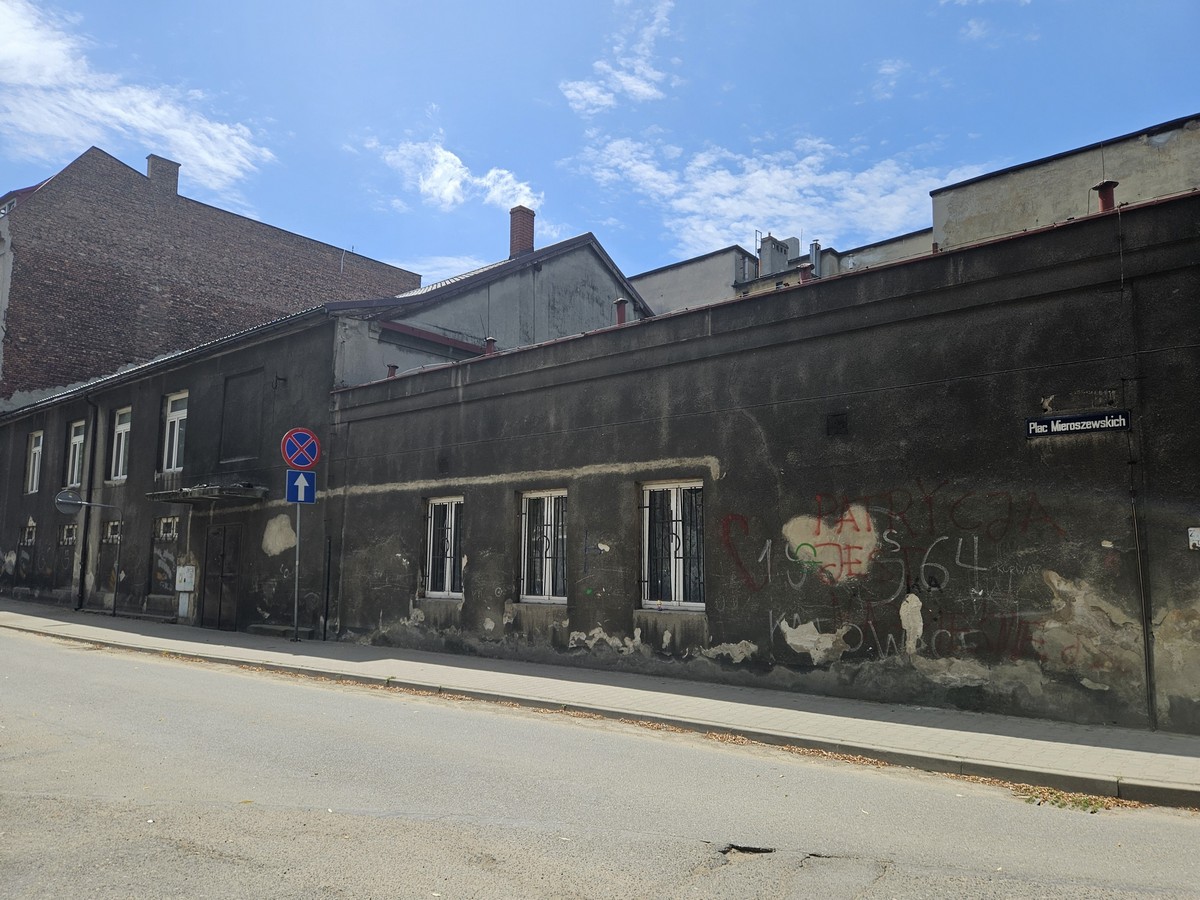
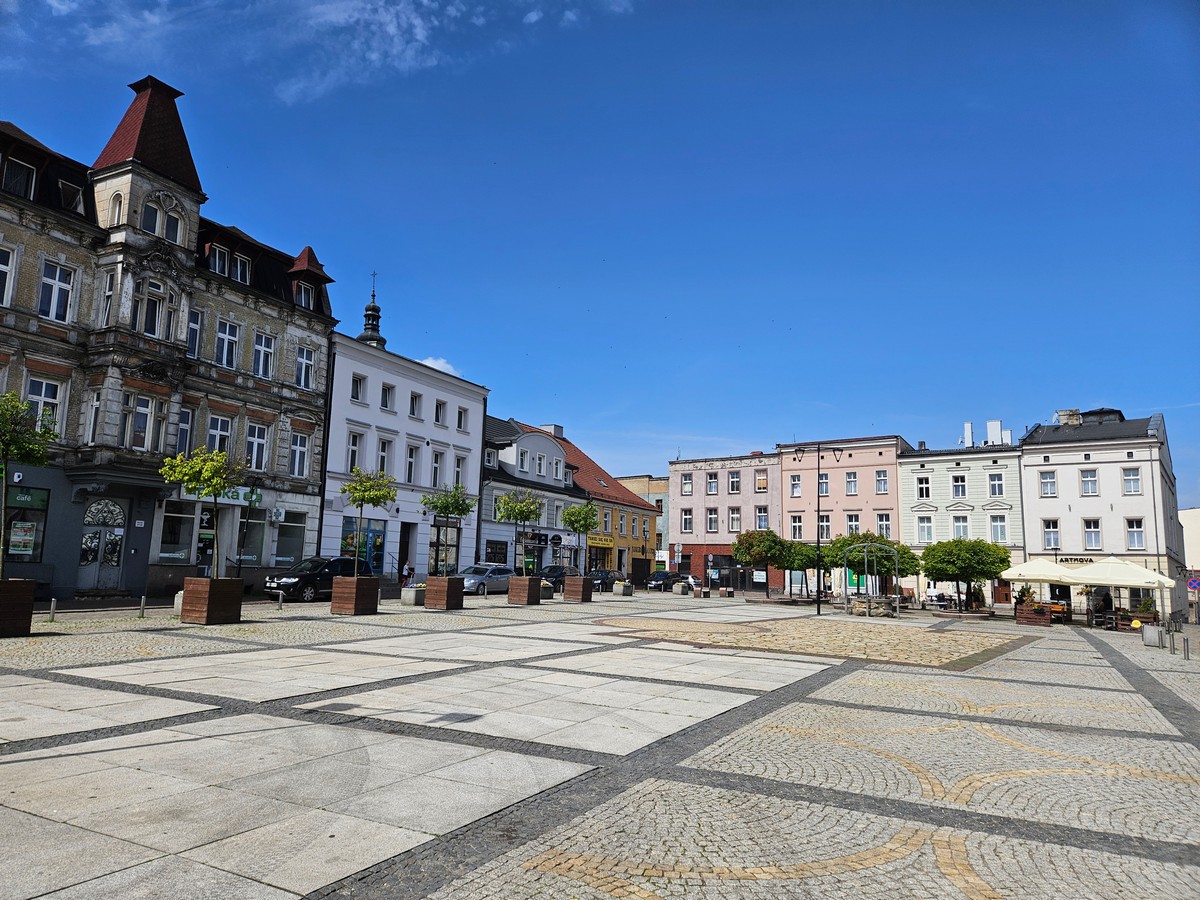
We walked from there to the Ring in Mysłowice, which definitely looked as if it could be lovely if only for some investment. Walking past the Catholic Church, we arrived at the Kaiser-Wilhelm-Platz. Several signs described some of the history, and a big display perfect for visitor photos proclaimed “I♡MYSŁOWICE”. Nearby was the site of the new synagogue (built 1895) destroyed in WWII. Interestingly the old synagogue, where 3rd great grandfather Nathan Weissler would have worked and likely lived close to, survived, a rather plain dark building with a peaked roofline. Clearly the beautiful and ornate new synagogue was a more obvious target. Today the old synagogue is a Catholic People’s House.
Our “holiday” continued with a stop in Bytom, looking for the “new” Jewish cemetery. Bytom (Beuthen) is important as Israel Deutsch, who married Bertha Hein of Hotzenplotz, was the rabbi there until his untimely death in 1853; also at least one Weissler, Rosa (who first married Gallinek, then Weissmann, and died in 1935). Of course, the cemetery, which unlike Mysłowice is usually open, was closed for the holiday. The irony of a Jewish cemetery being closed for Corpus Christi was not lost on us.
Back closer to the hotel, we had seen from the highway a mining museum with a photogenic “Königshütte” sign. It took us a bit to figure out how to get there due to the widespread road construction, but Wolfgang prevailed!
The next day, and our last full day with the three of us together, in the morning we went out to Gliwice (Gleiwitz). Abraham Deutsch, one of Israel’s brothers, was the rabbi here into the 1890s. Our target was the museum House of Remembrance of the Jews that had a permanent exhibit on the Jews of Upper Silesia; also an adjacent cemetery. It was a market day and quite busy. The exhibit covered the time period we’re interested in thoroughly – for our 1 złoty entrance fee (maybe $0.25?) was more than worth it. The receptionist was also very helpful and gave us a list of Deutschs and a Weissler (Jenny Gallinek) buried in Gliwice. While we walked through this “new” cemetery, we did not find any of our family. The old cemetery was in the city center; the receptionist at the museum gave us a brochure for it. We drove over to locate it, but it was locked, one needs to call to request access. Next time, perhaps.
From Gliwice we returned to Bytom and the new Jewish cemetery, which was open! Also overgrown and relatively large. Liza had read an account from 2009 of someone enlisting the help of the caretaker to find particular graves. While we had a # for Rosa Weissmann geb Weissler, 1998 according to jewishgen.org, we could not sort out the numbering entirely. Wolfgang asked the caretaker and with his help – and getting a look at his old map and list of names in an old book! – we were led right to her grave. Nearby was Rosa’s son Eduard Gallinek (grave 1992, d 1931, age 22).
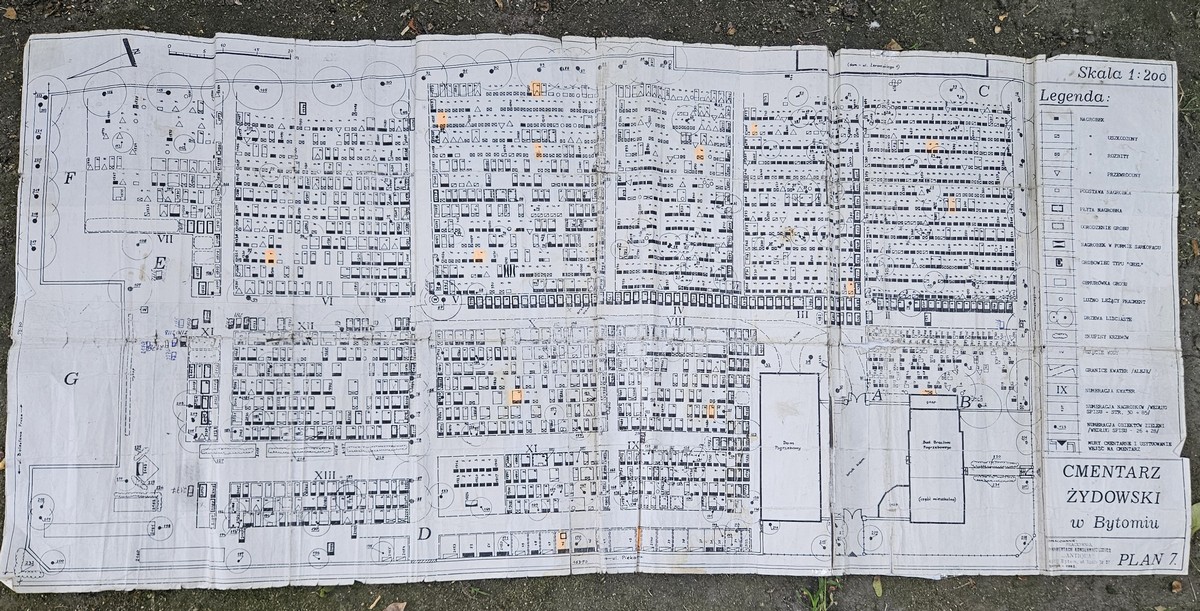
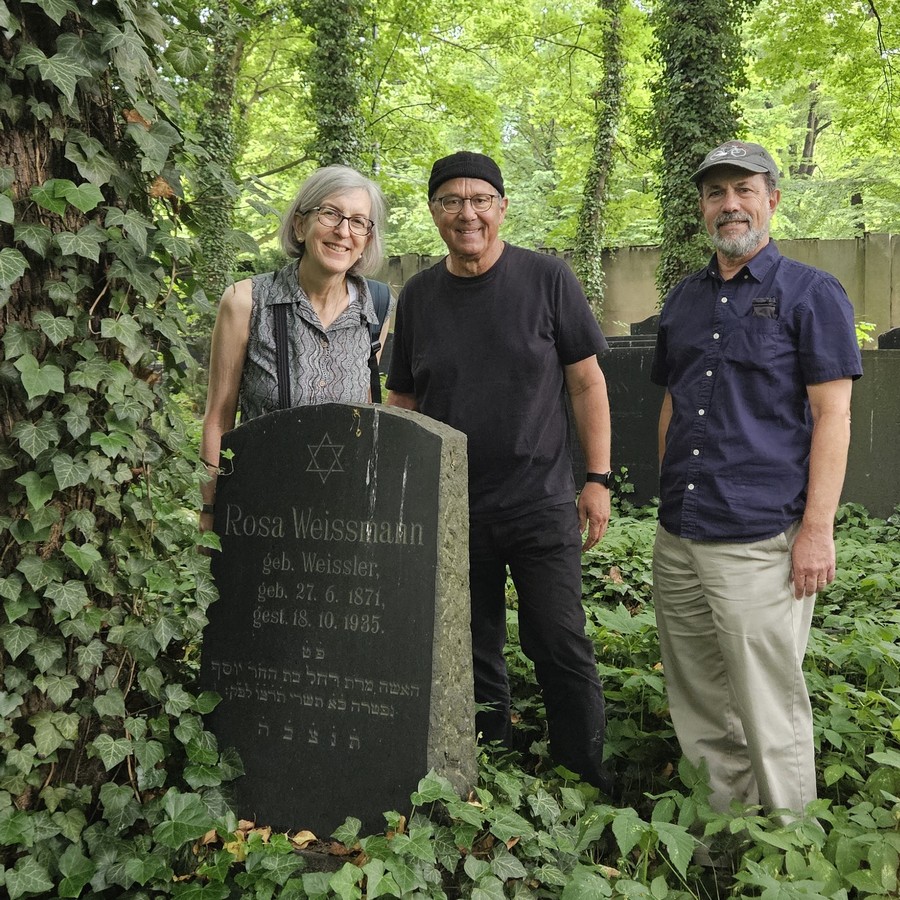
For context, Rosa, who died in 1935, was the granddaughter of Moses Weissler. Her father Joseph and Adolf were first cousins, and Moses is the uncle that Adolf wrote embarrassed him back in Mysłowice.
Our last stop of the day was back in Mysłowice at the new Jewish cemetery, where we met the keeper of the cemetery key…in the rain. It seems one cannot visit an overgrown cemetery on a sunny day. We managed to communicate with us both using a translator app. Sadly for us, any graves we might have expected to find were in the old Jewish cemetery adjacent to the new, now obliterated, only a sign marking the spot remains. There were some informative signs about the history, however, one of which identifying Moses Weissler – Nathan’s son and the grandfather of Rosa in Bytom – as one of the persons instrumental in the creation of the new cemetery.
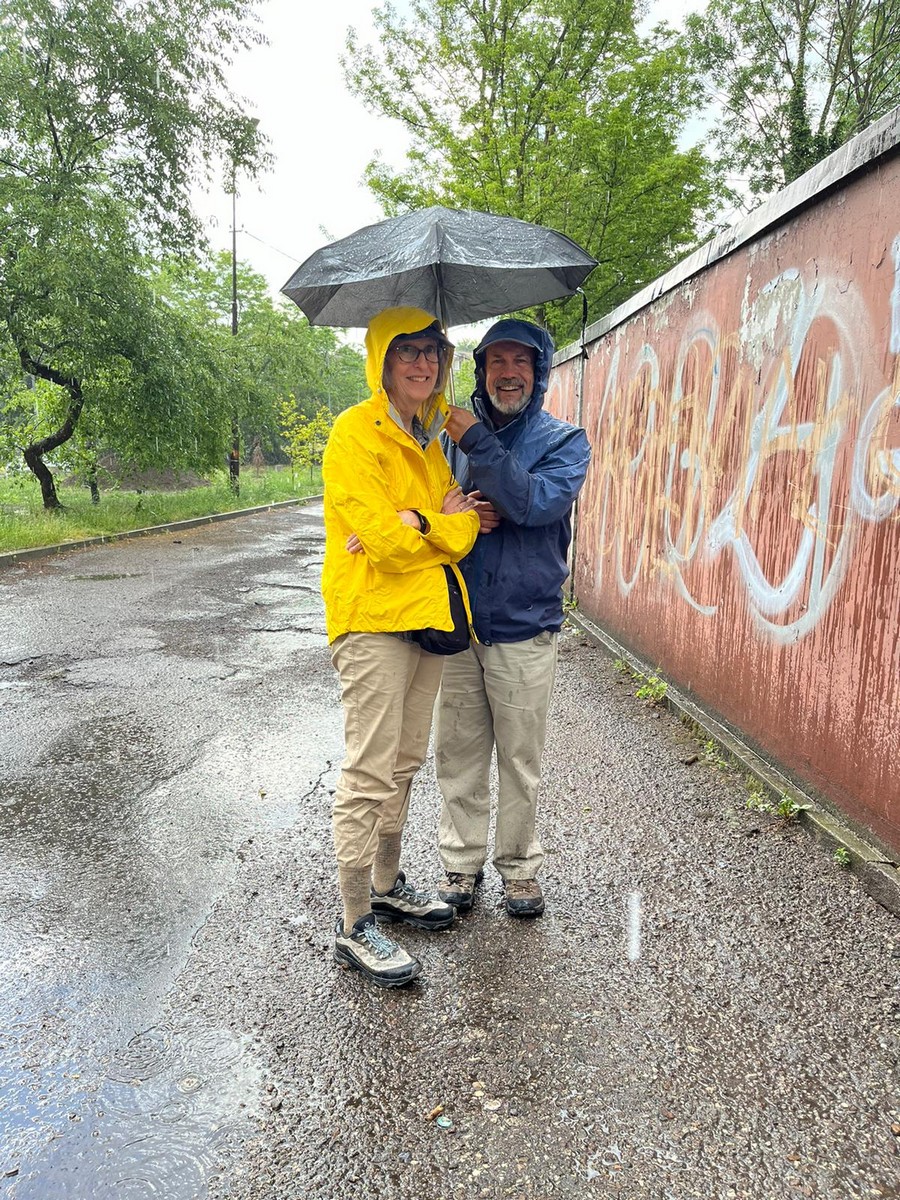
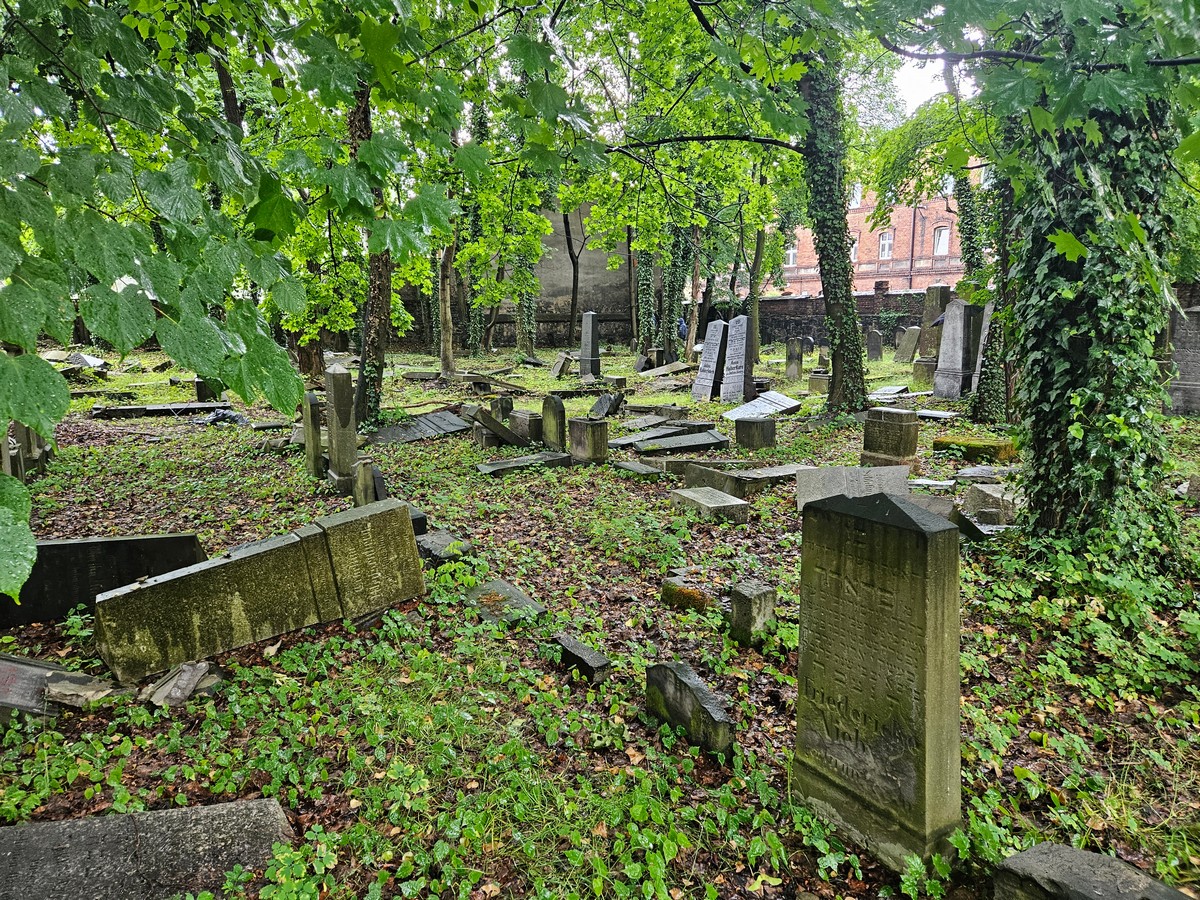
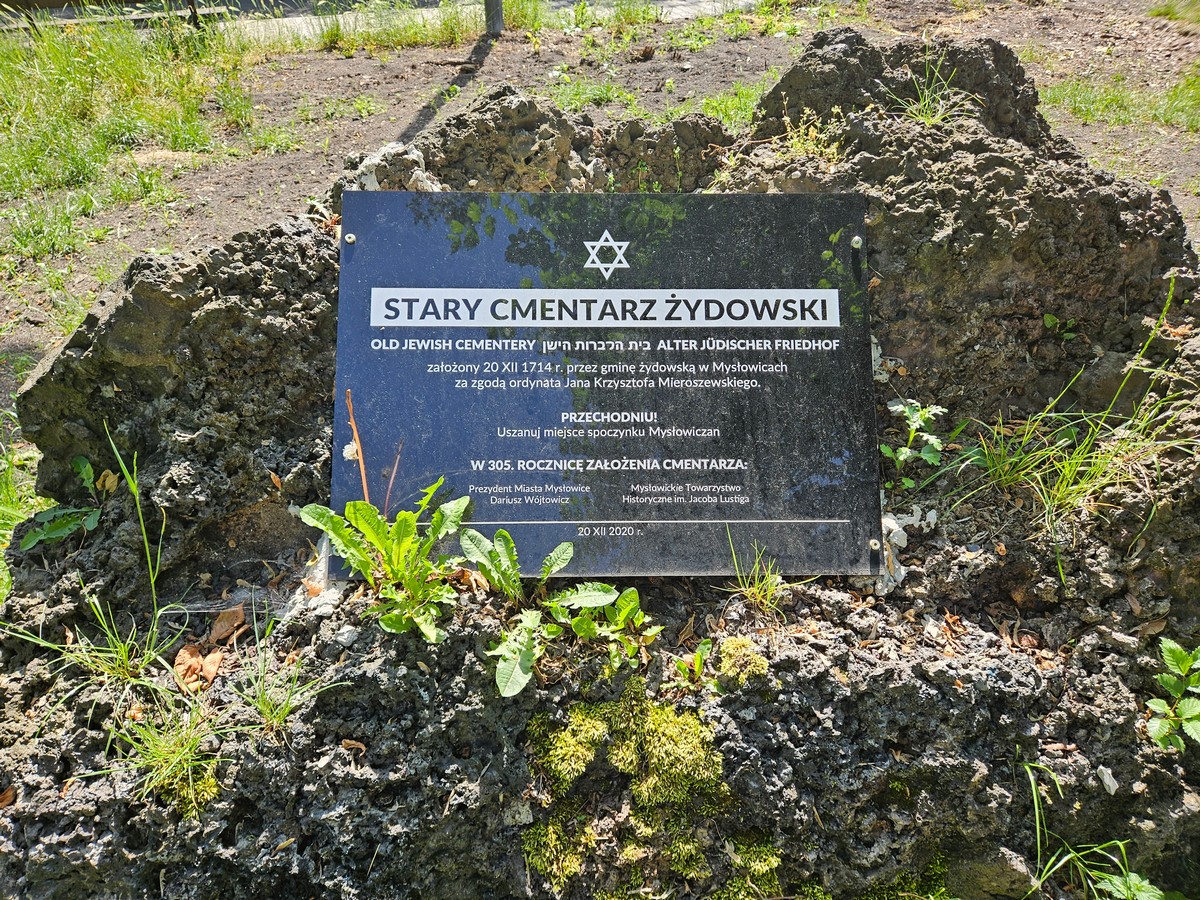
The cemetery itself was in terrible shape. Photos in a book showed mown grass and most of the headstones upright; now it is terribly overgrown and the headstones vandalized, most of them knocked over.
Our time together ended with dinner at the hotel in Chorzów with a discussion of what we accomplished and what we might do next.
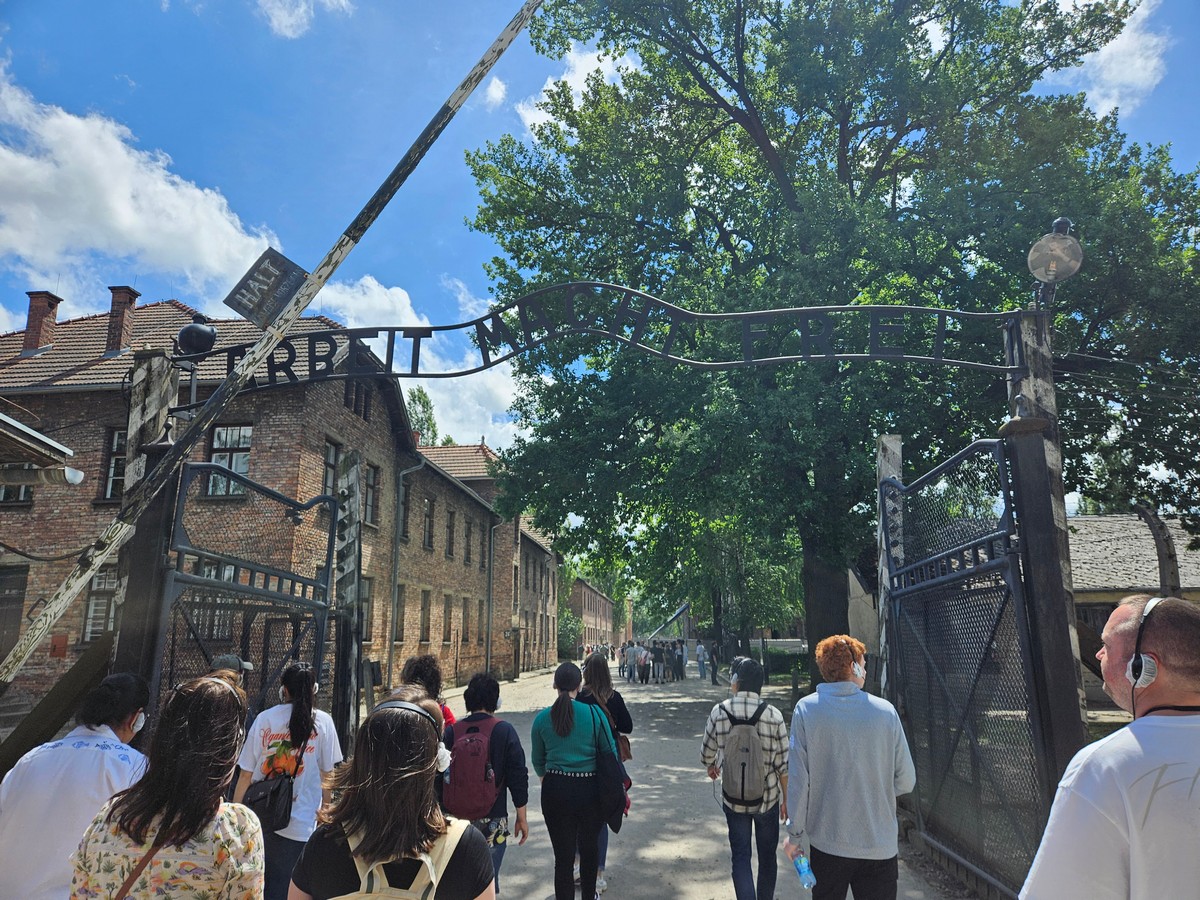
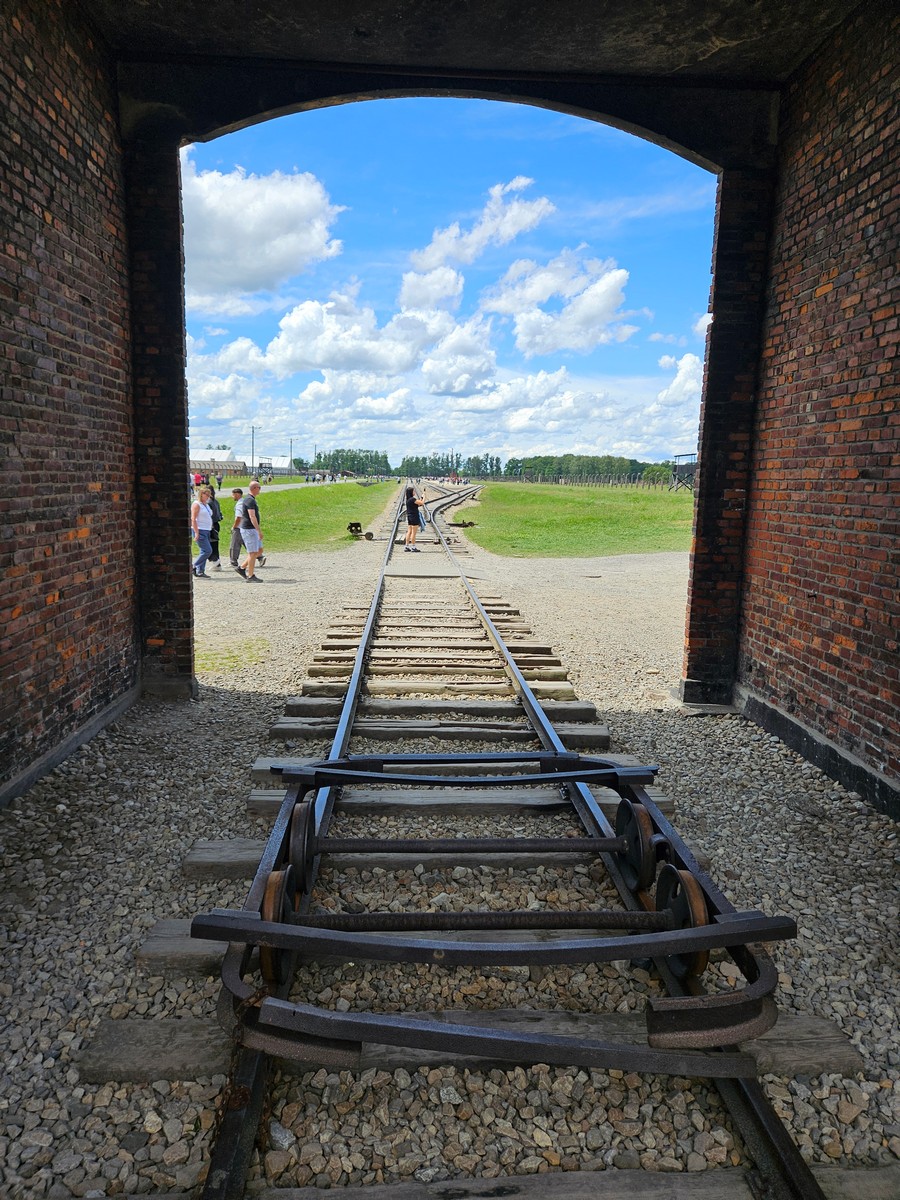
On June 1, as Wolfgang returned home (788 km!) we drove out to Auschwitz-Birkenau for our scheduled 11:00 tour. There were several Weisslers that we know from Yad Vashem perished here, including Alfred Weissler (a descendant of Nathan Weissler’s son Löbel), his wife Alice Herzog, and their four young children Charlotte, Max, Eli, and Josef. We parked at the train station adjacent to Birkenau and took the electric tram several kilometers over to the museum. Our English tour took us through the infamous “Arbeit Macht Frei” gate and into many buildings…it was very sobering to say the least, especially to see piles of shoes, brushes, suitcases and know that was a small fraction of what was taken. The Auschwitz part took about 90 minutes, then we shuttled back over to the much larger Birkenau camp. Fewer buildings here are preserved but still the scale of the place is overwhelming, compared to other sites we have visited in the past, namely Theresienstadt (where Auguste Weissler Adolf’s wife perished) and Sachsenhausen (where Friedrich Weissler, Adolf’s son and Wolfgang’s grandfather) was murdered.
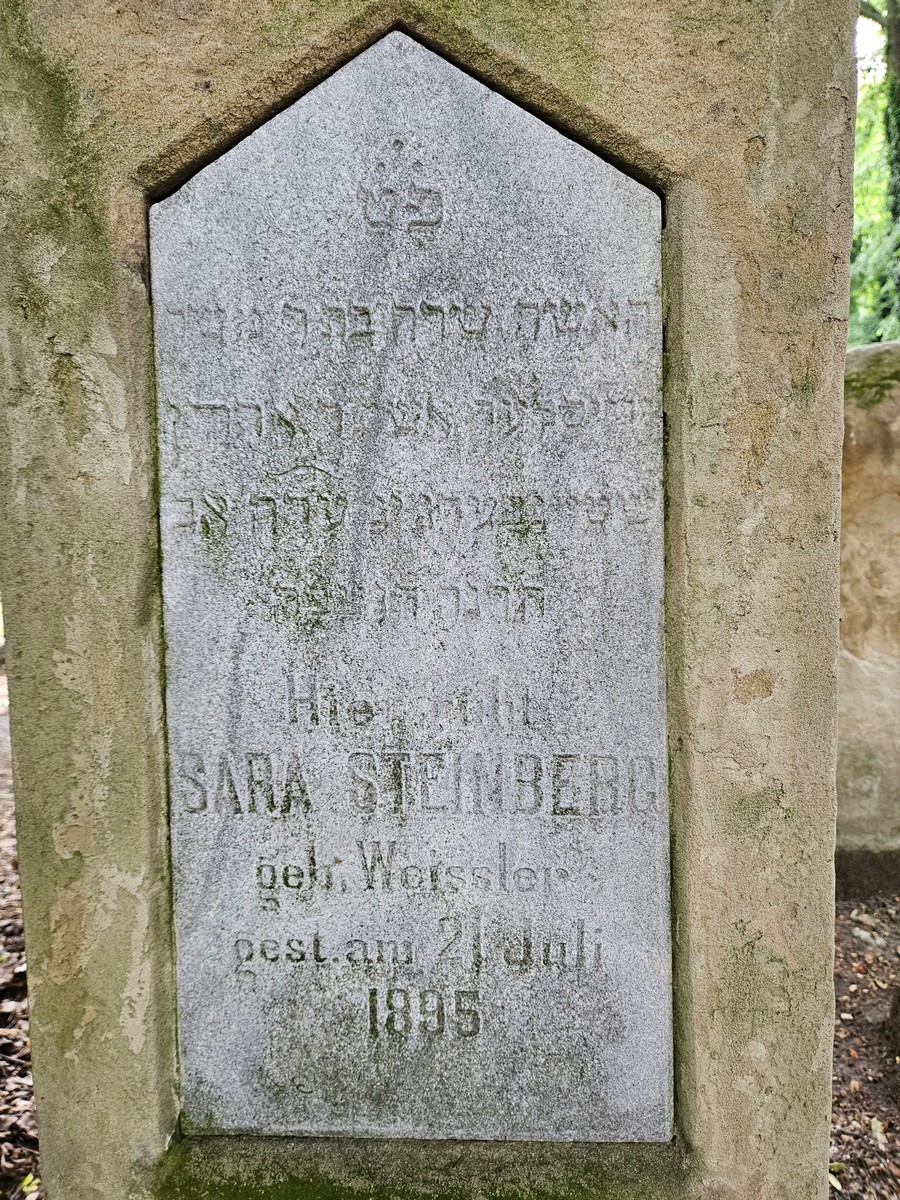
We took a couple days “off” after Auschwitz, dropping off the rental car in Katowice and continuing to the ski resort of Zakopane in southern Poland by train. (More on that in our other trip account.) From there we went on to Kraków. A prime target was to find Sara Weissler Steinberg, daughter of Moses Weissler, and Adolf Weissler’s first cousin. We had a grave number, but without a map or obvious numbering, 10,000 graves and many overgrown, and nobody to ask for help, it seemed unlikely we would find her…but Robert did!
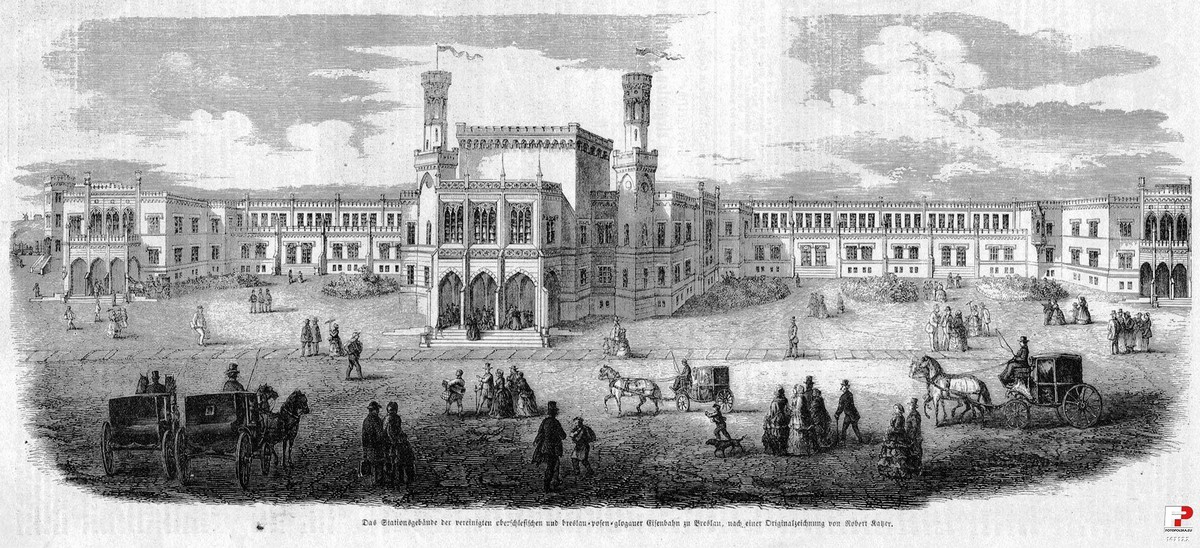
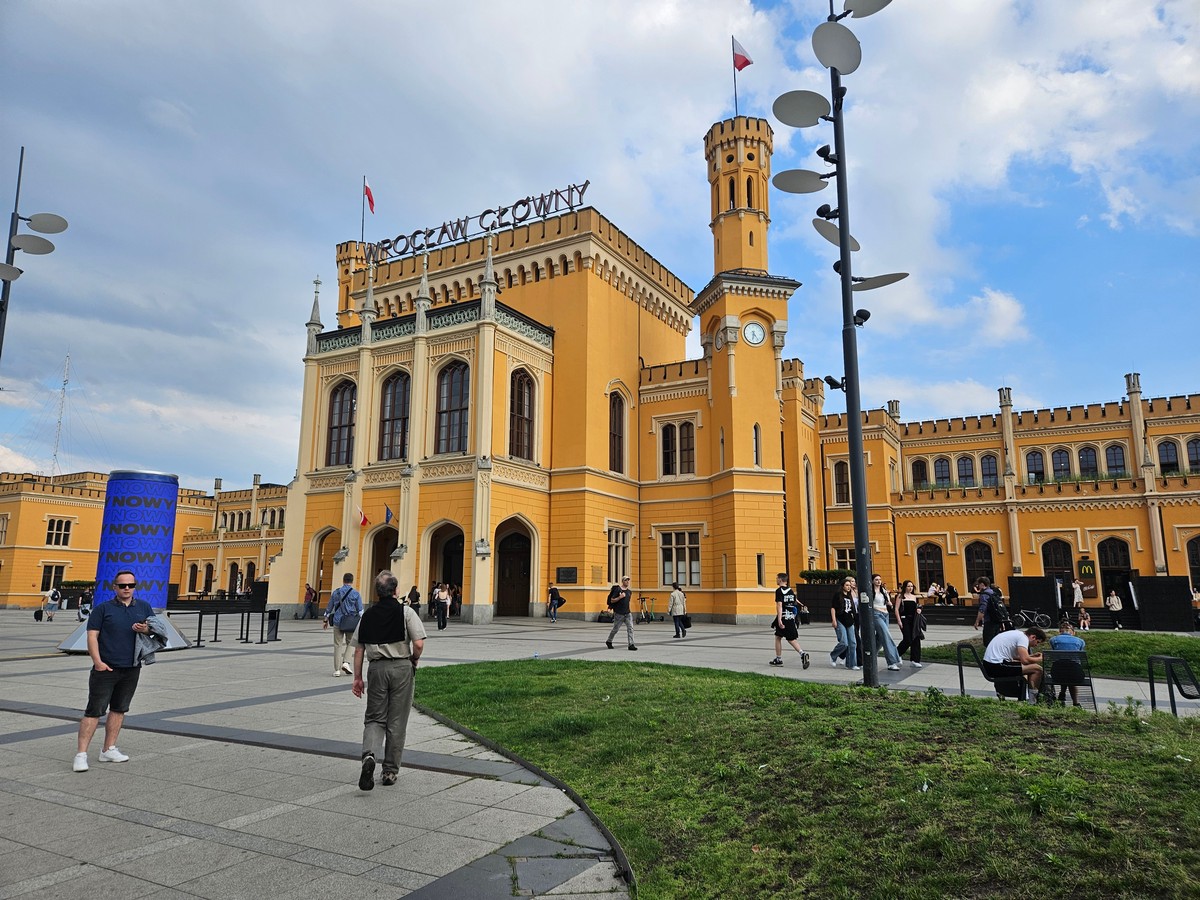
Kraków was followed by a short stay in Wrocław (Breslau), where Adolf and Auguste Weissler were married and other Weisslers lived. We arrived at Wrocław Główny, the grand old train station built in 1855–1857, as the starting point of the Oberschlesische Eisenbahn (Upper Silesian Railway). Quite nice to think that, again, we were walking where Adolf Weissler once walked!
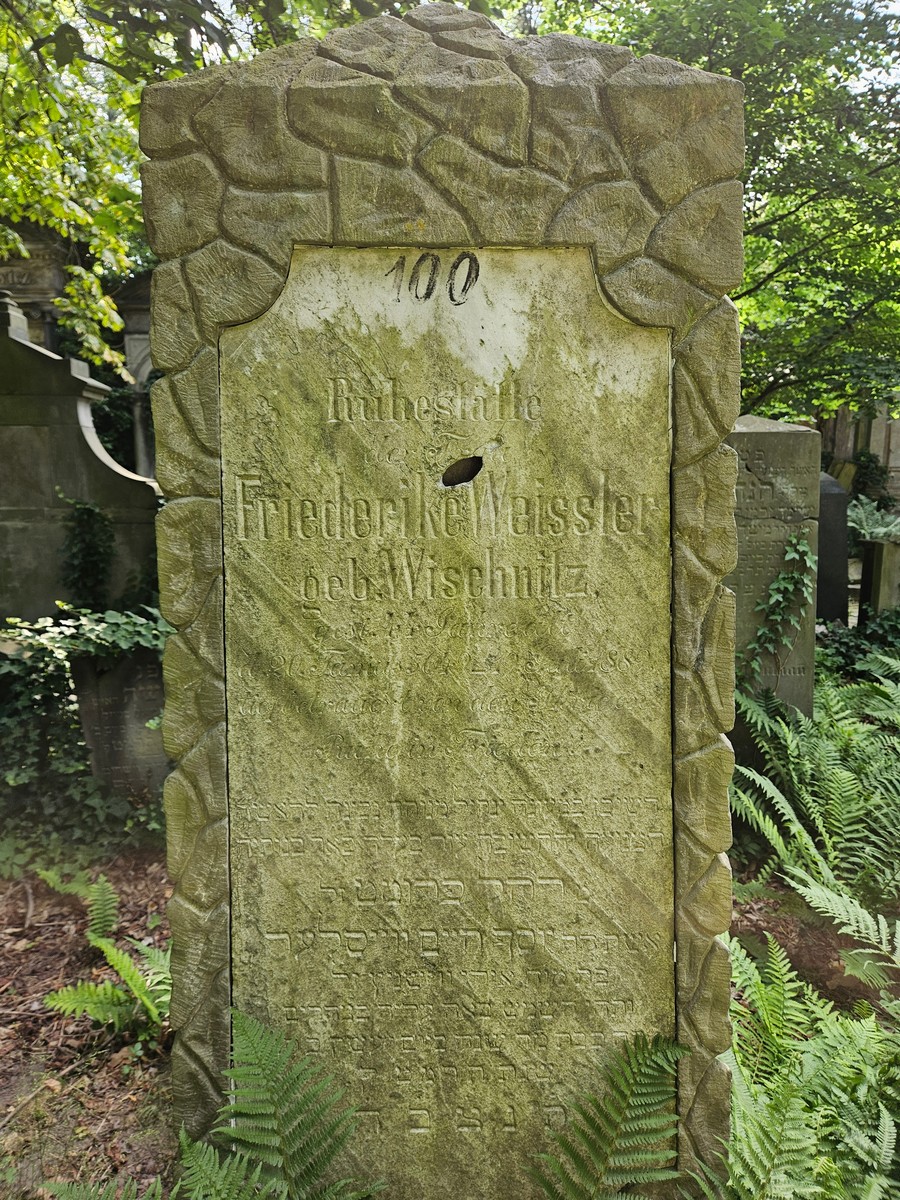
Our full day there we took the tram out to the Old Jewish Cemetery to look for Friederike Weissler née Wischnitz. The director of the cemetery, referred to us by Stephen Falk, had not only confirmed where she was in email, but also left a marked map for us at the entrance, and we found her easily. She was the first wife of Josef Weissler (son of Moses, first cousin to Adolf), but Josef is not at the old cemetery; neither it seems is he at the “new” Cosel cemetery. Liza has contacted three of the municipal cemeteries to see if he might be in one of them, only one responded so far saying no. It’s a mystery.

The next (and last) morning in Wrocław we went out to the Cosel Friedhof on ul. Lotnicza, about a 20 minute tram ride, to look for Rosalie Bochenek née Weissler, daughter of Moses Weissler of Mysłowice. The cemetery was listed as open only on Wednesday from 12-5 and Sunday from 9-1…but when we got there (on Sunday) at just after 9, it was still locked. The friendly caretaker with help from Google Translate (in live conversation mode!) said it would only be open with a guide and he didn’t know when that would start. But after a few minutes (no doubt we looked dejected) he said we could have 30 minutes. Robert won again, finding her after we both raced around for 15-20 minutes searching. We showed the caretaker a photo on the way out, and then he said family can always get in. 🙂 Good to know! We took the tram back to the hotel and killed our remaining time before catching our train to Berlin.
As a side note, Adolf and Rosalie Bochenek lived at Kürassierstrasse 7, now it is al. Generała Józefa Hallera 7, 53-319 Wrocław, Poland. As Google Maps street view showed it (of course) to be a relatively new building, and we were short on time, we did not visit that site.
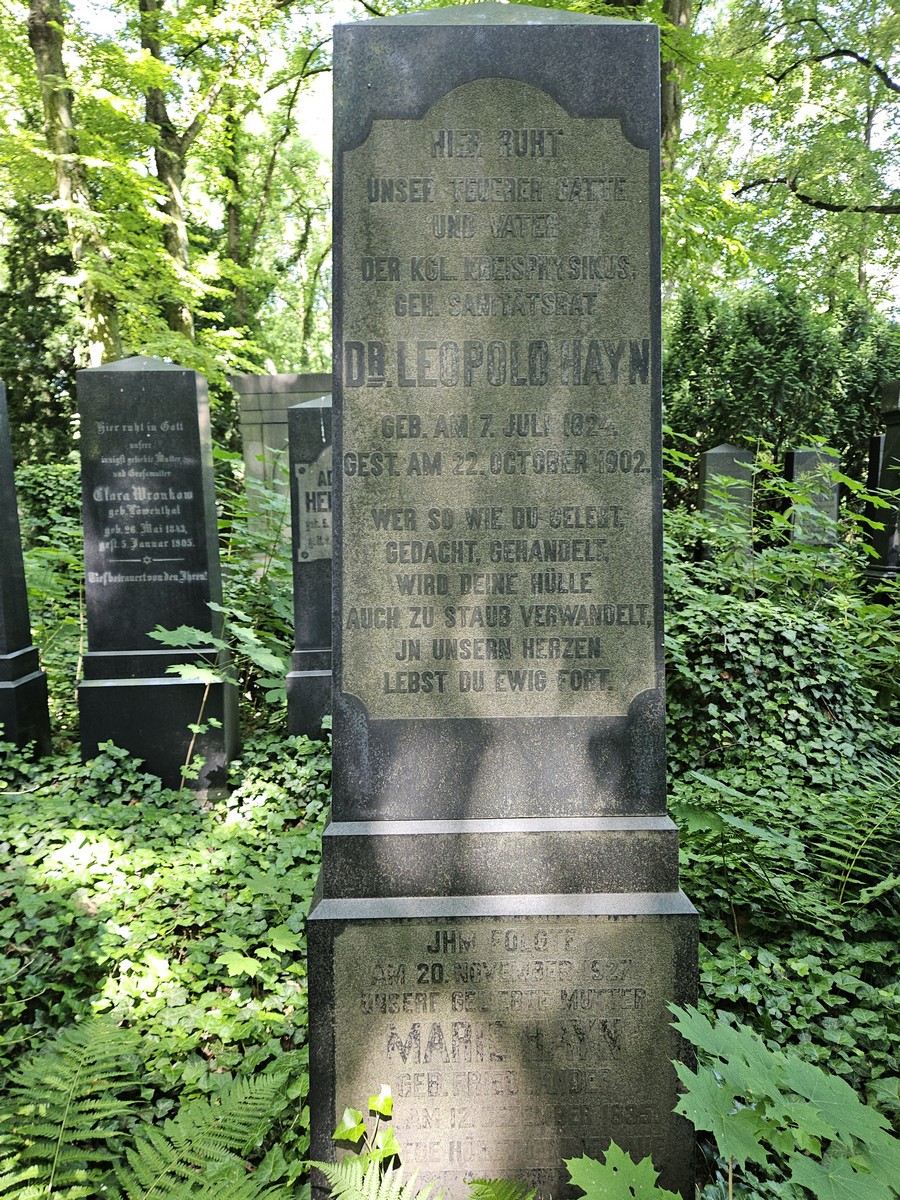
In Berlin we focused on visiting the Weissensee cemetery to find second great grandmother Rosalie Weissler née Hayn, and second great grandfather Leopold Hayn (Rosalie and Leopold were siblings). Weissensee is quite large, and while we had a little info from jewishgen.org, needed some help. The fellow in the office at first did not seem happy to help – asking about six people was “too many” and we should have asked in advance. Ah, we said, apologetically, we know for next time. Then he relented and started looking them up…and gave us a neatly annotated map. With his map we found:
- Louis Buki and wife Clara Buki geb Hayn
- Dr Leopold Hayn and wife Marie Hayn geb Friedlander
- Olga Bruck geb Weisler [Weissler]
- Sally [Salo] Hein (relation uncertain)
- Arthur Felix Hayn (son of Max Hein, brother to Leopold Hayn and Auguste Hayn)
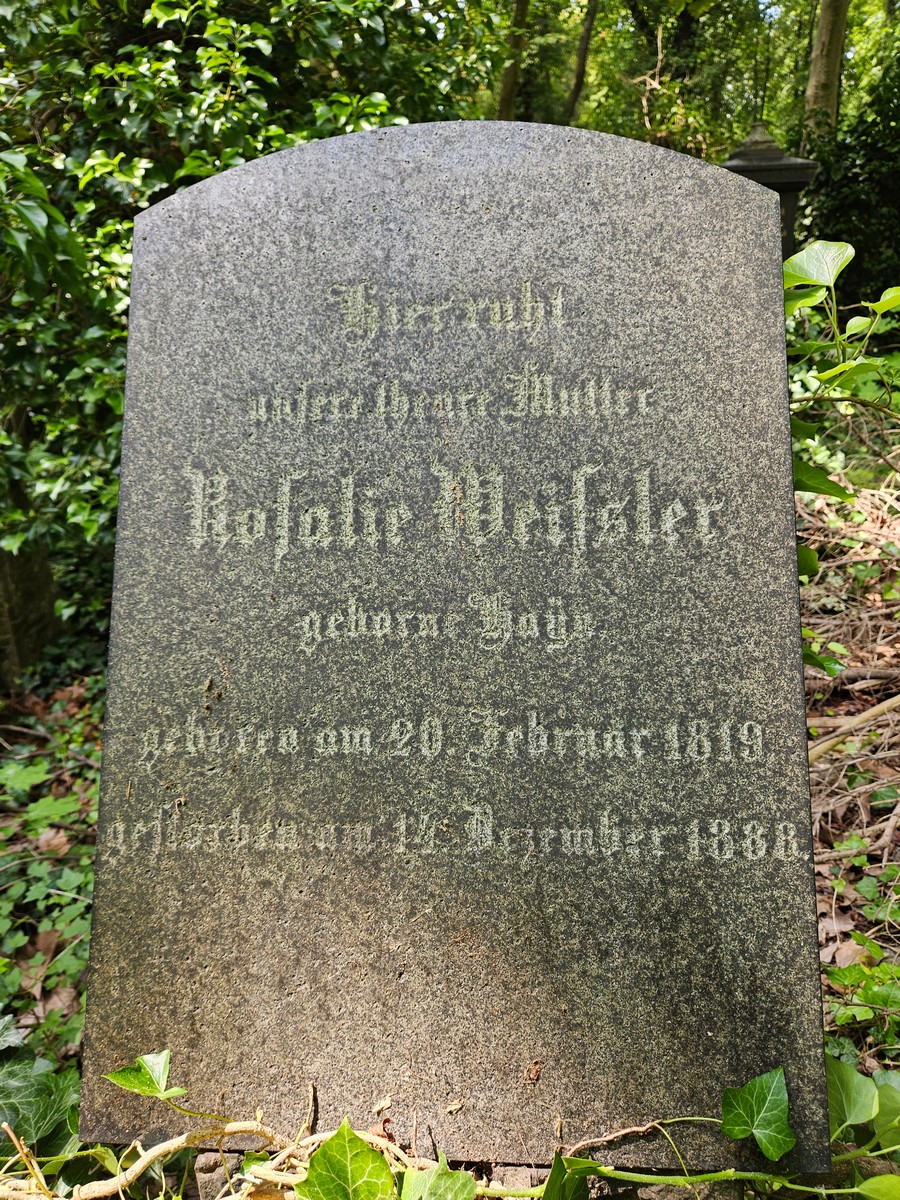
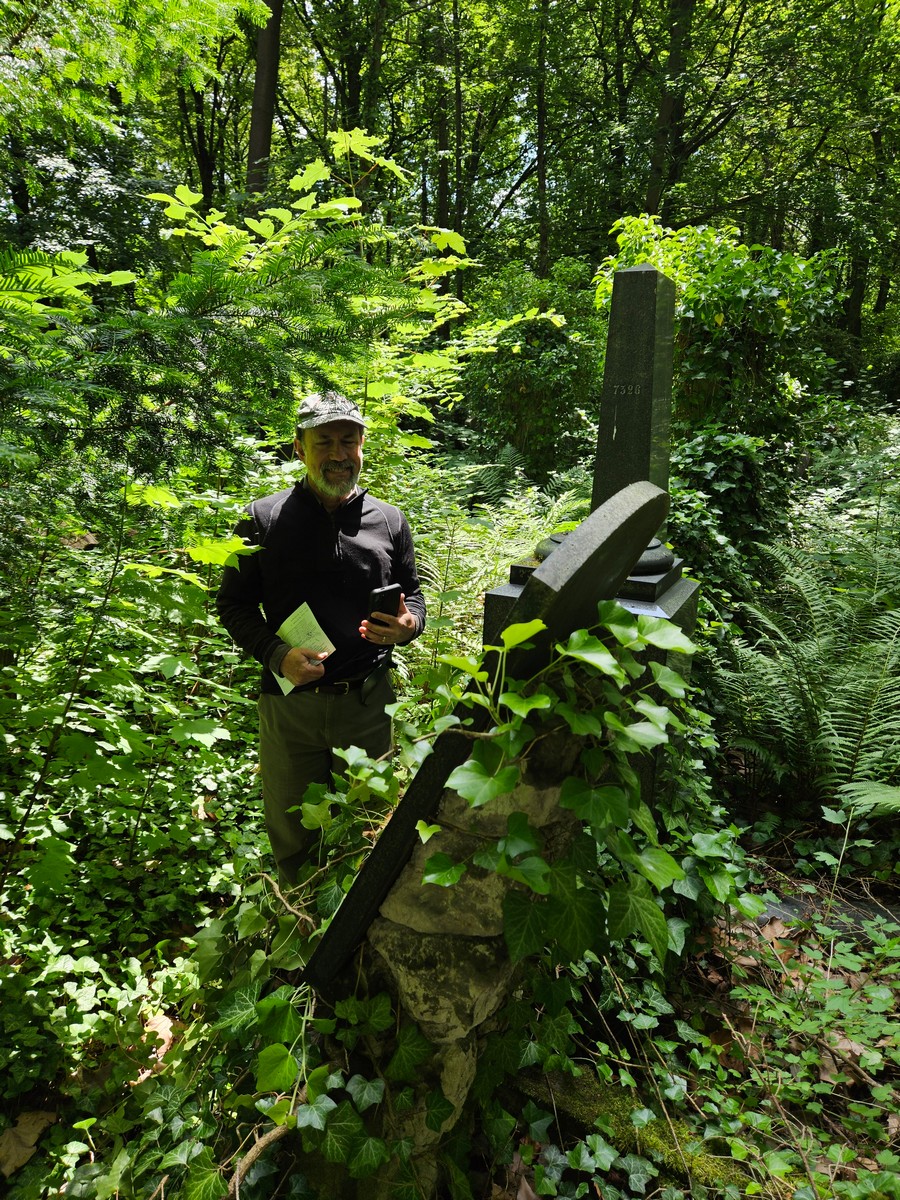
We then started hunting for Rosalie Weissler; she was neither in the office data nor on jewishgen.org. We split up to cover more ground, and Liza eventually found her based on appearance of nearby headstones in old photos. The stone was covered with ivy so she was only found with the context of the other stones. (Lesson learned: always take a few photos of each headstone showing what is nearby!)
On the way out, just by chance, we found Philipp and Luise Bloch, another good find. (Philipp was the nephew of the Deutsch rabbi brothers, and went to live with Israel as a child; it is only from Philipp’s biography that we know the name of Israel’s wife.)
After lunch we decided to check out the Schönhauser Allee cemetery closer to our hotel. We found Friederike Guhrauer née Hayn (relation uncertain), but none of the others on our short list. The cemetery was overgrown in places and many headstones eroded.
With that visit, our cemetery visits were done for this trip.
Several days later, Liza received email from the fellow at Weissensee cemetery, responding to an email she had sent a week before we arrived in Berlin (and had quite forgotten about, since there had been no response). The email rather firmly told us what the rules are, how one should ask 1-2 weeks in advance, and should not ask about one or two people on a “direct” visit. We would have happily done so if we had known in advance, but did not see that info online anywhere. Anyway, now we know, and need to keep this advice in mind for other places we may want to visit in the future.
There is much to do going forward. We are pursuing having Julius Muller in Prague return to Opava to review the marriage file that we ourselves could not read. Liza plans to review all of the pages of the Hotzenplotz Familiantenbuch that she copied, to see what she may have missed when in Opava. Wolfgang after the trip received a number of land records from the Opava archivist, and as not even his Tante Ulla could read them, Liza is slowly submitting those to ViewMate on jewishgen.org for possible translation. We will also continue to sort through our photos and data, to identify the gaps and how we might fill the most important missing information. And then – start planning the next trip!
Summary of Graves Located
Jaegerndorf (Krnov)
- Amalie Hein geb Freudenthal (1847-1900) [unknown relation]
Hotzenplotz (Osoblaha)
- Leopold Hein (Leib Schames) and Mirjam Marjana Kohn/Katz [chewra 218-00289, 218-00290]
- Yom Tov (or Jom Tov) Hein [chewra 218-00340] (d 1817)
- Jettel Hein [chewra 218-00075] (d 1854)
- Jakob Hein (not confirmed) [chewra 218-00183]
- Meshulam Zalman Hein [chewra 218-00074] (d 1869)
- Sara (Serl) Hein [chewra 218-00296]
- Amalie Hein [chewra 218-00233] (d 1866) (Hoeniger m to Abraham Hein?) Note photo on chewra is of Abraham Hein.
- Abraham Hein [chewra 218-00219] (d 1857). Photo on chewra doesn’t match epitaph transcription.
- Salomon Hein [chewra 218-00264] (d 29.05.1848, father is Leib Schames)
- Faiga (Faigele) Hein [chewra 218-00387] (d 1839)
- Shimon Hein [chewra 218-00246] (d 1878 [chewra transcribed incorrectly) / father is Saul, occupation is Schames – this is rabbi David Hein’s brother
Mysłowice
- n/a
Gliwice
- Gertrud Brauer (1888-1912)
- Fanny Brauer geb Hamburger (1852-1919)
- Simon Brauer (1861-1938)
- Ferdinand Deutsch (1846-1914)
- Rosalie Deutsch geb Turbin (1849-1924)
- Anna Perl geb Friedlander (1855-1922)
- Jenny Weissler geb Gallinek (not photographed?)
Bytom / Beuthen
- Jacob Fraenkel (1852-1917)
- Adele Fraenkel geb Faerber (1852-1917)
- Simon Perls (1840-1901)
- Fanny Perls geb Orgler (1843-1912)
- Rosa Weissmann geb Weissler (1871-1935), first husband Gallinek
- Eduard Gallinek (1909-1931)
Krakow
- Sara Steinberg geb Weissler (1848-1895)
Breslau / Wroclaw – Old Jewish Cemetery
- Friederike Weissler geb Wischnitz (1843-1889)
- Max Deutsch (1856-1889)
- Immanuel Deutsch (1847-1913)
Breslau / Wroclaw – Cosel Cemetery
- Rosalie Bochenek geb Weissler (1856-1935)
- Adolf Bochenek (1852-1937)
- Erich Bochenek (1892-1915)
Berlin – Weissensee
- Louis Buki (1838-1908)
- Clara Buki geb Hayn (1858-1928)
- Dr. Leopold Hayn (1824-1902)
- Marie Hayn geb Friedlander (1835-1927)
- Olga Bruck geb Weissler (1843-1911)
- Peter Bergner (1907-1968) – is on Olga’s tombstone, who is he?
- Sally (Salomon?) Hein (1864-1915) – not sure who he is
- Artur Felix Hein
- Rosalie Weissler geb Hayn (1819-1888)
- Professor Dr Philipp Bloch (1841-1923)
- Luise Bloch (1849-1924)
Berlin – Schoenhauser Allee
- Isidor Guhrauer (1814-1878)
- Friederike Guhrauer geb Hayn (1825-1901) – needs research
© Liza and Robert Weissler aves.org 2000-2026, licensed under the
Creative Commons Attribution ShareAlike 4.0 International License.