
For the last couple of years we contemplated a special trip for our 40th anniversary (in Dec 2023), maybe back to Switzerland where we honeymooned. But then thought…why not go somewhere warm? :-0 And go birding! Wings Birding Tours had a trip that fit the bill perfectly…endemics of the Lesser Antilles. Who doesn’t love the Caribbean?
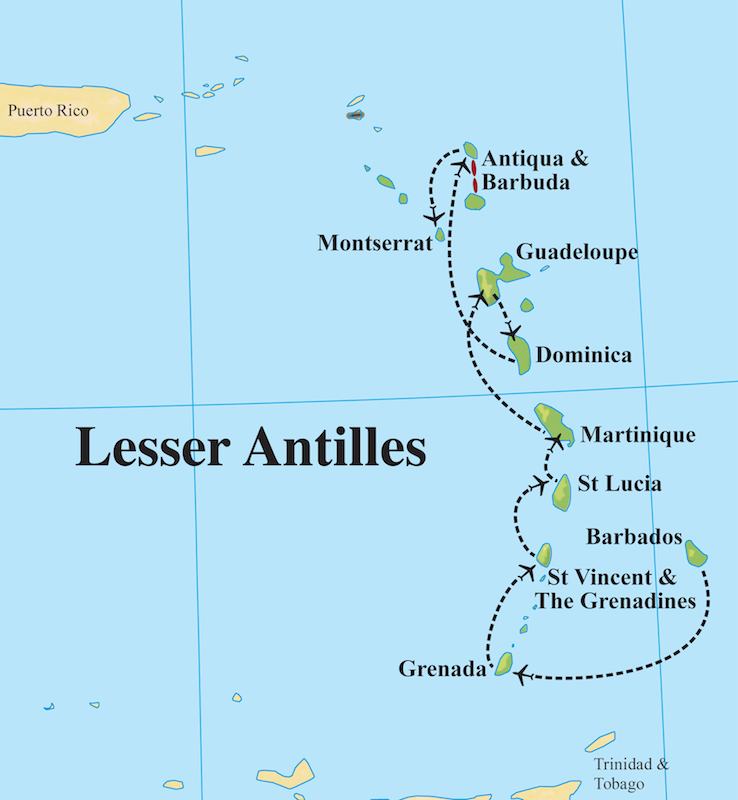
This fantastic trip had us visiting 10 islands, 9 countries/territories in two weeks. From Barbados in the southern Lesser Antilles (LA) to Antigua & Barbuda in the northern LA, our group led by super guide Ryan Chenery sought out the endemics, birds found only in a specific area, be it an island, group of islands, or the region as a whole. Armed with new binoculars and Liza’s camera, off we went in November.
To skip the narrative and just look at photos – scenery, birds, and Buddy Bison! – click here.
For a full trip report from Wings Birding Tours, click here.
In the following, click any photo to see a larger version.
We arrived in Barbados a day early – the usual safeguard against travel delays on the front end – along with a couple of our tour mates on the same flight. There we enjoyed some beach time, something we actually wouldn’t get a lot of on this trip, by design. You know the water is lovely when Liza gets in! We also enjoyed a few Barbados rum punches!
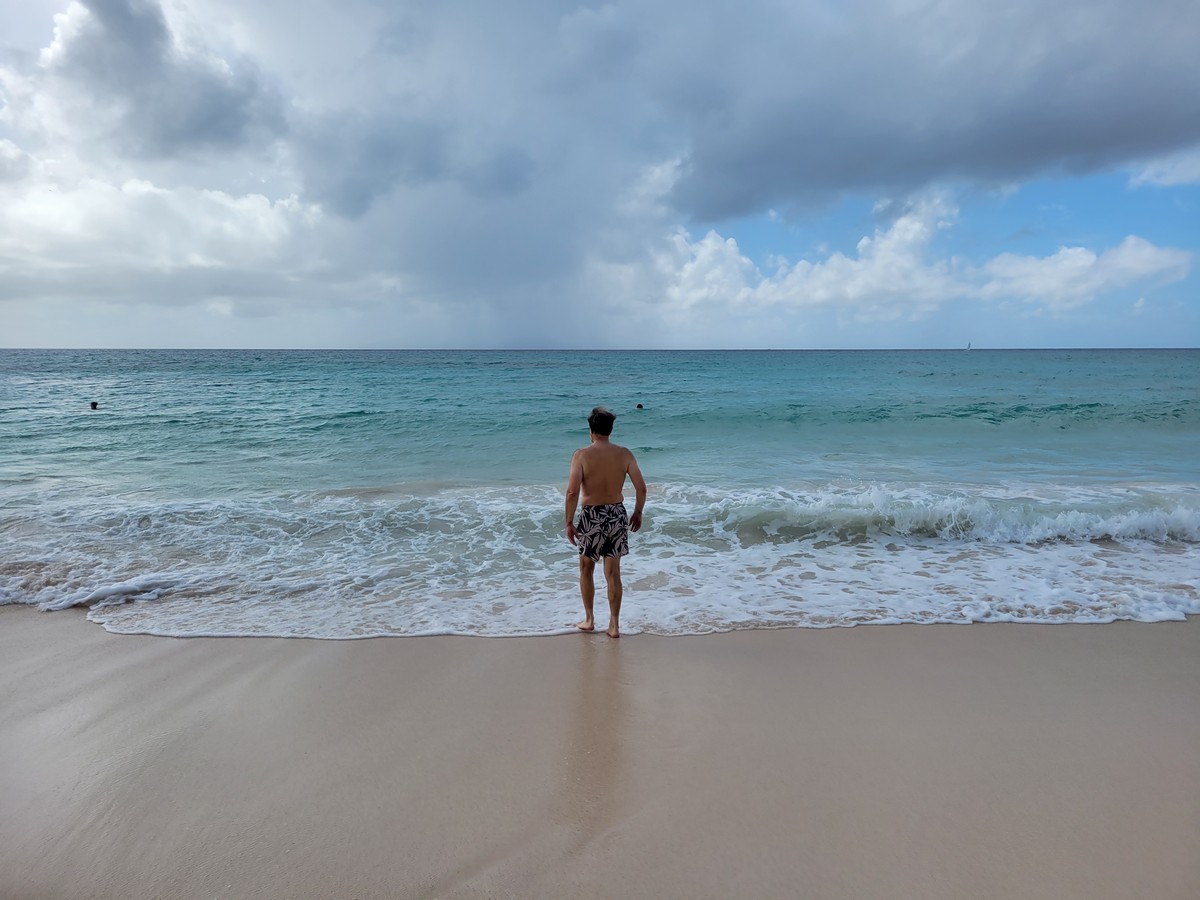

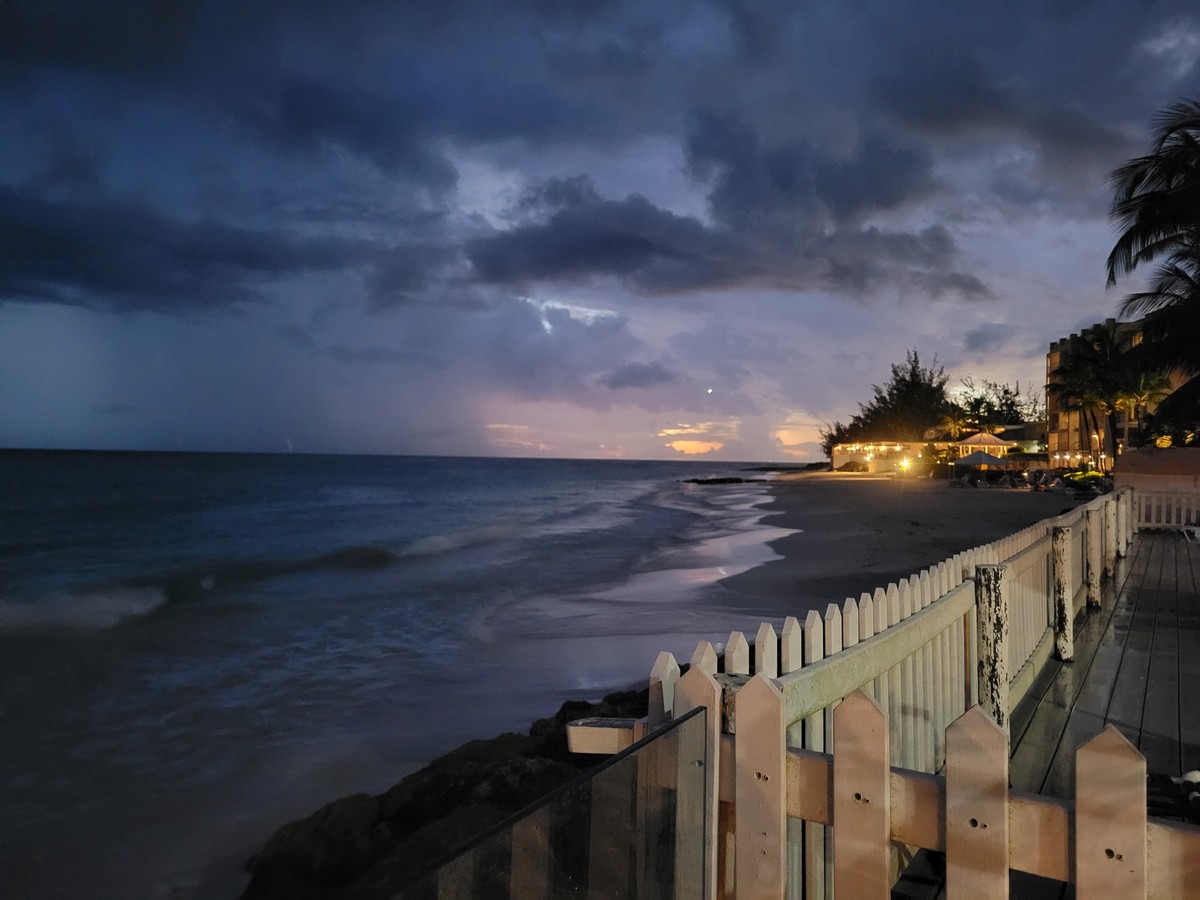
The tour started the next day with birding throughout Barbados. (Fun fact: Barbados got its name from the locals calling the Spanish and/or Portuguese who arrived there “bearded guys”.) Much of the time was spent inland birding, but we also had a chance at a cliff overlook to see feeding Hawksbill and Green Sea Turtles.
From Barbados we were headed to Grenada (the “Island of Spice” – mainly mace and nutmeg) …until our outbound flight was delayed so long that by the time it could have left, the Grenada airport was closed. Turned out the lights, everybody went home. Thought of joking we would invade but figured it would not go over well. It was also late enough – after 10 pm – that there weren’t any available hotel rooms, or at least that’s what the guy at the airport said who was supposed to be assisting us. What did we do? Slept outside the terminal (great weather, after all) on the benches. Not the most comfortable night for everyone, but hey we’re tough!
We got to Grenada the next morning, and despite having less time on the island managed to see the critically endangered Grenada Dove (according to some accounts there may be fewer than 40 individuals left in the wild).
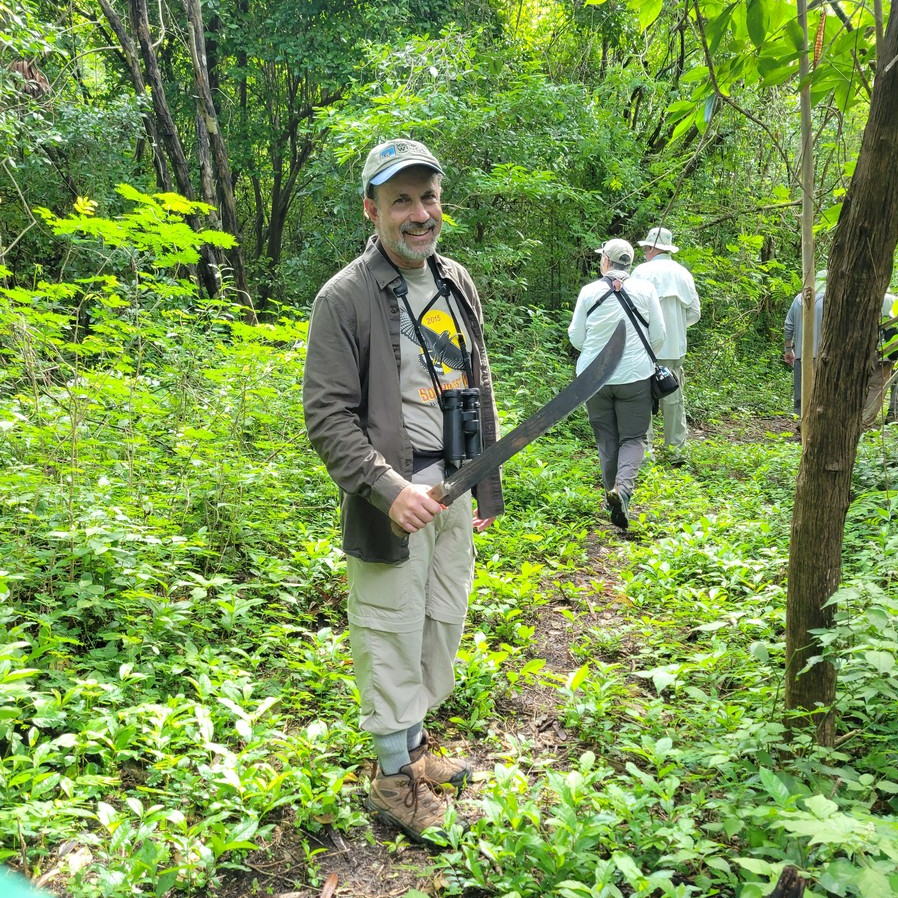
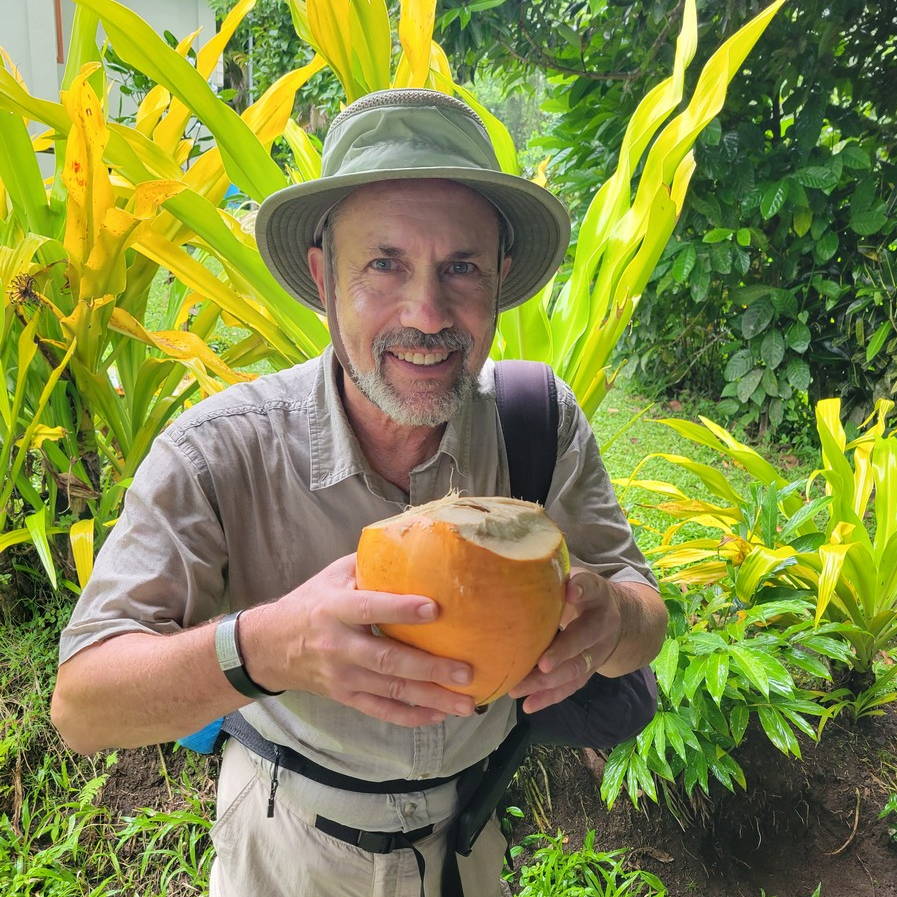

On to St Vincent and the Grenadines – which Liza still thinks would make a great name for a singing group – our focus changed to parrots. St Vincent is one of three islands home to at least one endemic species of the large Amazona parrots, the other islands being St Lucia and Dominica. (The Grenadines are a string of 32 smaller islands; St Vincent is the main island.) A few of us went up a steepish hill to get a good view from up top of the St Vincent Parrots coming into roost, only to find when we came back down that one was posing obligingly for us near where the vehicles were parked.
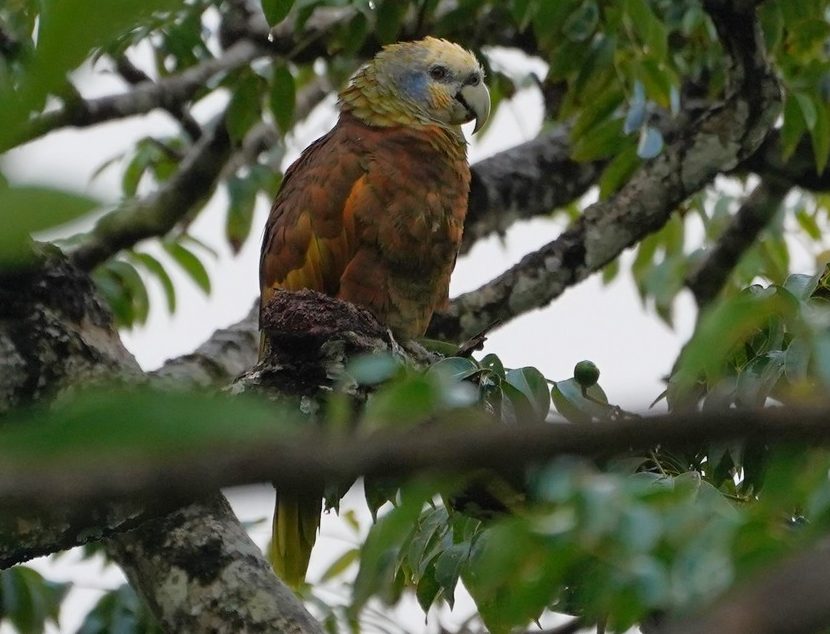
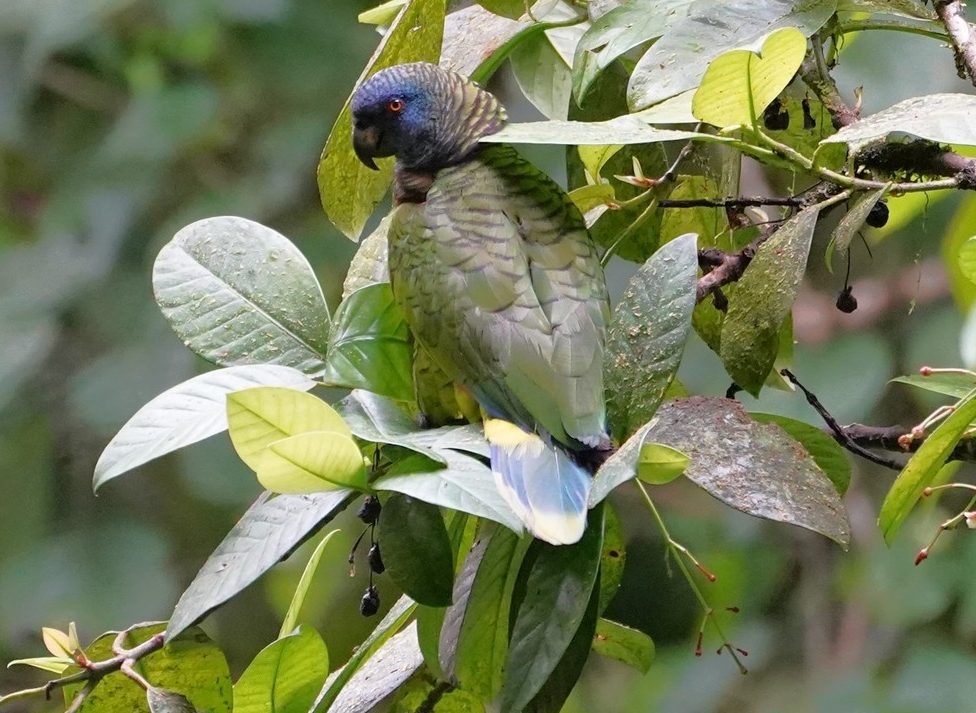
We had a little bit of beach time on St Vincent before moving onto postcard-perfect St Lucia (the “Island of Inspiration”) by plane. Here we found all of our target birds including the superb endemic St Lucia Parrot, and even had some time one afternoon to relax at the hotel pool.
From St Lucia we were off to Martinique by ferry. Martinique (“The Pearl of the Antilles”) is (per Wikipedia) an overseas department and region, and a single territorial collectivity of the French Republic. It is also part of the European Union as an outermost region. What that means practically for the traveler … one can get really great croissants and coffee, the roads are excellent, one can practice speaking French (it did come in handy a time or two), and the passport entry/exit stamp says Martinique and not France. There we enjoyed more great birds and superb meals – especially loved the marlin “burgers”.
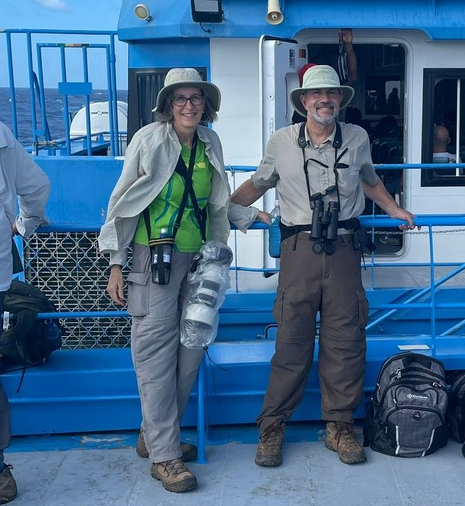

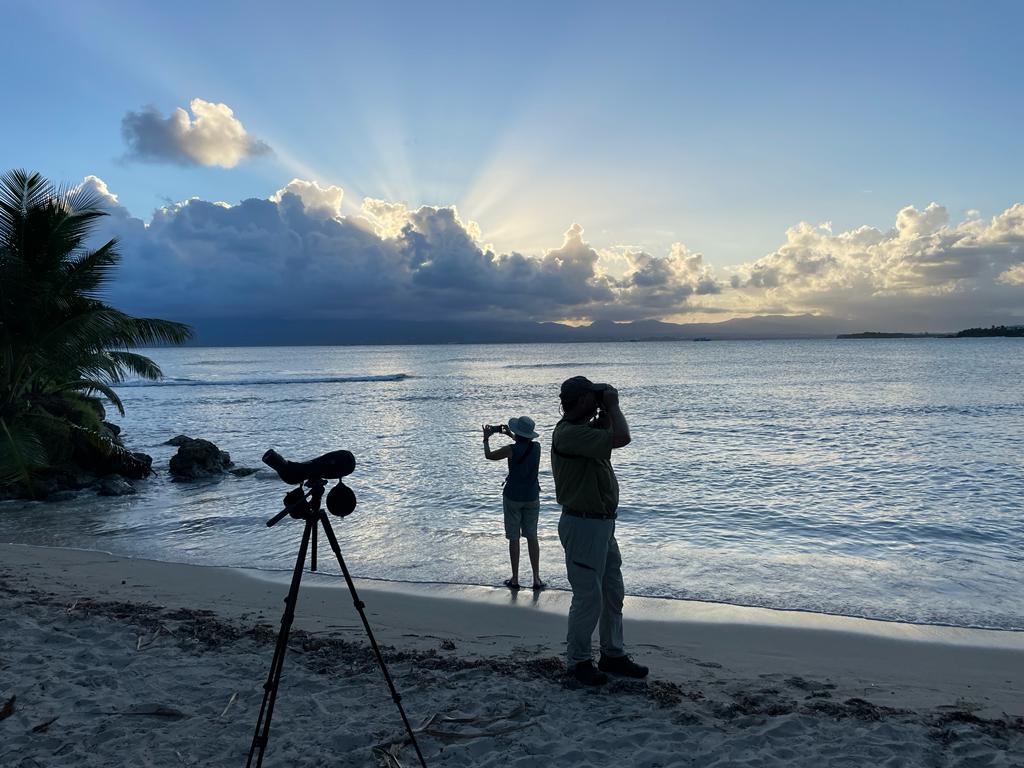
Our time in France continued in Guadeloupe, also a French department. Also doubles as the fictional Saint Marie in the British/French tv show Death in Paradise! Guadeloupe is actually an archipelago, with the two largest islands, Basse-Terre and Grande-Terre, separated by the Salée River and overall resembling a butterfly. There we spent time in the Parc Nacional du Guadeloupe, not only birding but enjoying a delicious French brunch of blue cheese, camembert, fresh baguettes, cured meats and Belgian chocolate.
The last two endemic big Amazon parrots awaited us in Dominica (pronounced DOM-i-nica, not do-MIN-ica – and known as the “Nature Island of the Caribbean”). Alas, the Imperial Parrot was viewed only on the country’s flag, but we did see the other big boy, the Red-necked Parrot, on a very rainy morning. How rainy? … well Liza’s phone, ill-placed in an outer pocket of her hiking pants, complained of being wet for a couple of weeks after that.
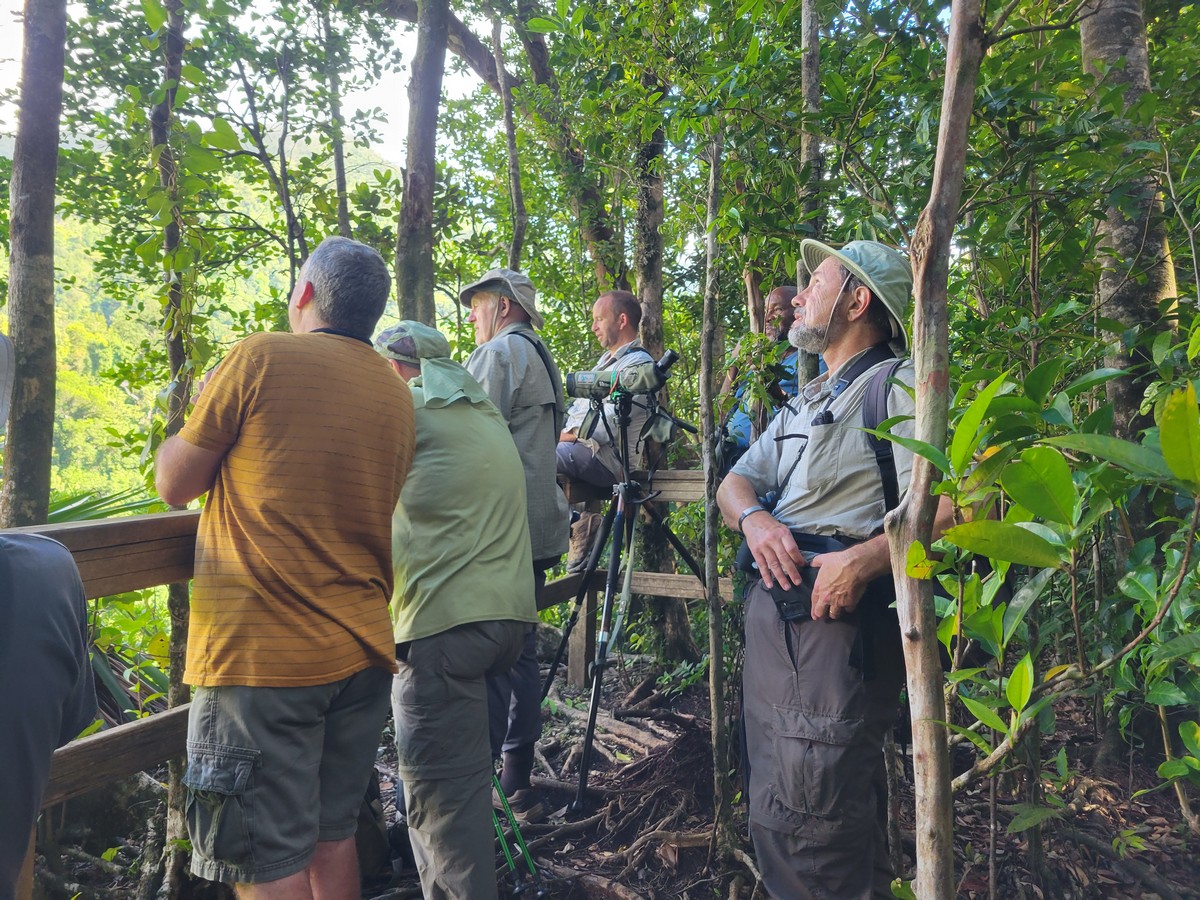


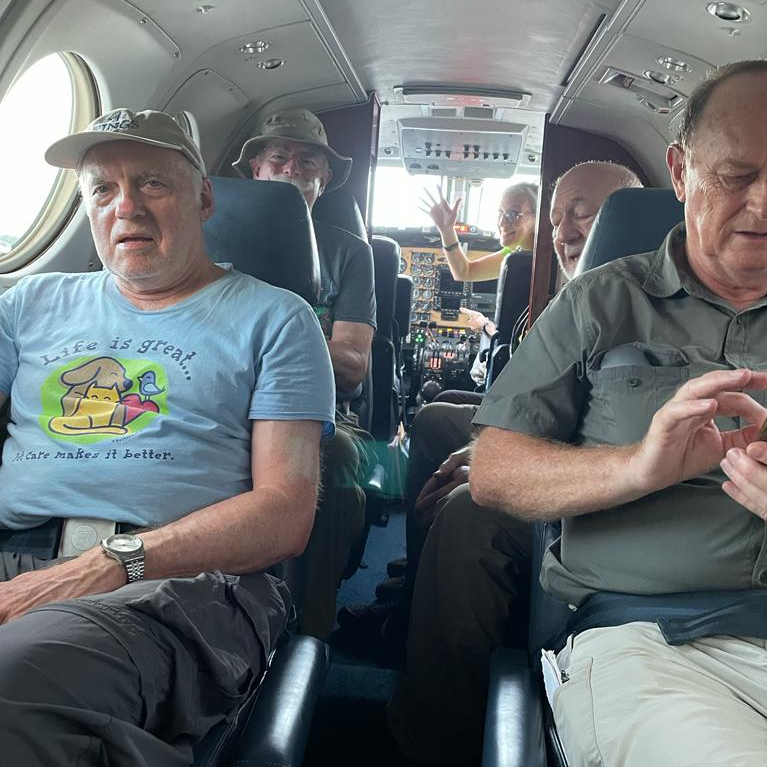
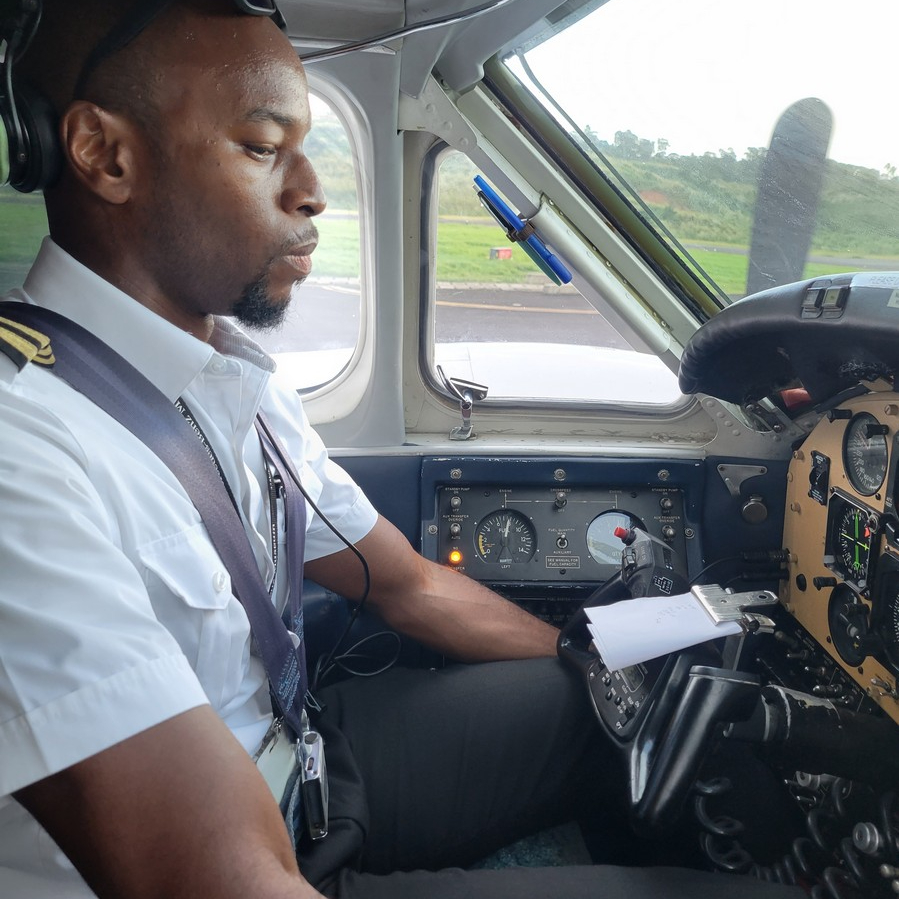
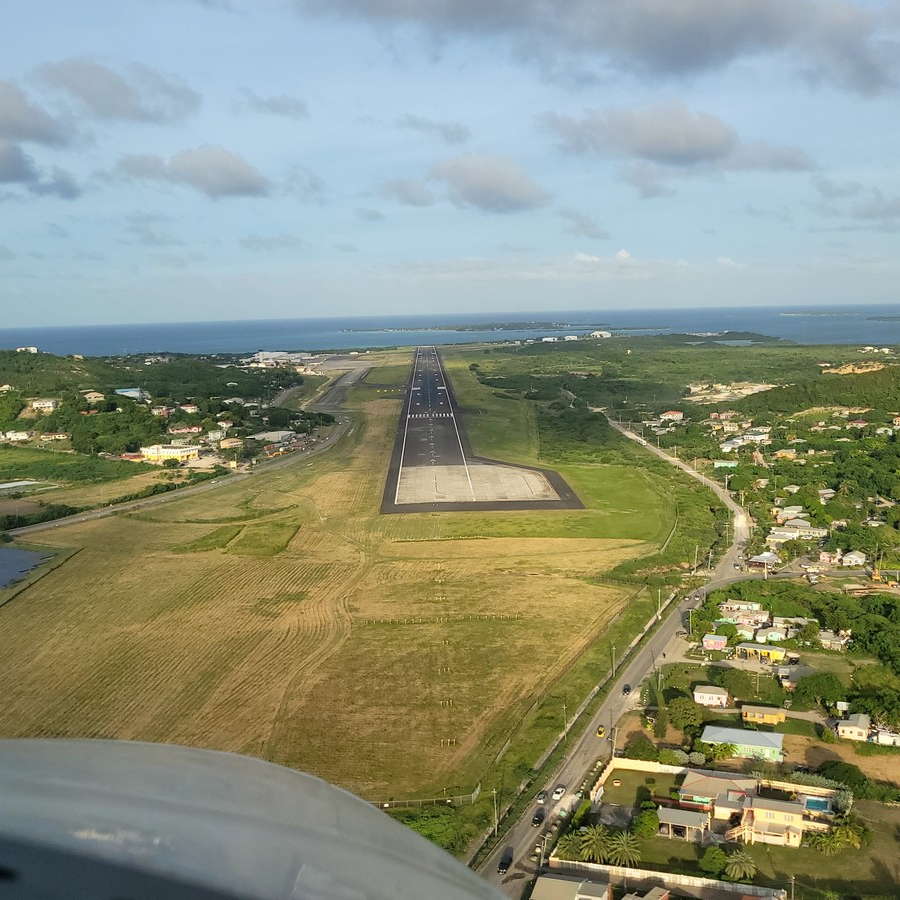
From Dominica we were off to Antigua & Barbuda (one country, two islands). Here we can mention the original plan was to fly to Antigua on the airline Liat … a small company that was down to one plane, and that one was on the tarmac in St Vincent awaiting engine repairs. Tour leader Ryan was told of this in advance and rearranged our transport, as opposed to waiting to see if Liat would fly. (Most of us also said, we didn’t really want to get on a plane whose engine was just repaired.) We wound up on a private charter, and most fun Liza got to ride up front with the pilot. No, she didn’t touch anything!
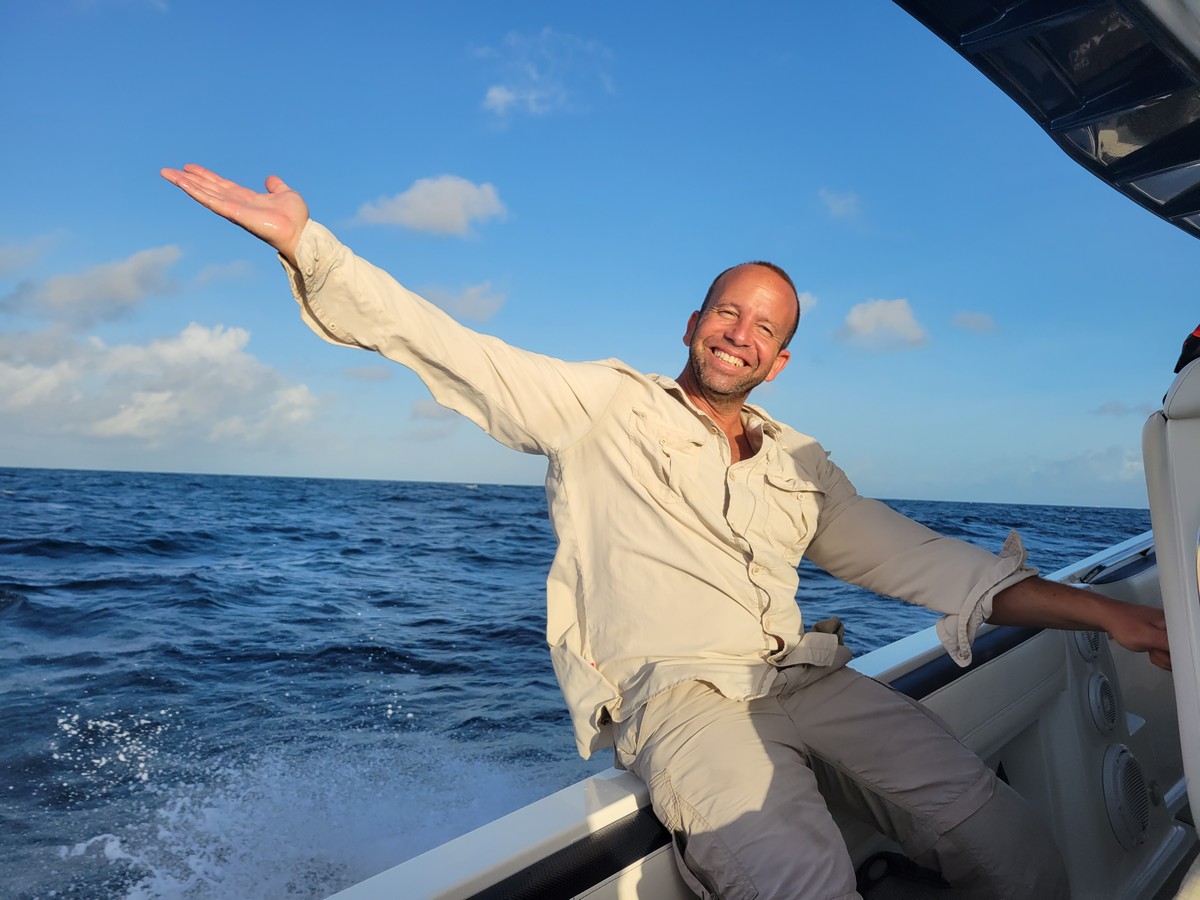
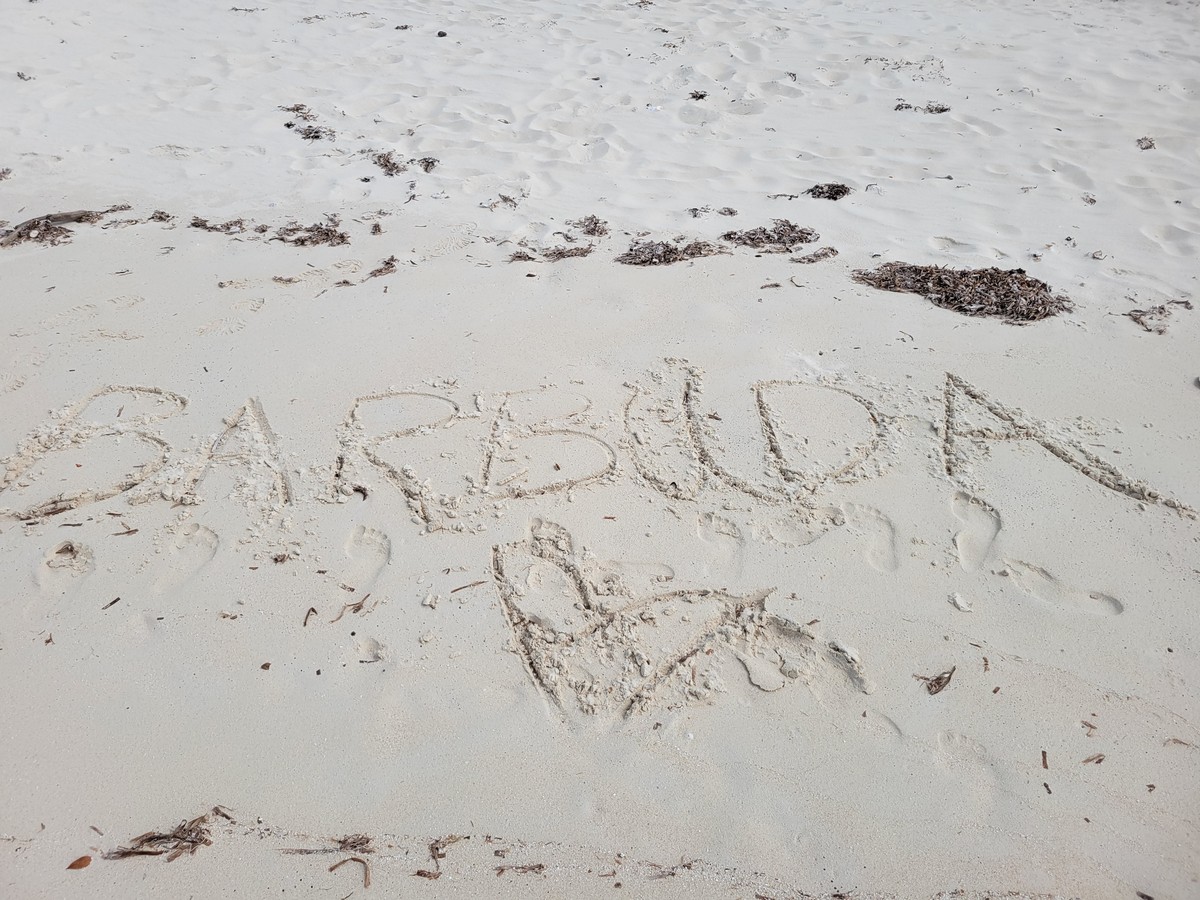
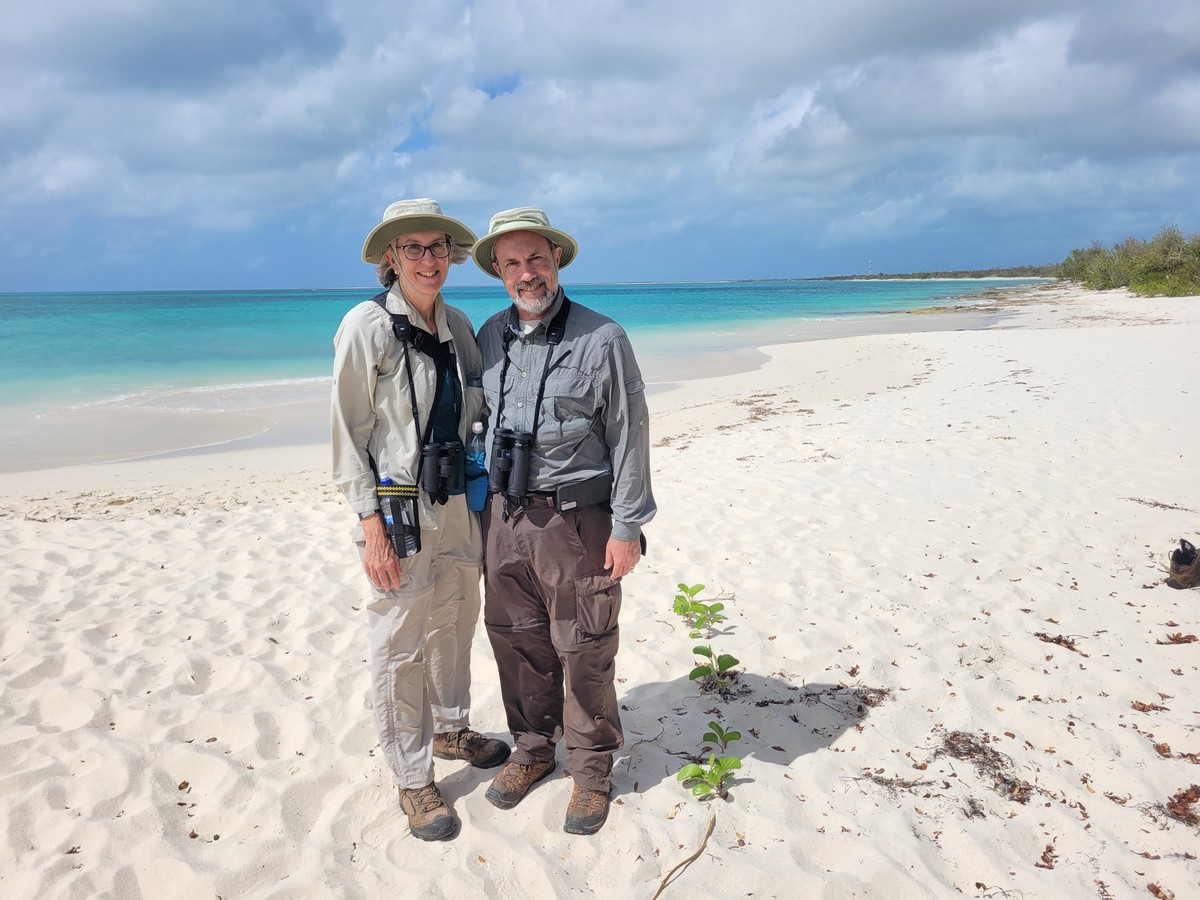
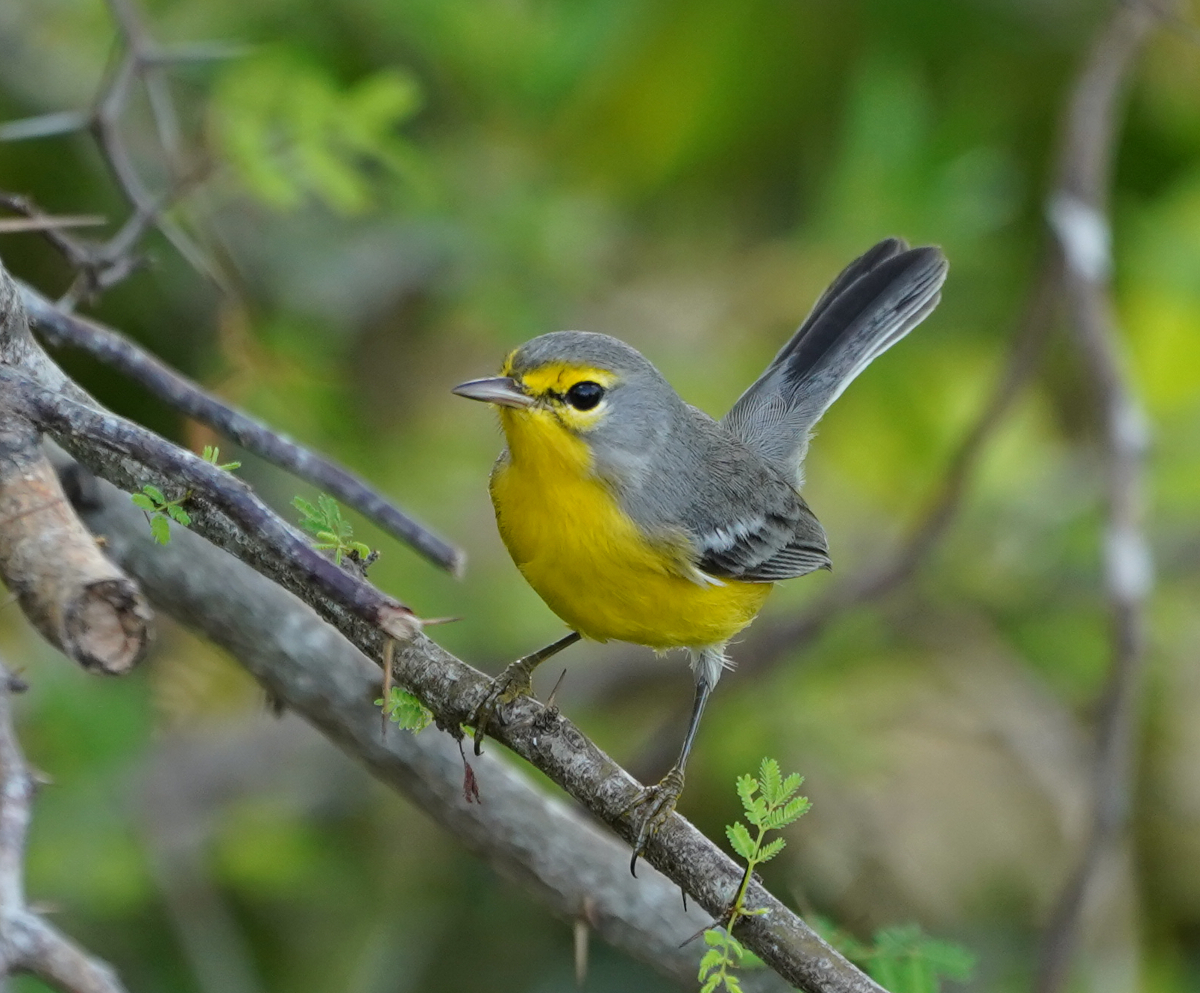
We day-tripped out to Barbuda on a private speedboat. The operators initially didn’t want to go out because forecast choppy seas, but by now the group of “psycho birders” (so named after the rainy day in Dominica) were up for it. Well, maybe some more than others. The usually calm seas were choppy going out and (strangely) rougher for much of the ride back. Still, we had a great day on the island, with wonderful views of a probably endangered (due to development) endemic Barbuda Warbler, a visit to a colony of Magnificent Frigatebirds, and lunch on a pristine beach.
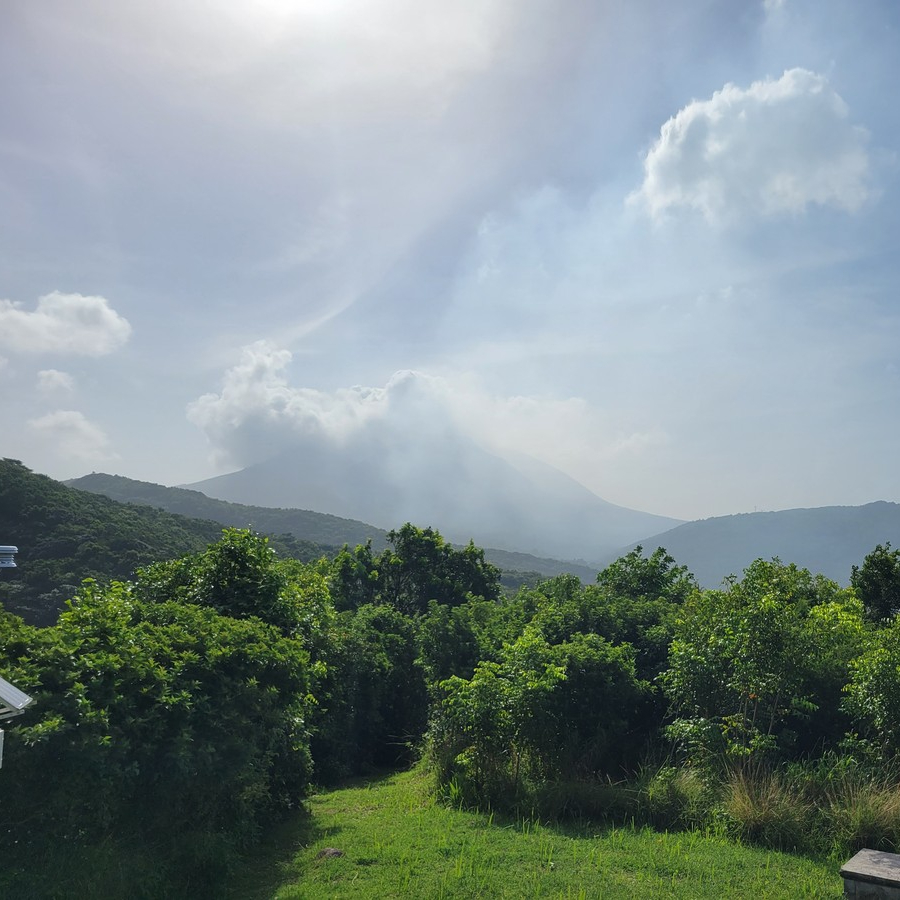
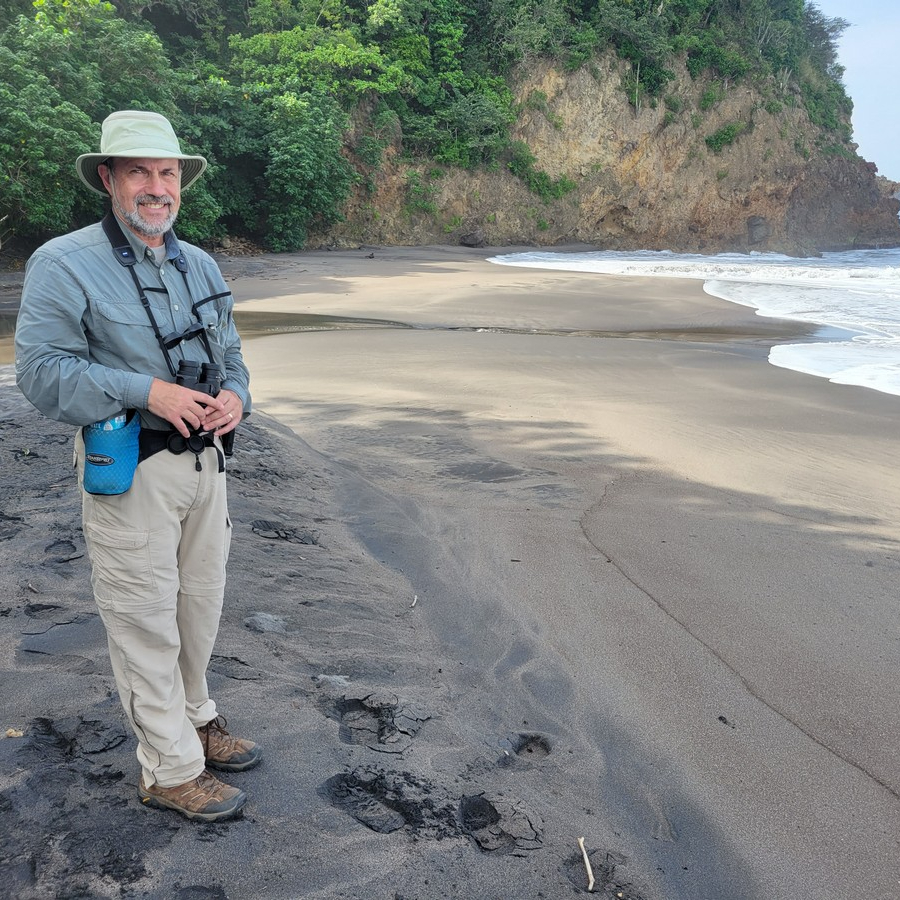
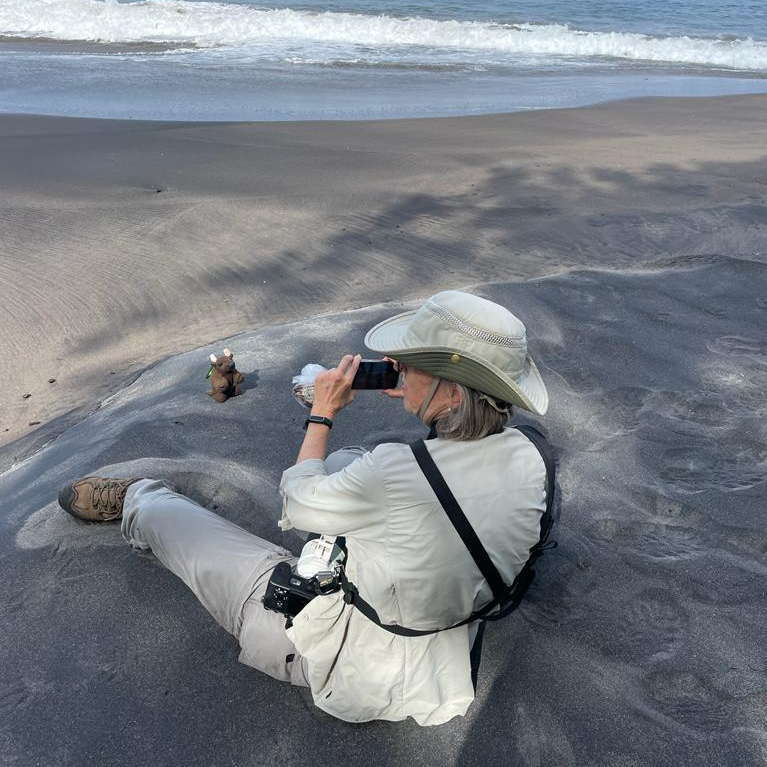
Our next to last night on the tour was in Montserrat (the “Emerald Isle of the Caribbean”). A series of volcanic eruptions starting in 1995 destroyed the capital of Plymouth and rendered half of Montserrat uninhabitable; an exclusion zone remains on the southern half of the island. We were there to see the endemic Montserrat Oriole, but also had time to visit the Montserrat Volcanic Observatory and the lovely Woodlands Beach.
The tour concluded with a last night in Antigua, where we got a few more birds on the grounds of the hotel, and we enjoyed a final dinner with the group. Our flight out the next day was delayed to the point where we would miss our connecting flight to Miami; the original plan was to connect in Miami and continue to Phoenix for the overnight, then on to Los Angeles the next morning. Instead we were rebooked to overnight in Miami and got a nonstop the next day to LA, so while we had another long stretch in the airport in Antigua, it worked out better in the end. Still can’t say I think much of the Miami airport hotel, but it certainly is convenient when your flight the next morning is ultra-early.
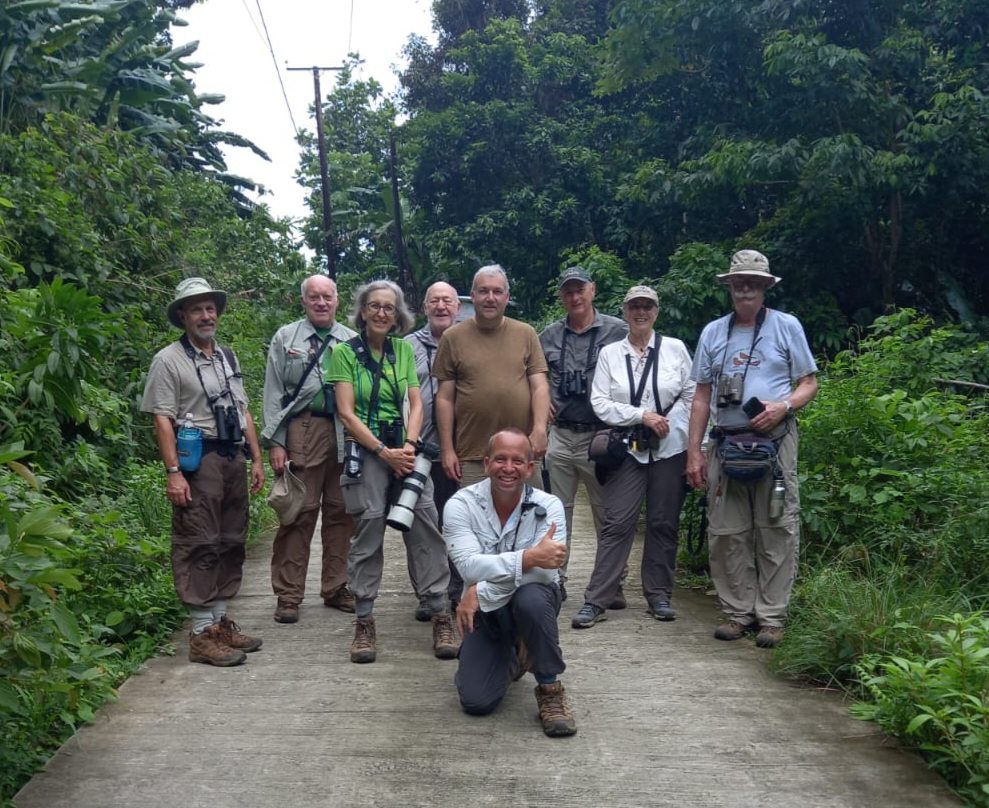
Overall a wonderful trip, lovely weather, yummy food, great company, great birds, and a wonderful tour leader in Ryan. He perservered with an injured knee, sprained ankle, sore back, and kept a smile on his face the whole time – at least to us! We’d happily go on another tour with him, and not just because he said he’d use some of Liza’s photos in the next edition of his book, Birds of the Lesser Antilles. Not even the overnight on benches at the airport in Barbados could keep us down. The only thing I’d say we might not have considered fully beforehand was that going to 9 countries meant a lot of passport control and security checks at airports/ferry terminals. But hey, we got a lot of new stamps in the passport, which is always cool!
Again, to see photos, click here; the full trip report from Wings is here.
© Liza and Robert Weissler aves.org 2000-2026, licensed under the
Creative Commons Attribution ShareAlike 4.0 International License.