
In August 2026 we returned to Europe, this time getting to visit four(!) new-to-us countries – Finland, Estonia, Latvia, and Lithuania – and to make a return visit to Poland. It was a great opportunity to see new sights, try new cuisines, and to do a little more Weissler family history research. Overall the trip was only just over two weeks, a bit short for us these days, just enough for us to decide where (besides Poland) we might want to return.
To skip the narrative and go straight to the photos – including Buddy Bison! – click here. Click any photo below to view a larger version. See also Liza’s food blog.
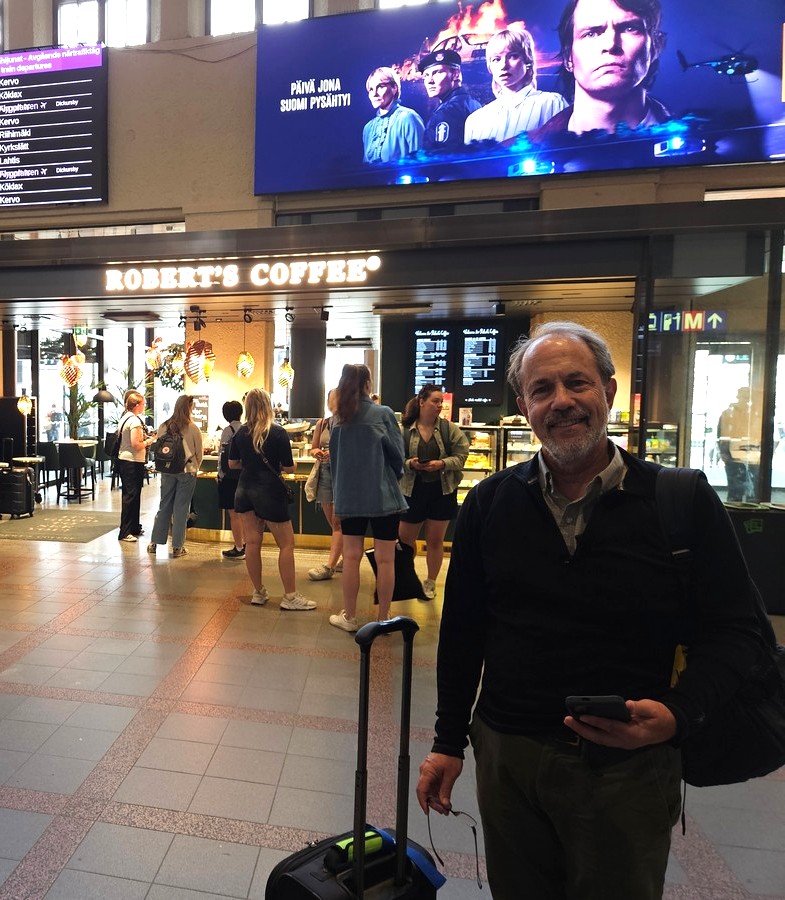
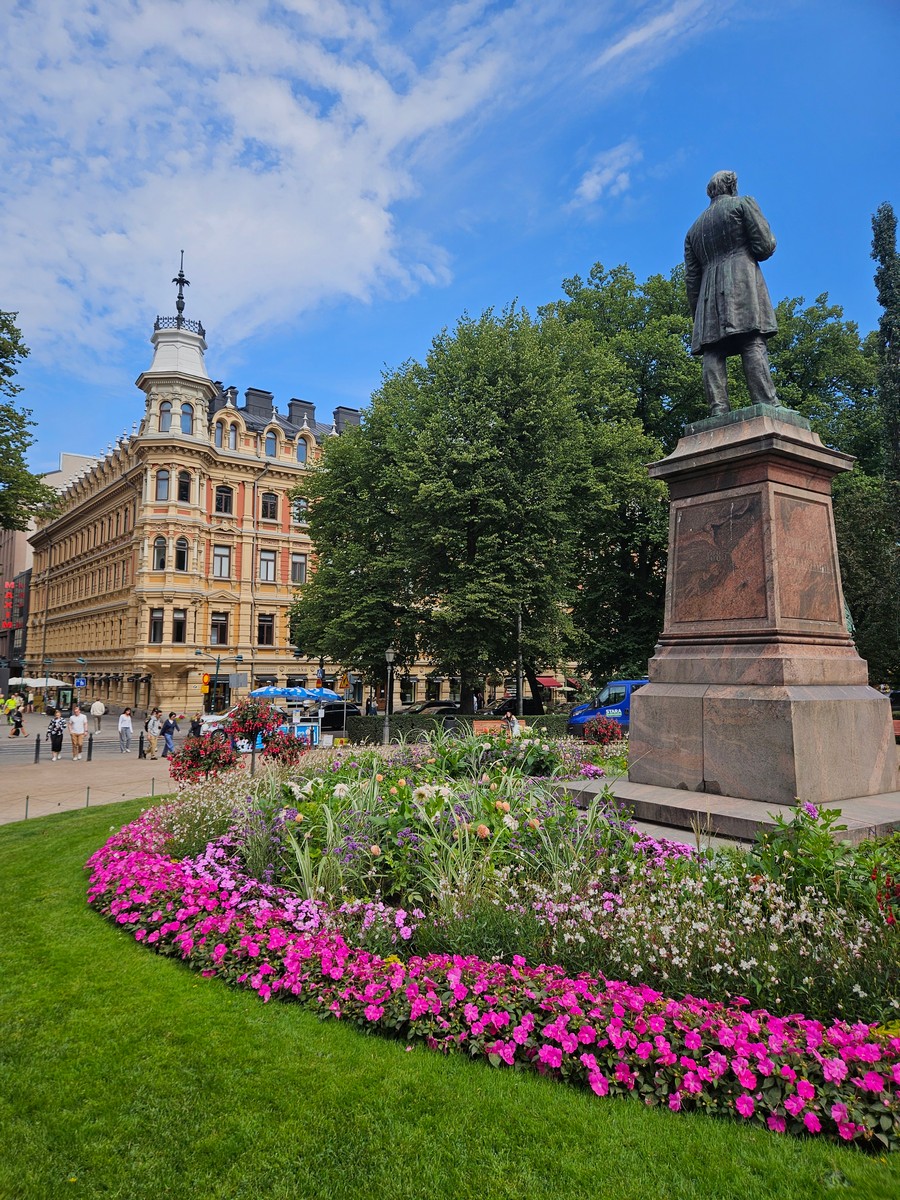
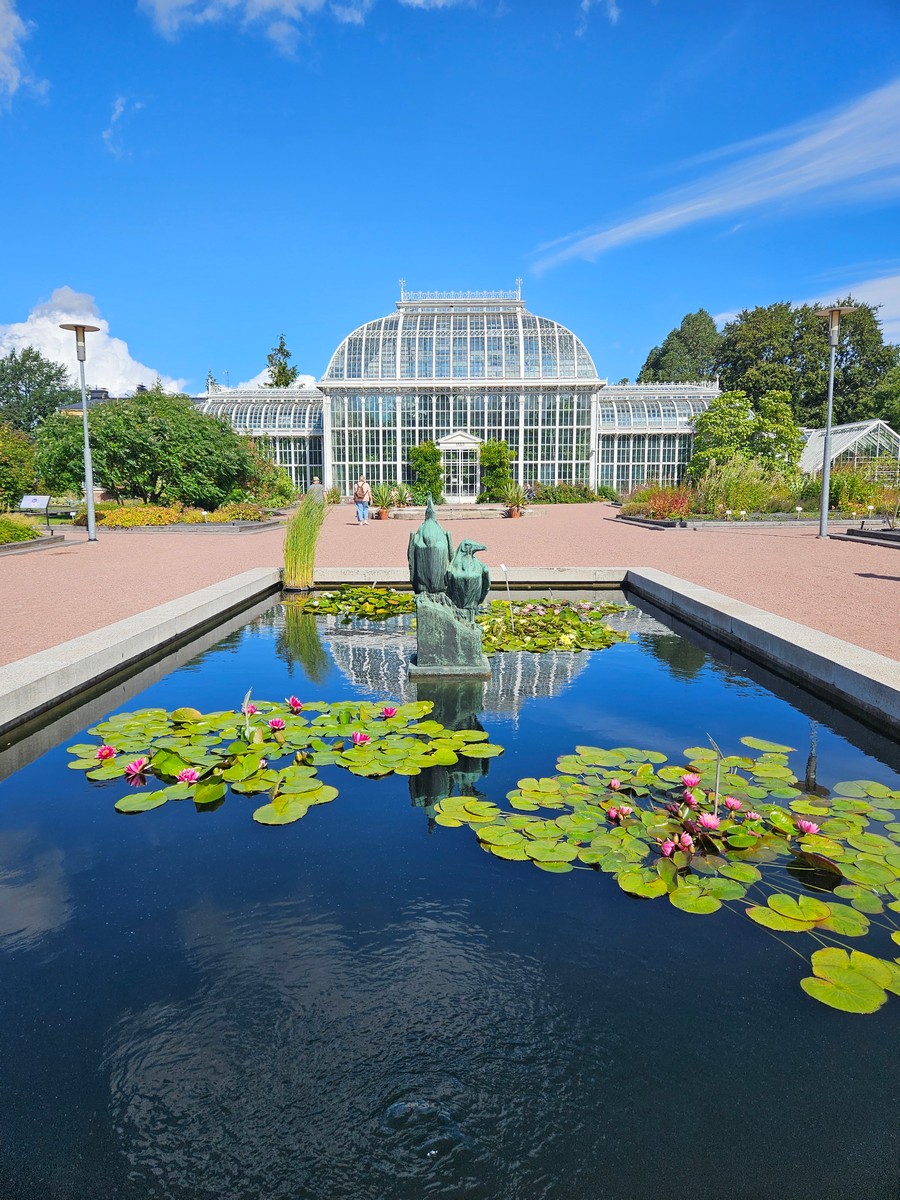
We flew into Helsinki on Finnair and had several days there as the airline changed their schedules, getting us there a day earlier than originally planned. Despite the inevitable issues with sleep and jet lag, we had a good time walking in the city along the Esplanade pedestrian area, visiting the market square, checking out the architecture and the botanic garden, and (a recurring theme) enjoying fine non-alcoholic beer (the US is getting better at this, but the European countries we’ve visited are way ahead in terms of variety, quality, and general acceptability, which might be a side effect of very strict drink/driving laws). And coffee – Finland has the highest per-capita consumption of coffee in the world, up to 8-9 cups per adult per day. It seemed fitting that the most prevalent chain was Robert’s Coffee.

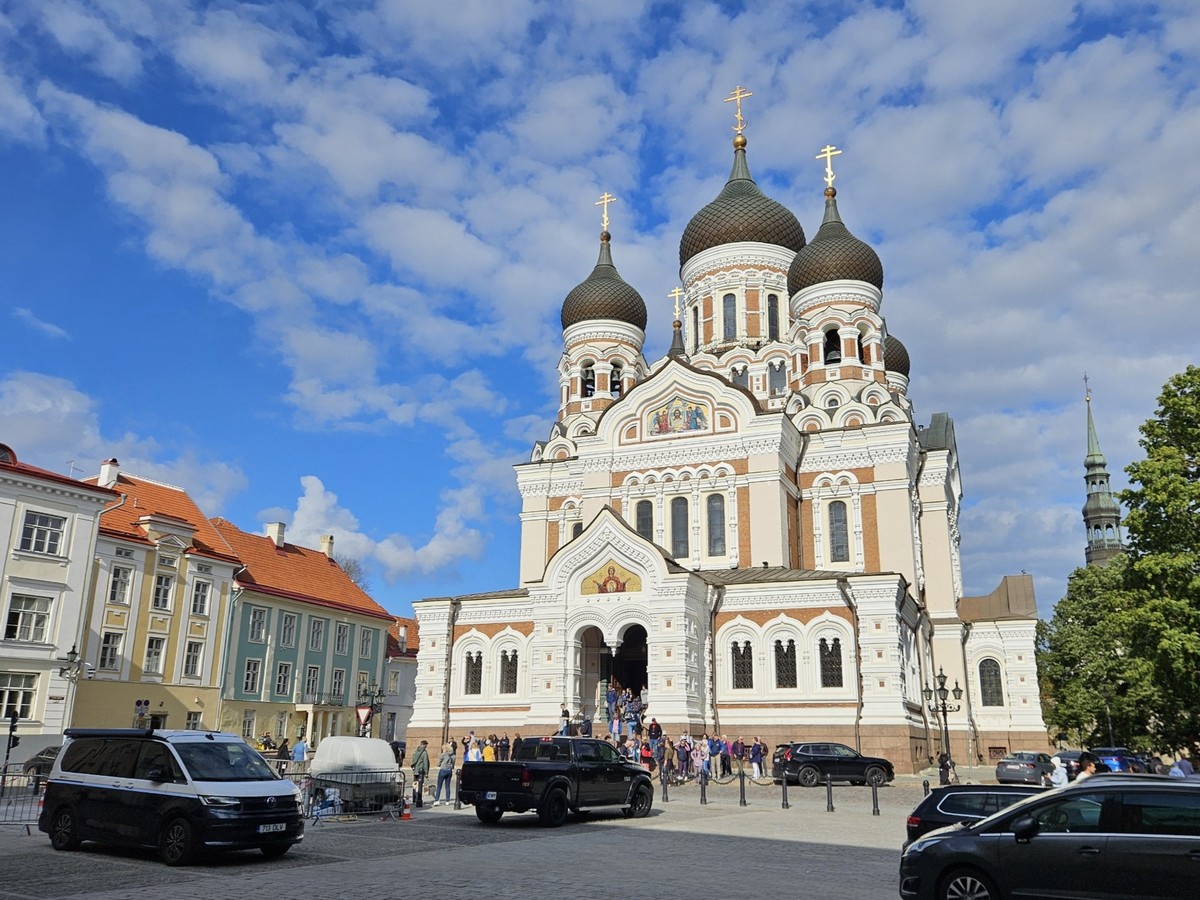
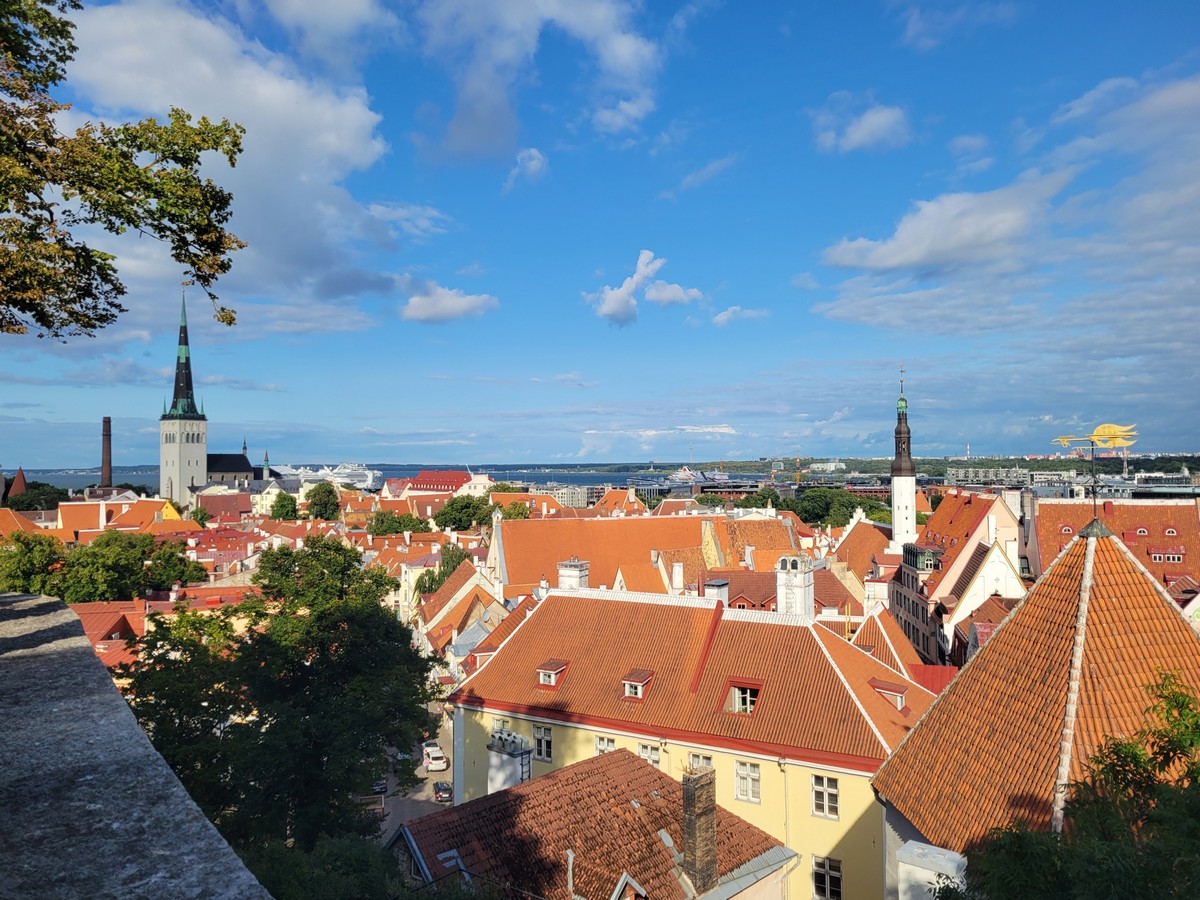
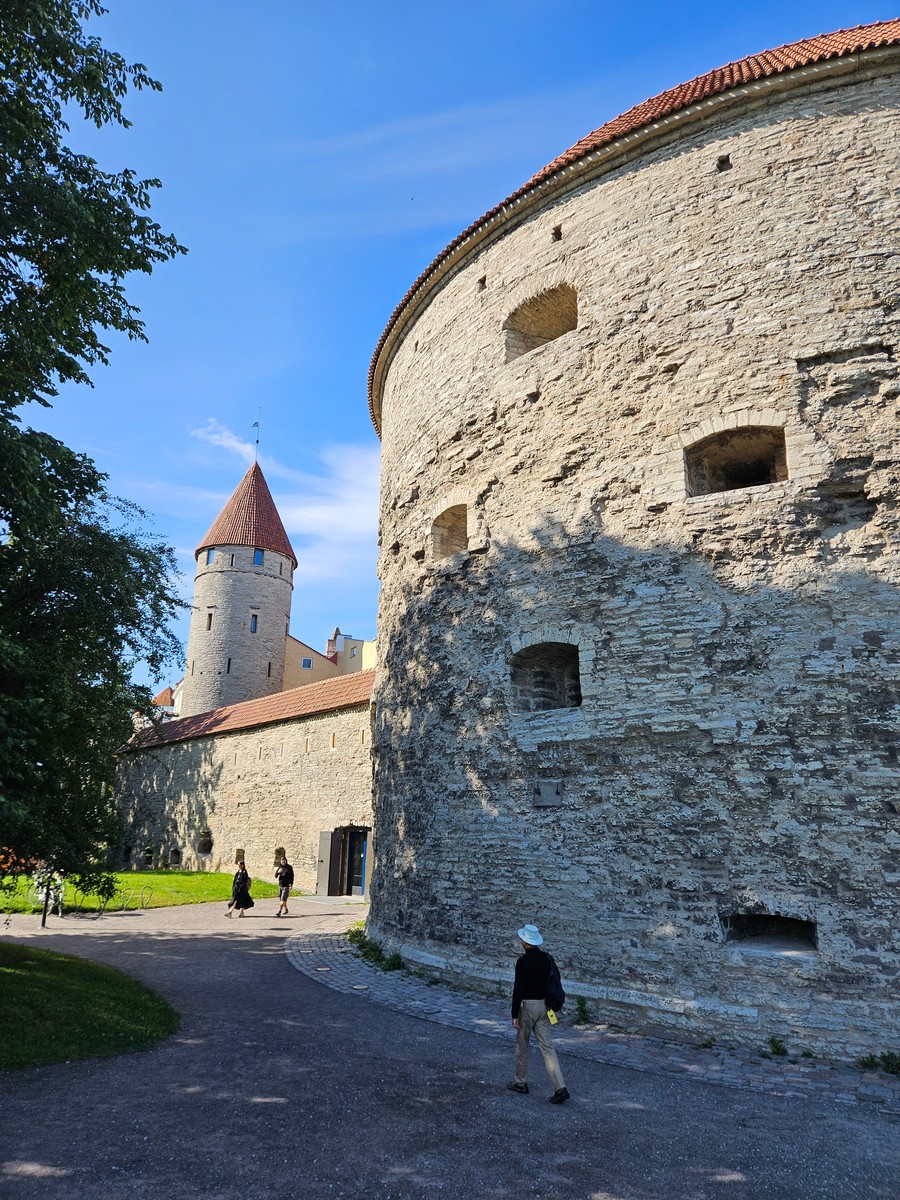
From Helsinki we took the Tallink ferry over to Tallinn, Estonia, a smooth two-hour ride. Day-tripping over to Tallinn is a common thing to do, but we were happy to be staying there so that we could enjoy the city early and late in the day without any crowds. Our hotel was on the edge of the Old Town, a UNESCO world heritage site and a lovely compact walkable area with something beautiful around every corner. Highlights included the Alexander Nevsky Cathedral (eastern Orthodox), the Maritime Museum in the “Fat Margaret” tower, and the Estonian History Museum; Robert also visited the natural history museum while Liza and Buddy checked out the city walls and towers.

Leaving Tallinn, we took a Flix bus to Riga, Latvia. (Buses were our main mode of transport from Estonia through to Warsaw, Poland; the trains were infrequent, not convenient, and cost considerably more.) The bus ride was comfortable, even if it was delayed about 40 minutes due to some road construction. Our hotel, once we found it 🙂 was once again on the edge of the Old Town, in a pretty funky area that seemed more popular with locals than tourists. It had the potential to be noisy at night but our room was quiet enough.
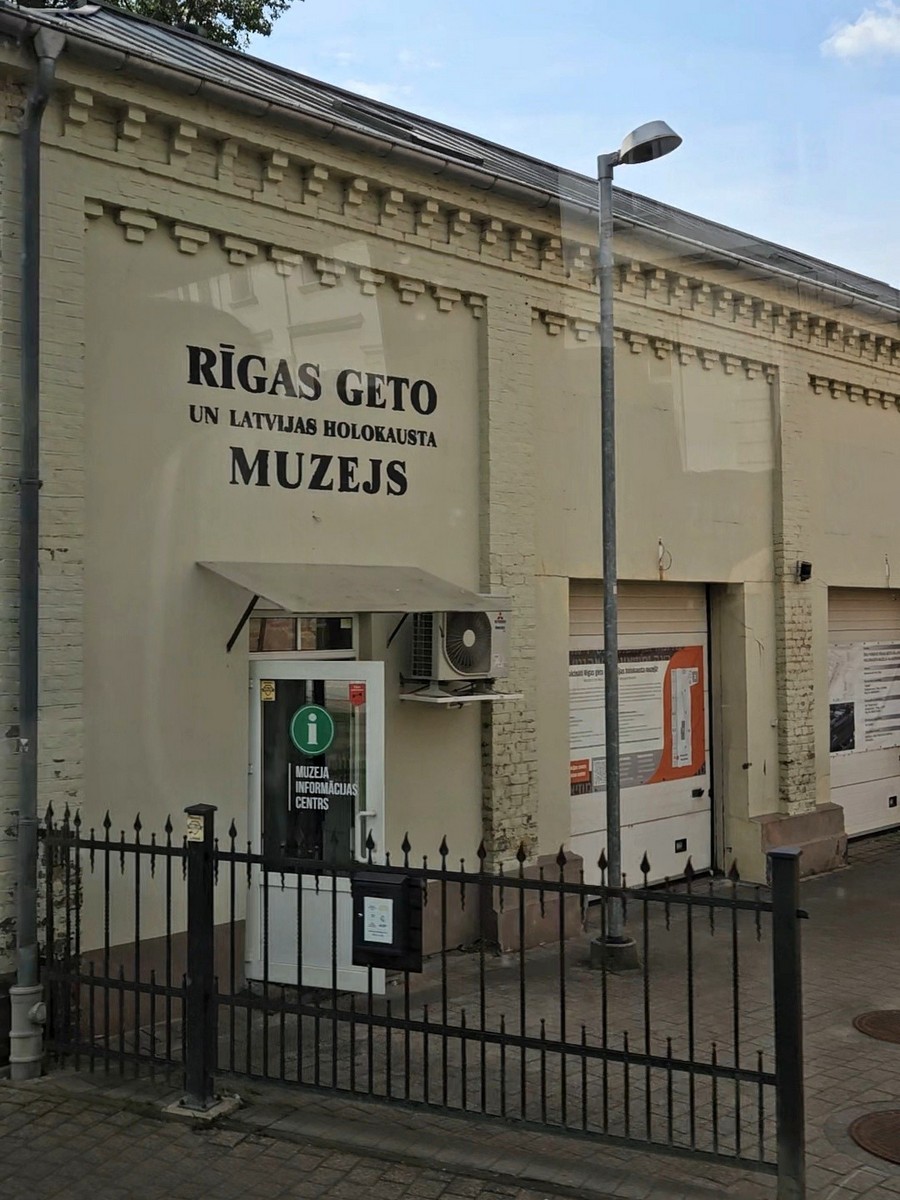
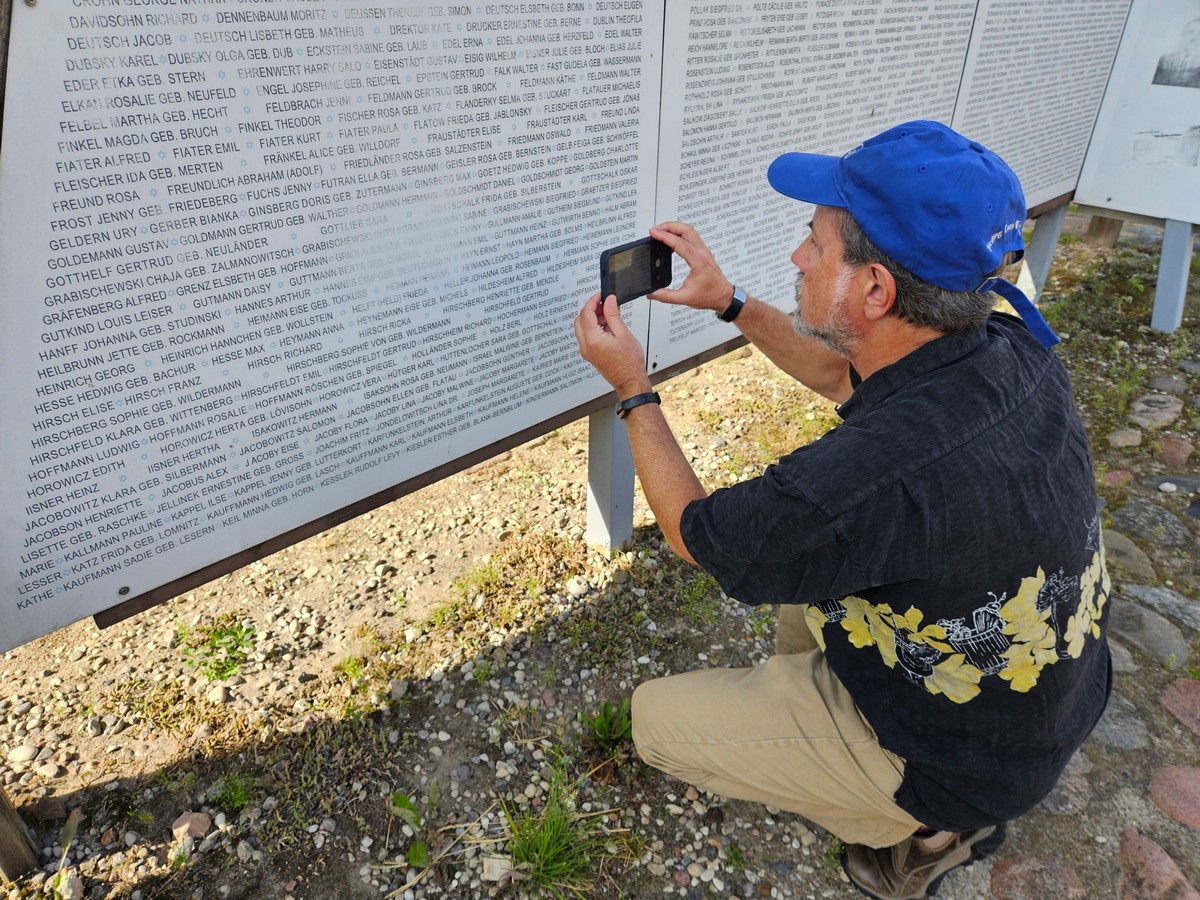
After settling into the hotel we walked over to the Riga Ghetto Museum, not far from the bus station and very large central market. We had a few hours there, which was a very good thing as it was closed the next day (Saturday) and we were leaving on Sunday. The museum featured a wall of remembrance outdoors with the names of people transported to Riga organized by date; we found Ernst Hayn and his wife Martha nee Solms, Ernst being a grandson of Abraham Hayn and Rosalie Koeniger (Robert’s third-great-grandparents). The interior of the museum included an exhibit about the SS St Louis, which included the boarding pass for Walter Weissler, a great-great-grandson of Nathan and Blumel Weissler (also Robert’s third-great-grandparents).
Riga was in the middle of a festival celebrating 825 years of existence (considerably older than Helsinki, which only dates back to 1550, and was founded to compete with Tallinn). On our walks we passed a lively music performance in the park along the river and stopped to listen for awhile. We visited the Nativity of Christ orthodox church (Seinfeld fans, reference the Latvian Orthodox Church…if you know you know), and also the National History Museum in the Riga Castle. More music was on offer in the square in front of the astronomical clock; we heard a fine bass singing Ave Maria.
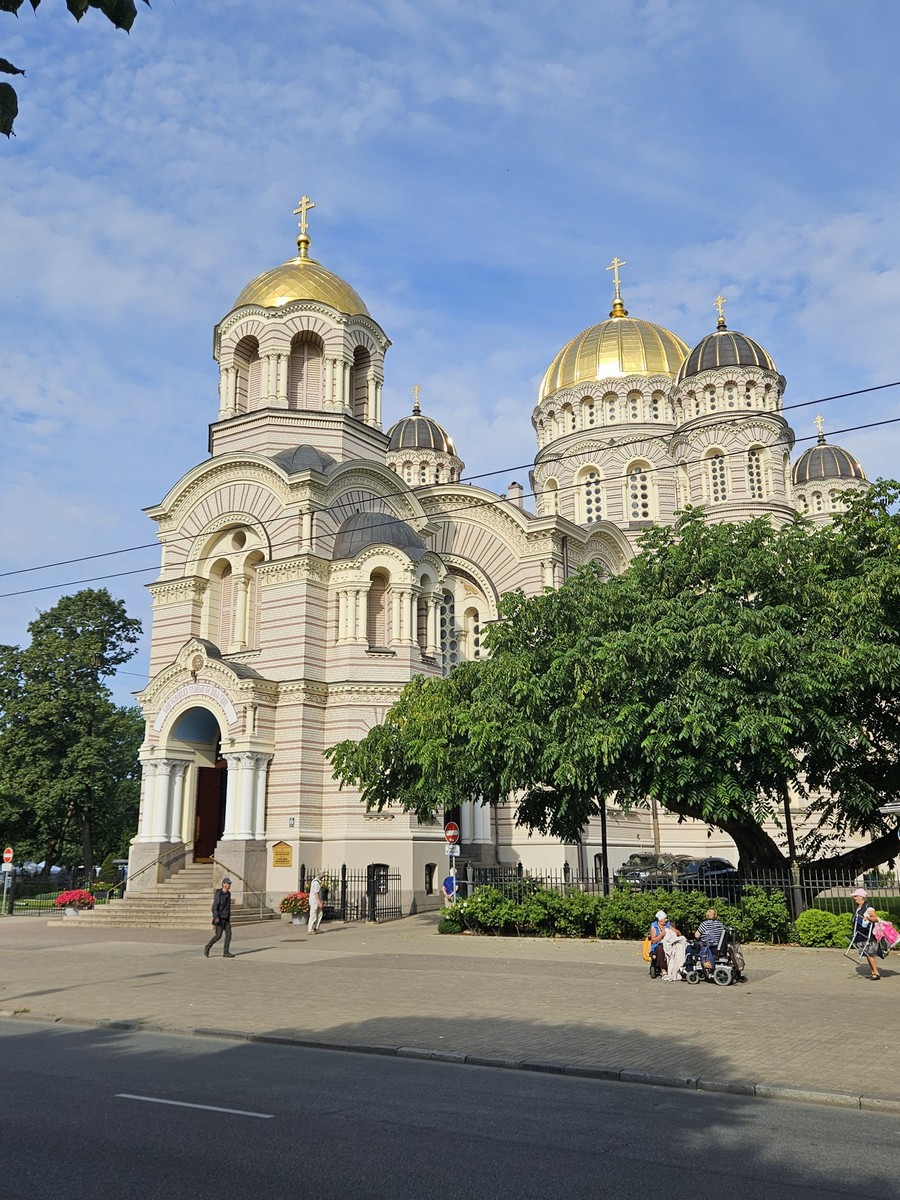
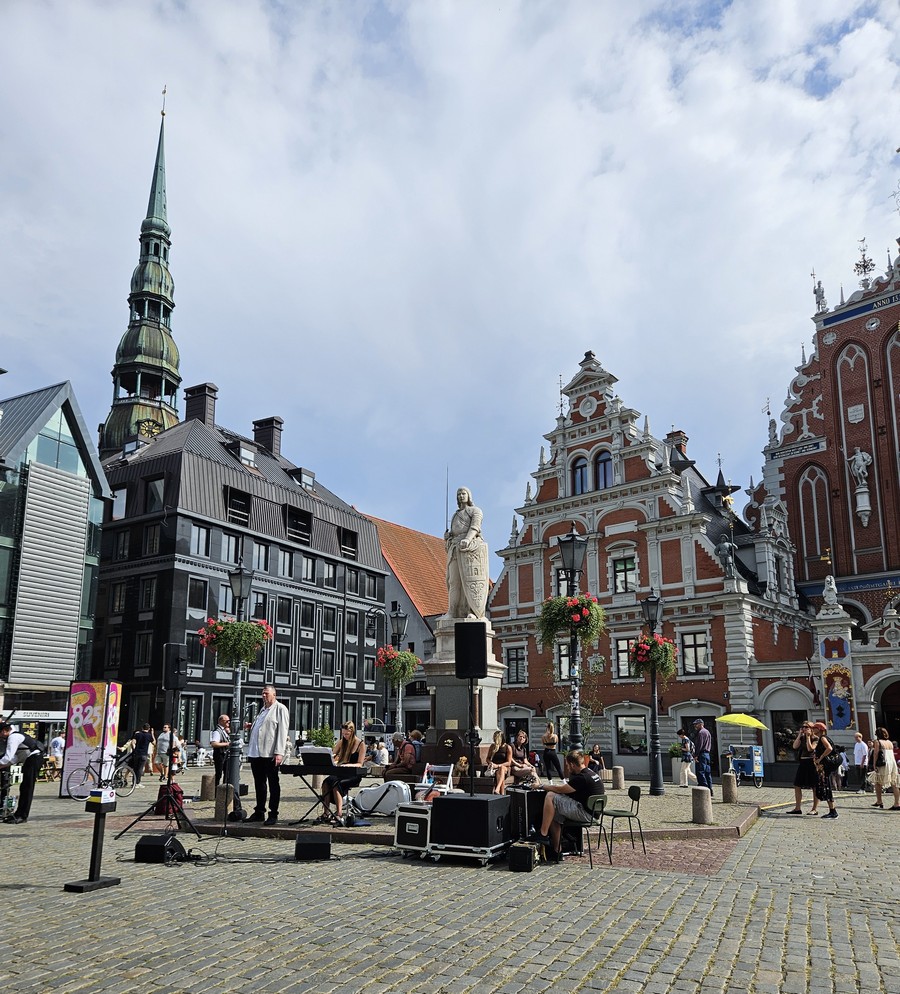
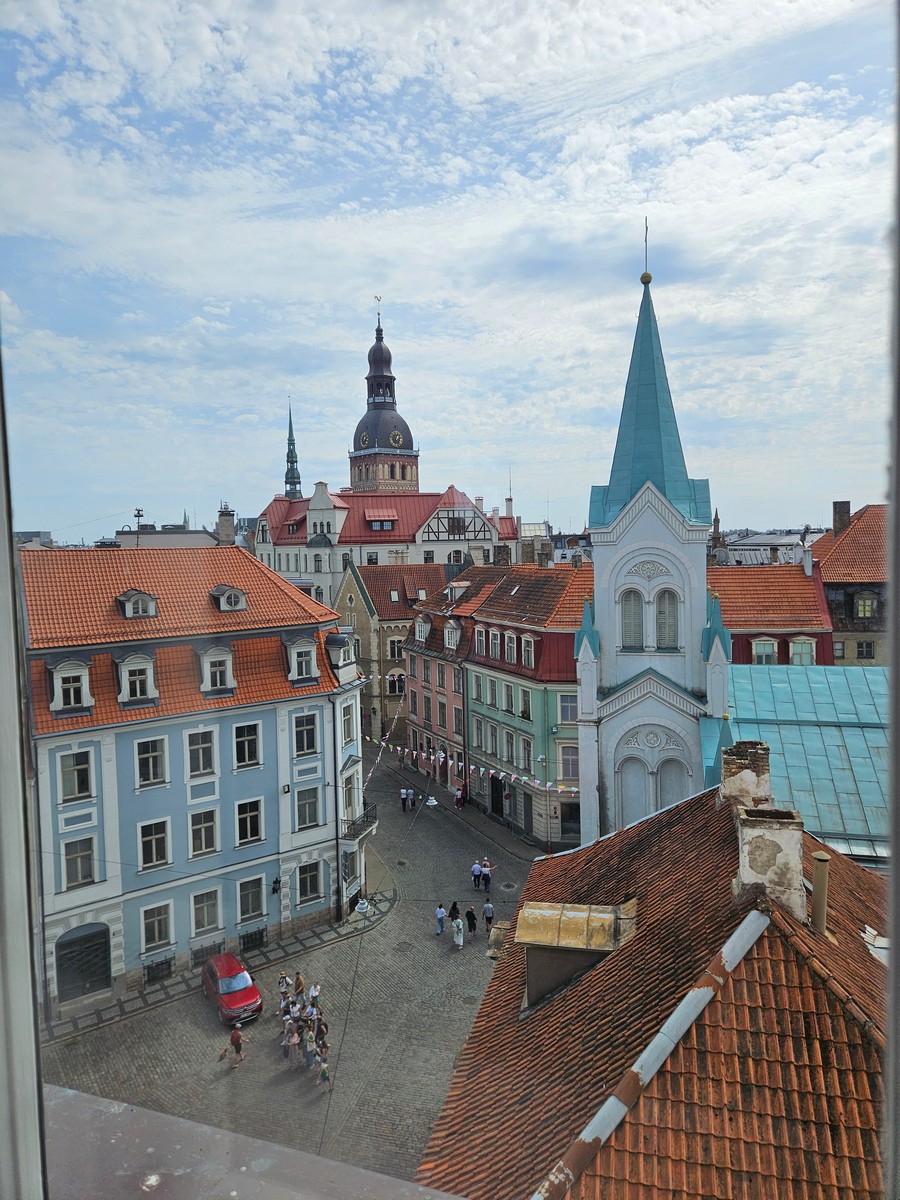
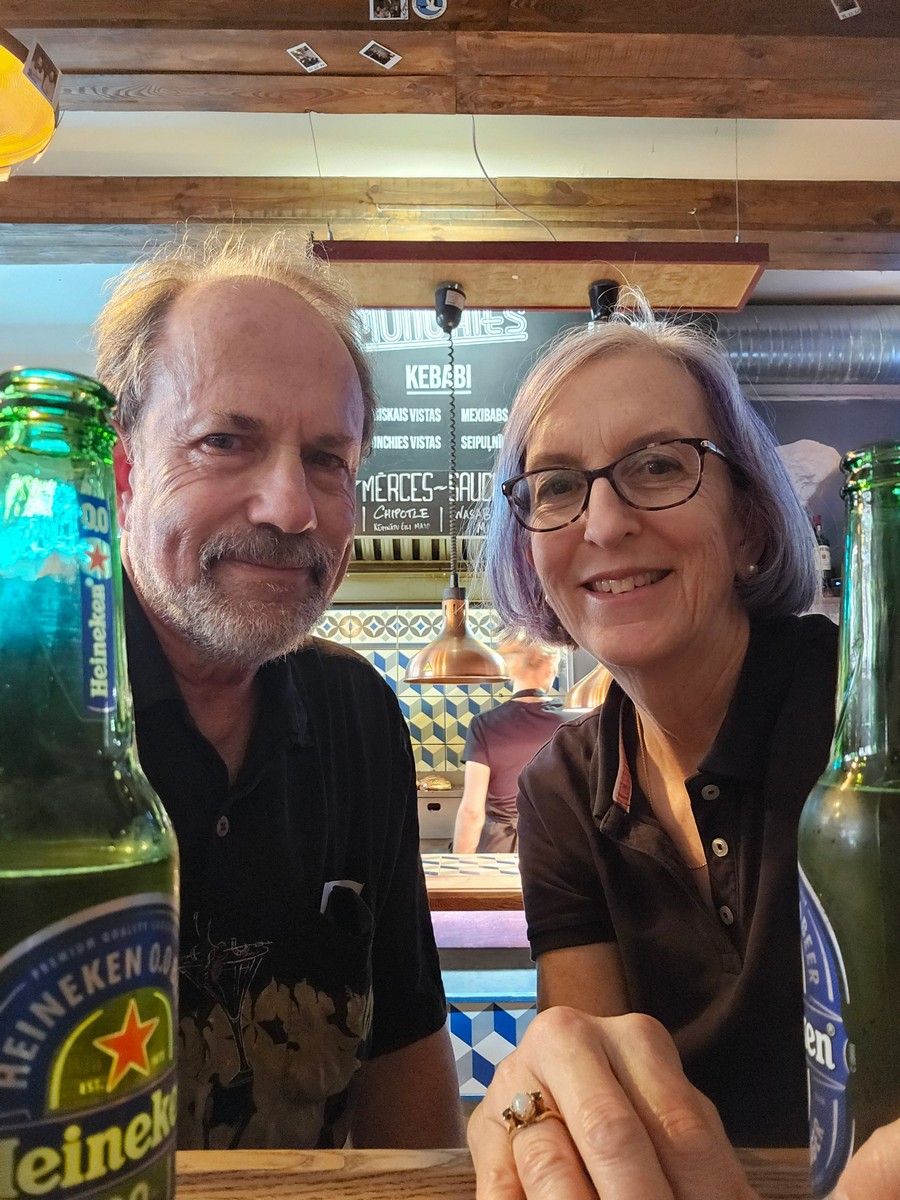
[On a side note, it seemed to us that Riga has barely come to grips with its Jewish heritage. They do have the ghetto museum, but otherwise the history seems to be glossed over. In the old town we found a small sign describing where the ghetto actually was; another building near our hotel had a little plaque on it about a woman who had hidden 7 Jews and was discovered (some were shot, others were tortured in prison). The national history museum acknowledges the different religious communities that co-existed but says nothing about the ghetto or its eventual liquidation. One synagogue still exists – which we were unable to visit as we walked past it on Saturday – apparently the only reason it is still there is because it was too close to other buildings for it to be burned down.]
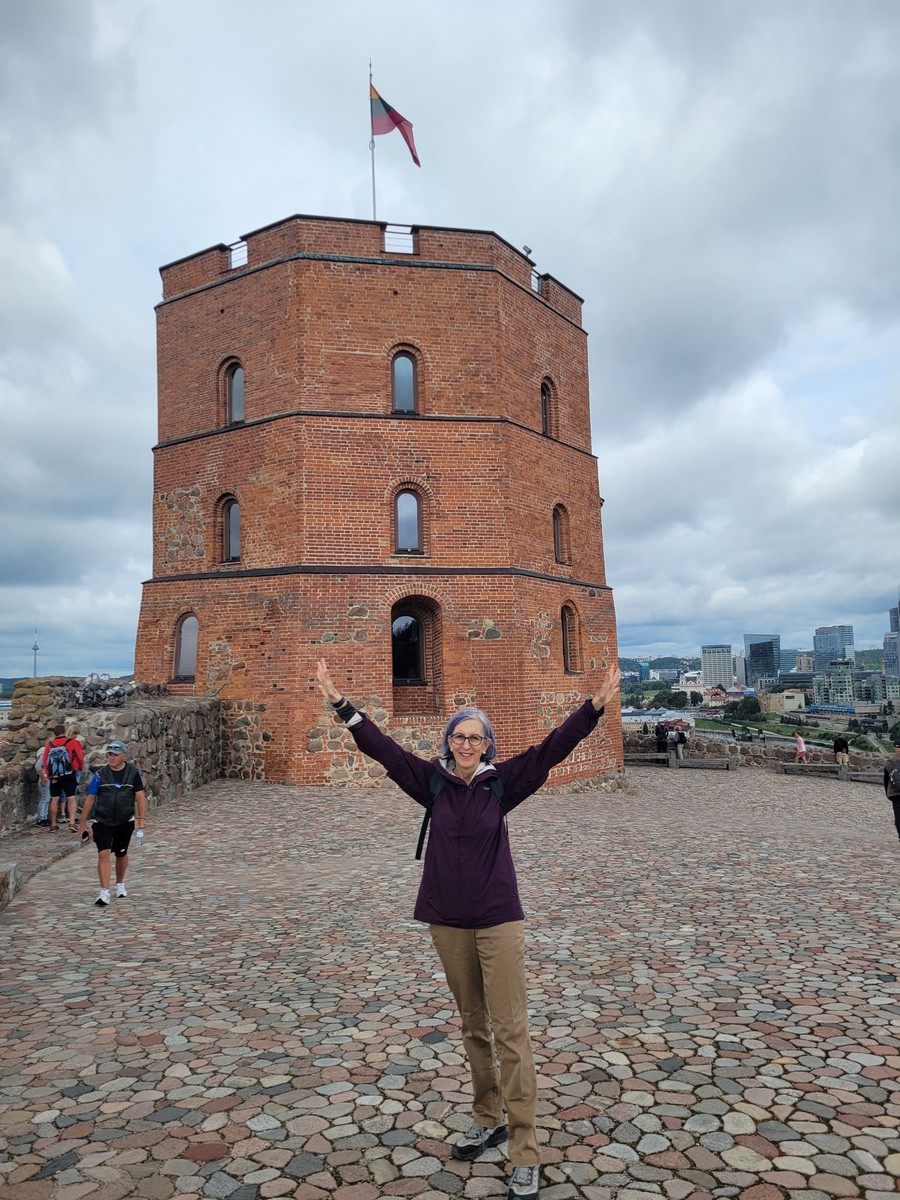
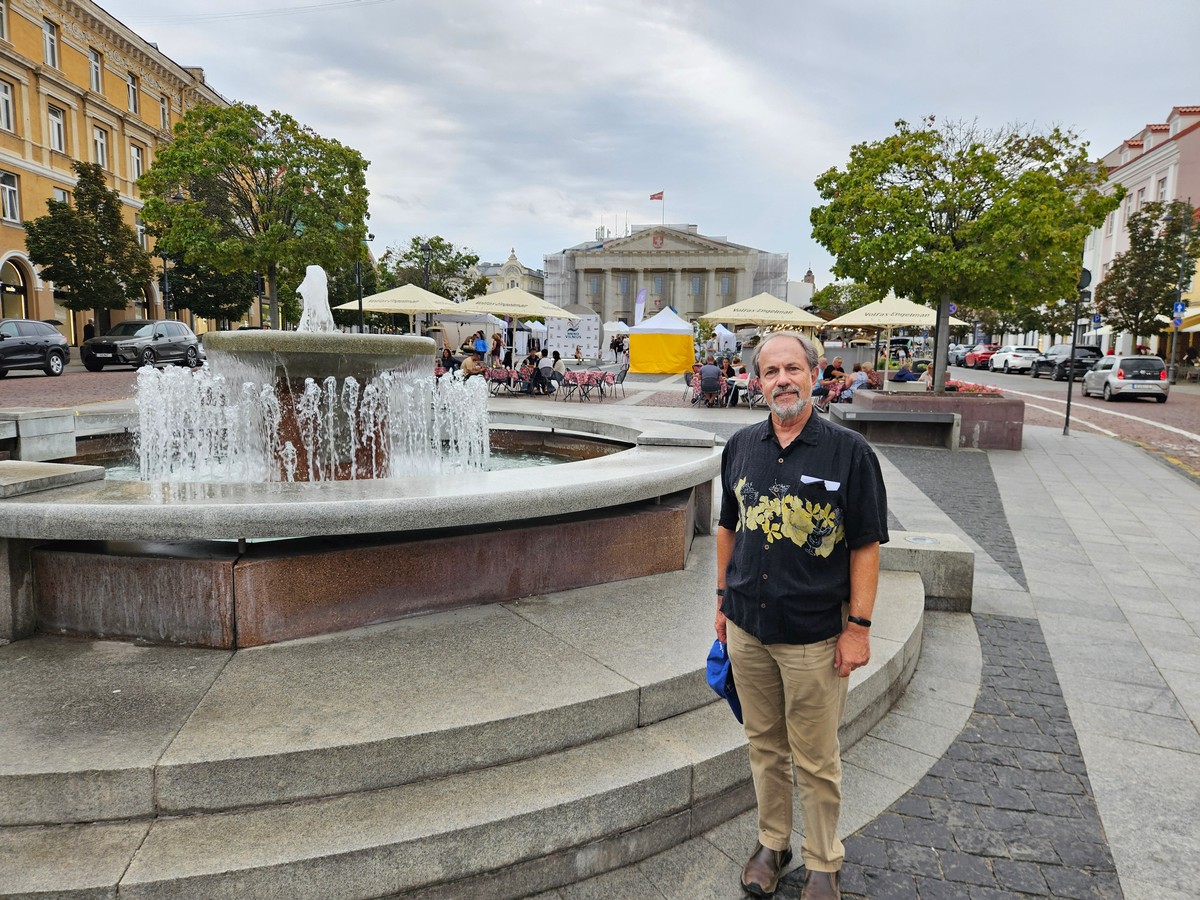
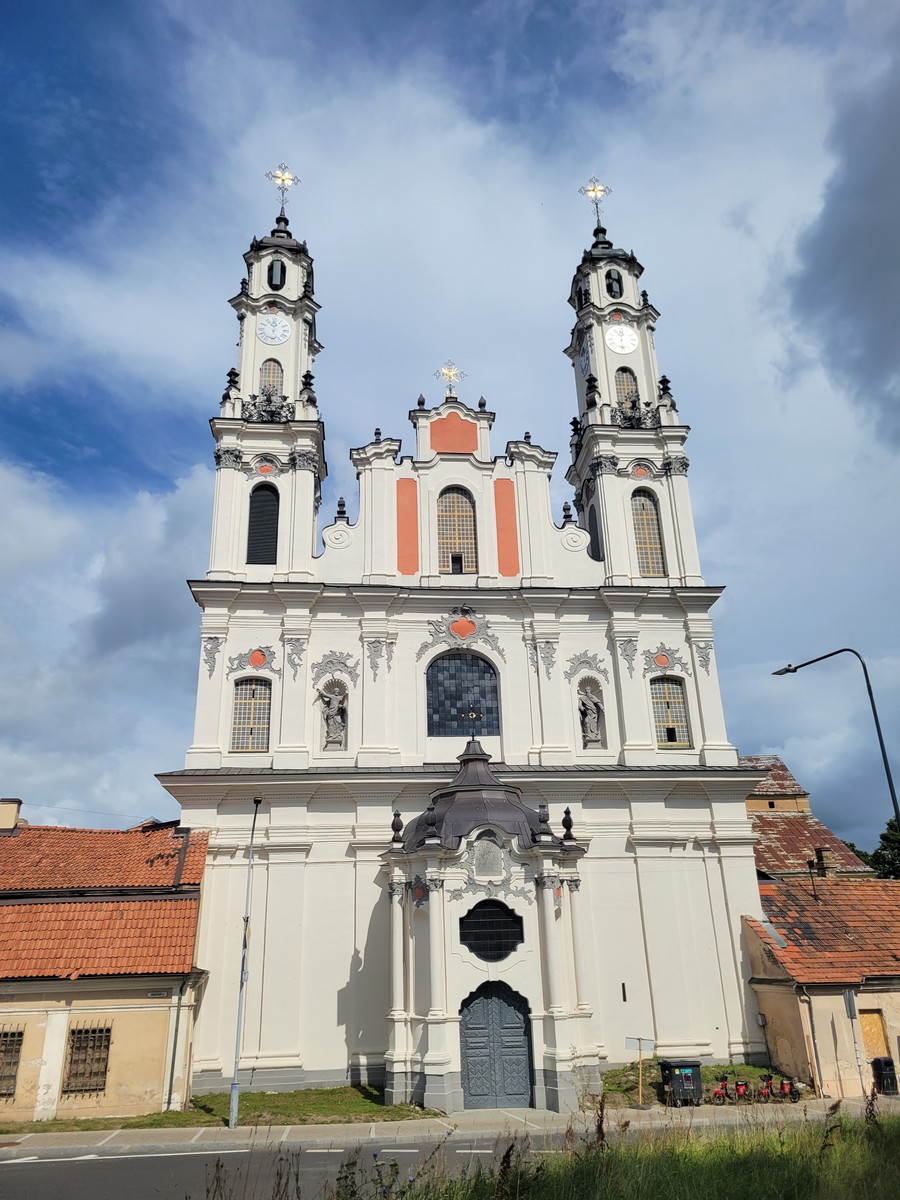
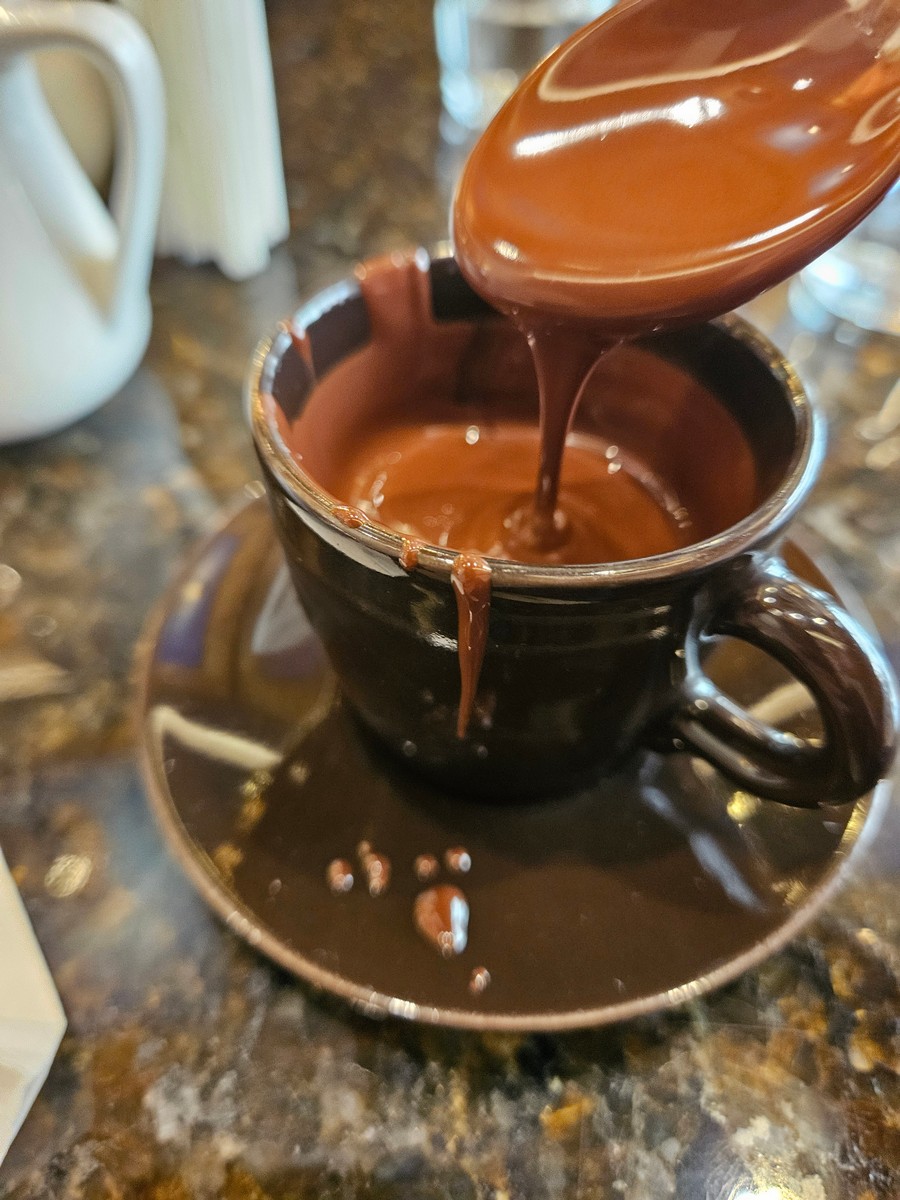
Leaving Riga, again by bus and fortified with a few purchases from the central market, we continued on to Vilnius, Lithuania. Another comfy ride, despite the burly fellow across the aisle from us who needed a shower and drank a six-pack of beer on the 4 hour journey. :-0 Our timing of visiting Vilnius put us there on a Monday, when all the museums were closed (oops), so instead we were content simply to walk. Up to Gediminas’ Tower via the Bernadine gardens to start, taking the funicular up and walking down; “second breakfast” of hot chocolate, literally just melted chocolate like a fondue at a Belgian chocolate shop in the old town; and more walking to take in many churches and admire the architecture.
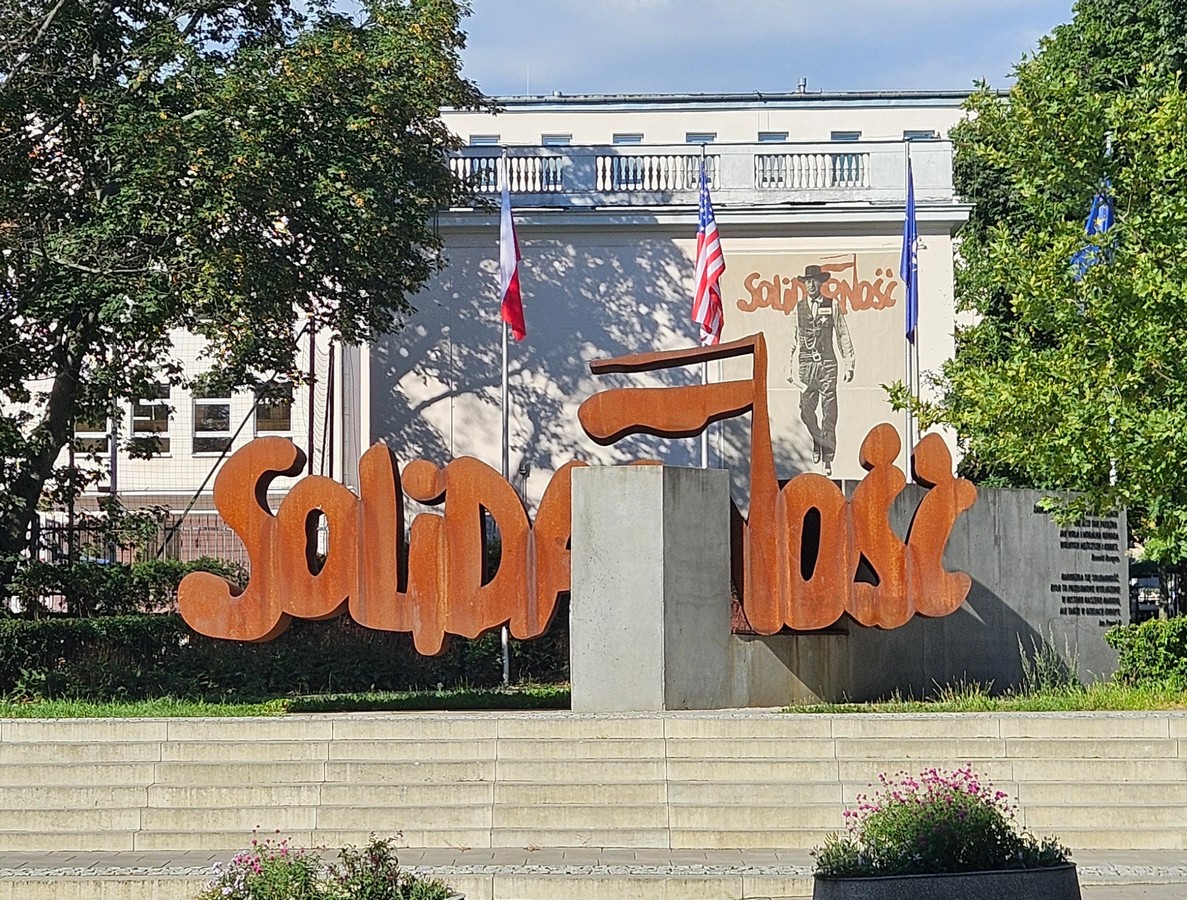
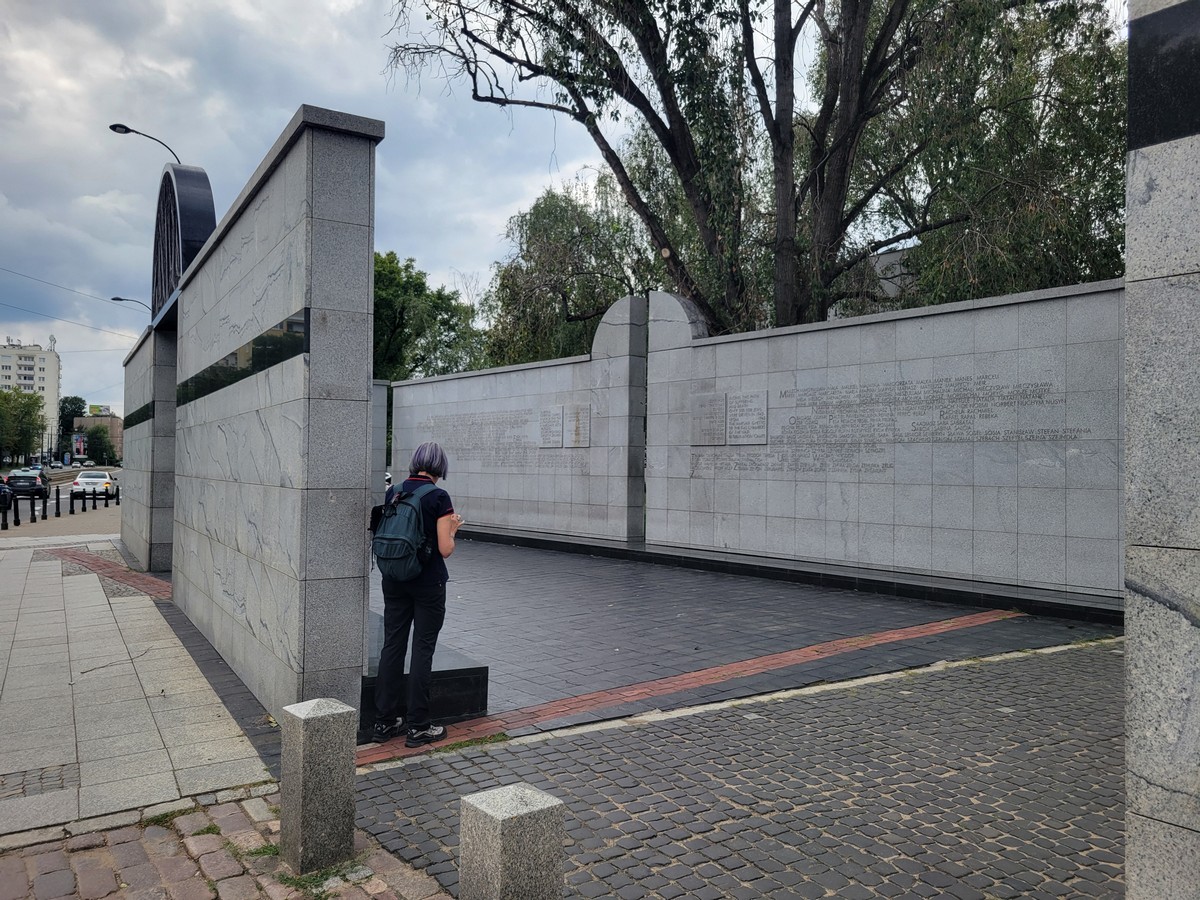
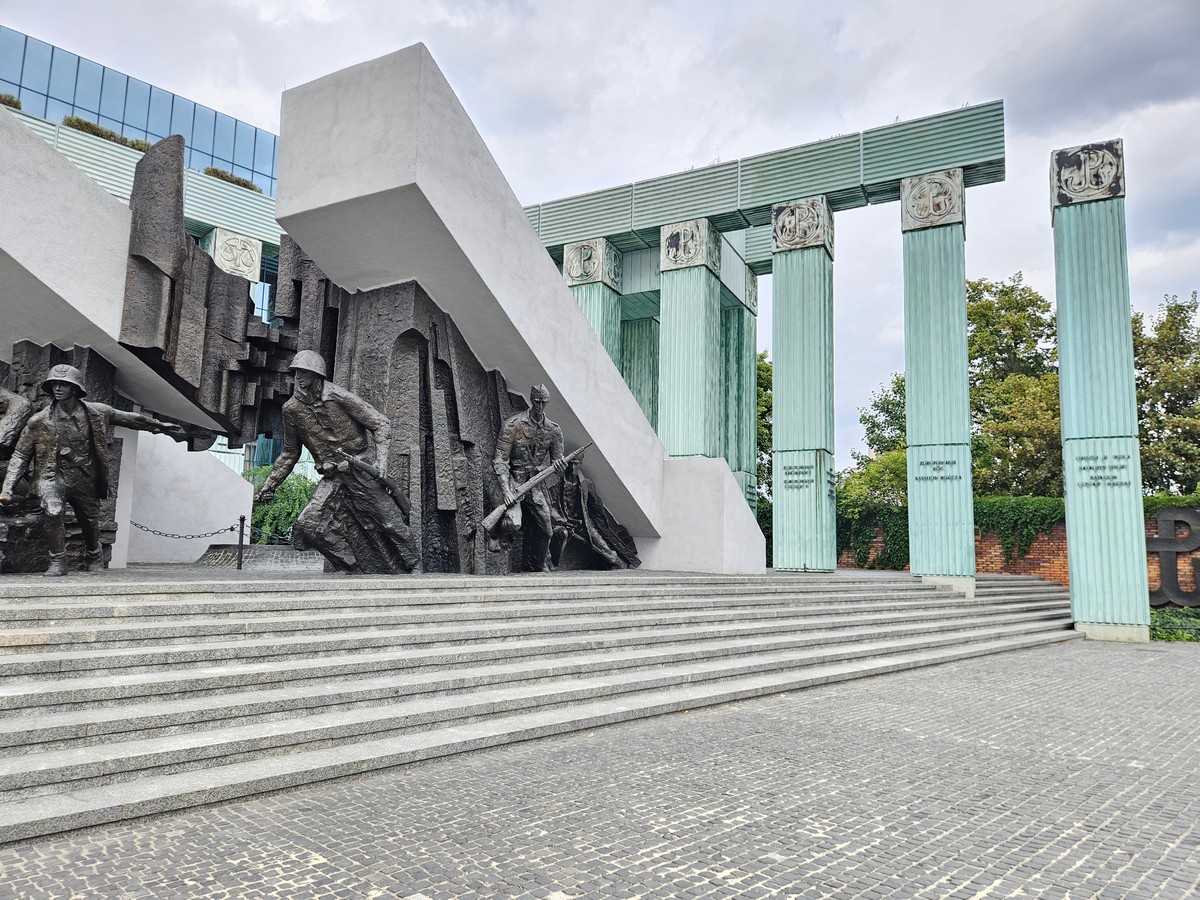
Our last bus ride took us from Vilnius to Warsaw, Poland, about an 8-hour ride. It was a rainy and cool day, just as well to be in transit. We also walked everywhere we visited – but only because the ticket machines in the metro station didn’t work with our credit card, and the ATM didn’t work either to get out some Polish zlotys. Close to our hotel was a monument dedicated to Solidarność (Solidarity) featuring an image of Gary Cooper from High Noon, but instead of a gun he’s holding a ballot; the image from the 1952 movie was used in the 1989 election. We visited the Jewish History Museum, and also a few sites in what was the Warsaw Ghetto, including the Umschlagplatz (from where people were deported), the KGB building, and a Warsaw Uprising monument. A lot of walking but it made for a very satisfying day.
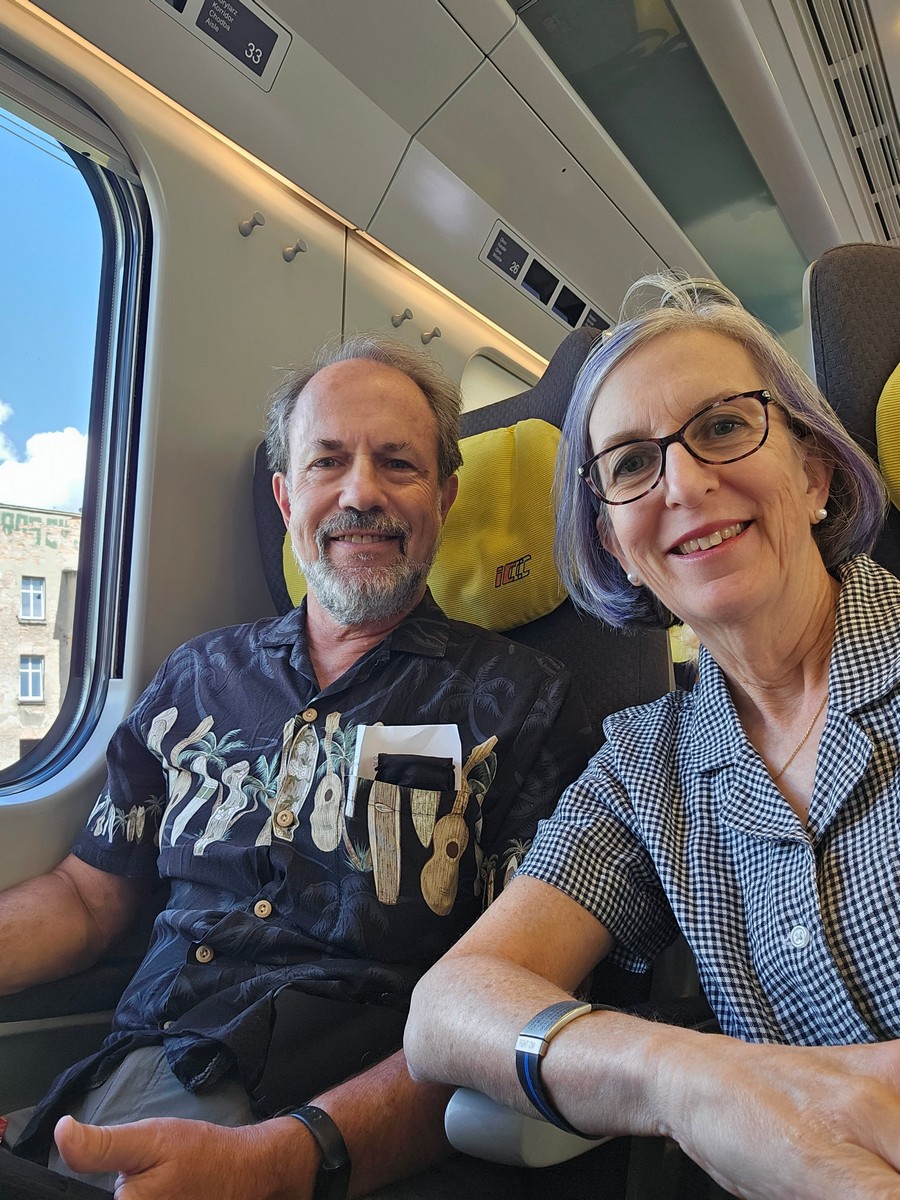
From Warsaw we took a train to Katowice, after buying some snacks at a nearby Lidl market and having our first chatty Uber driver (a friendly Belorussian). Liza had bought first class train tickets (short ride, not expensive, why not) and as we usually don’t do that, didn’t realize that the tickets included food and drink. (We made the same mistake in Spain some years ago…we need to travel first class more.) So we packed up our goodies and enjoyed the train meal, which was quite good. The weather was rainy/windy so we didn’t even go out to explore on arrival, opting to stay in the hotel for dinner.
The next day was our much anticipated visit to Mysłowice, the ancestral home of the Weissler family. Robert’s third great-grandfather Nathan Weissler moved there in about 1815, and served for 21 years as the rabbi until his death in 1837. Our day was organized by the president of the Mysłowice Historical Society Jakob Lustig (MTHJL), Bogusław Polak, and co-hosted by MTHJL and the Urban Lab Mysłowice. To read about our day and see photos of our visit, click here to see our post on our genealogy website.
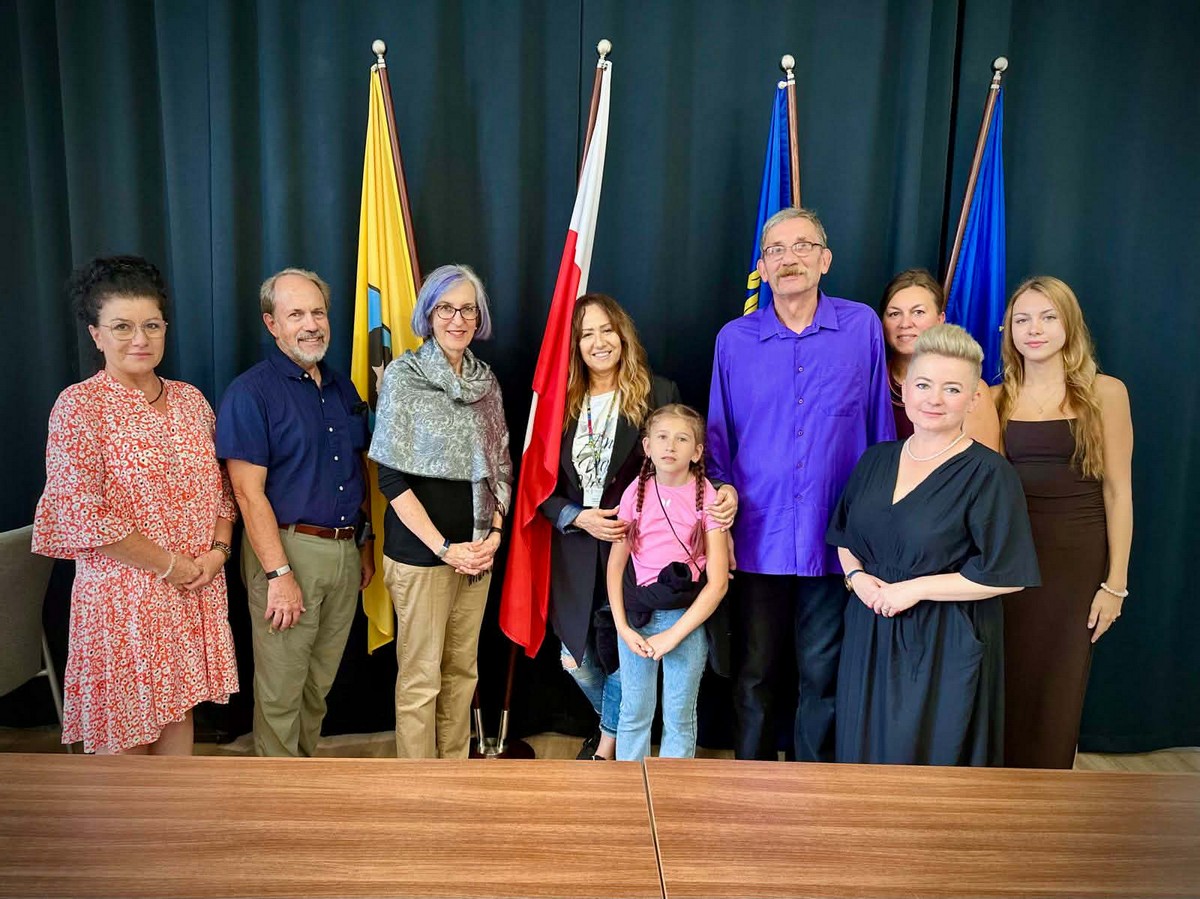
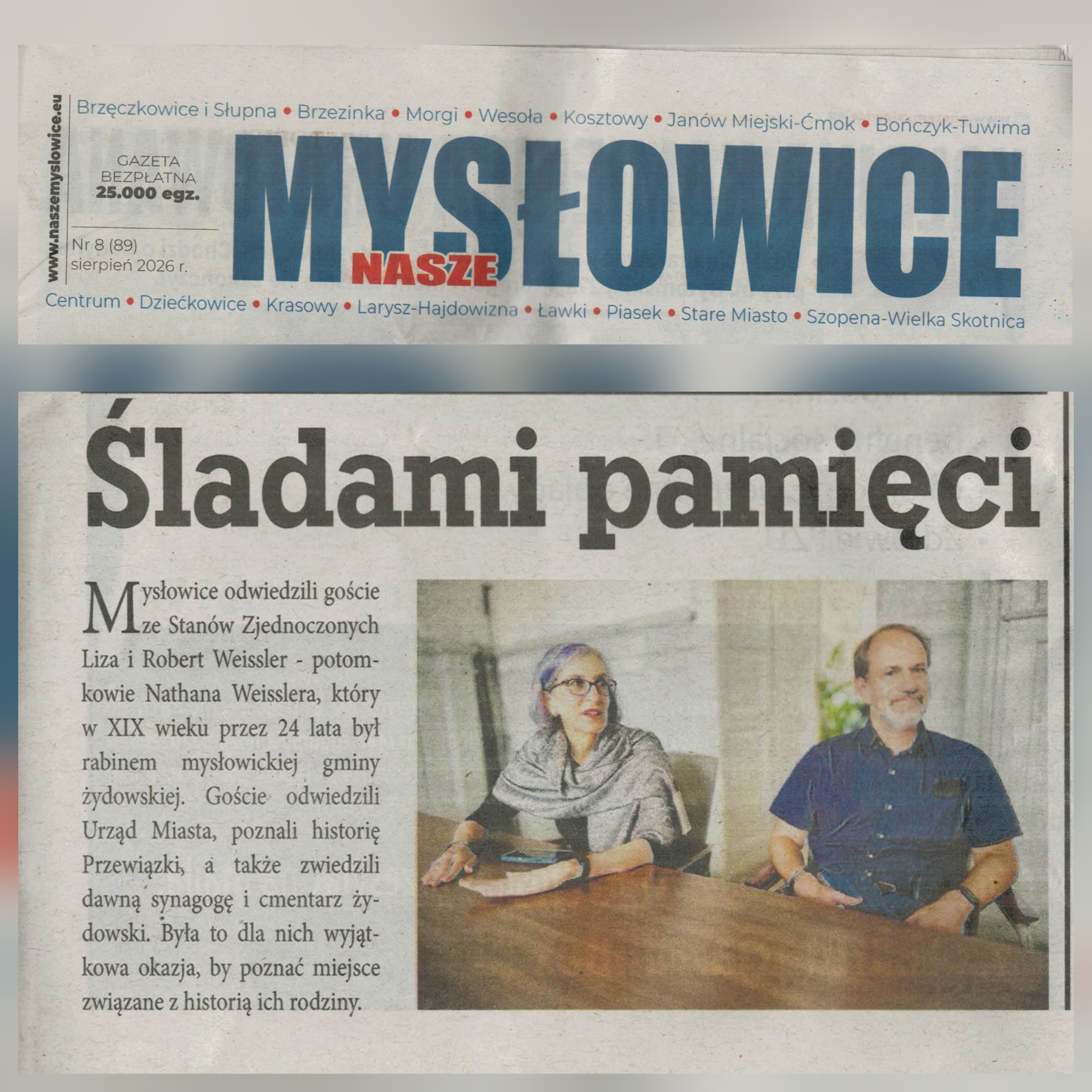
We had hoped also to see Slawek Pastuszka, an historian specializing in cemetery restoration whom we met last year and now also the president of the Jewish community of Katowice, but our schedules didn’t quite work out this time. He is one very busy guy, hopefully we can catch up with him on another trip.
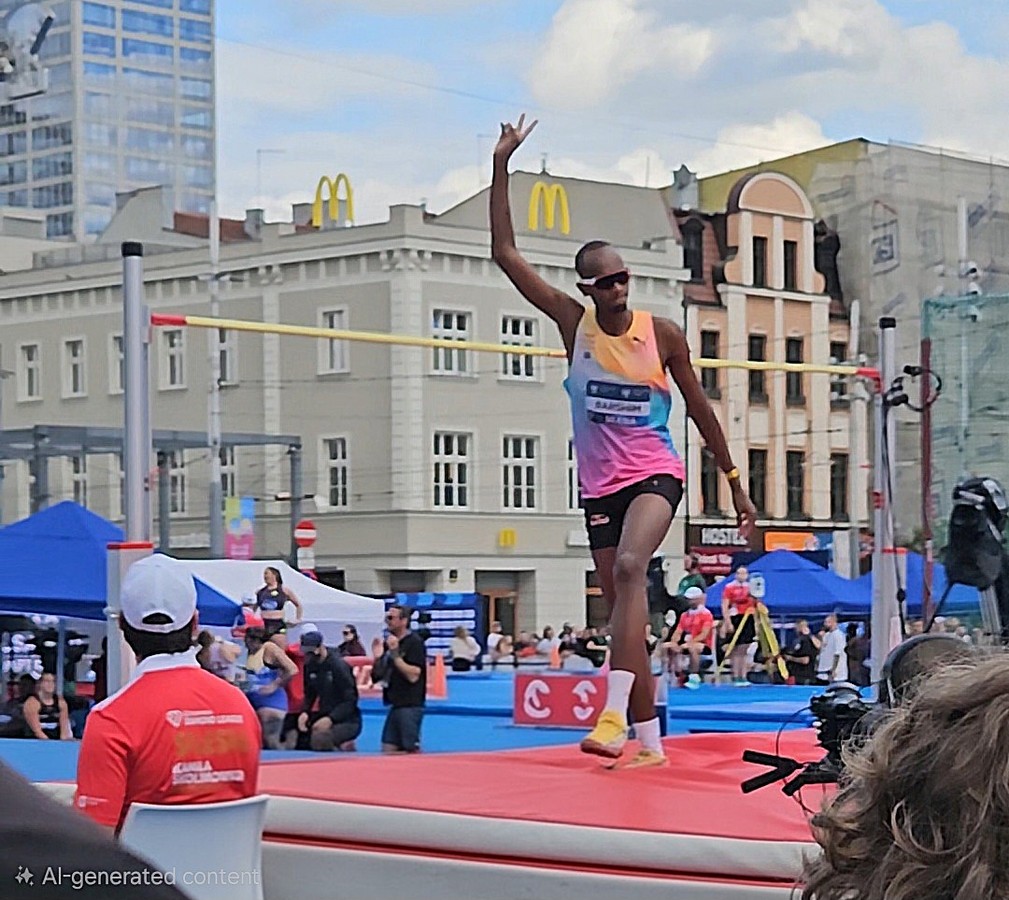
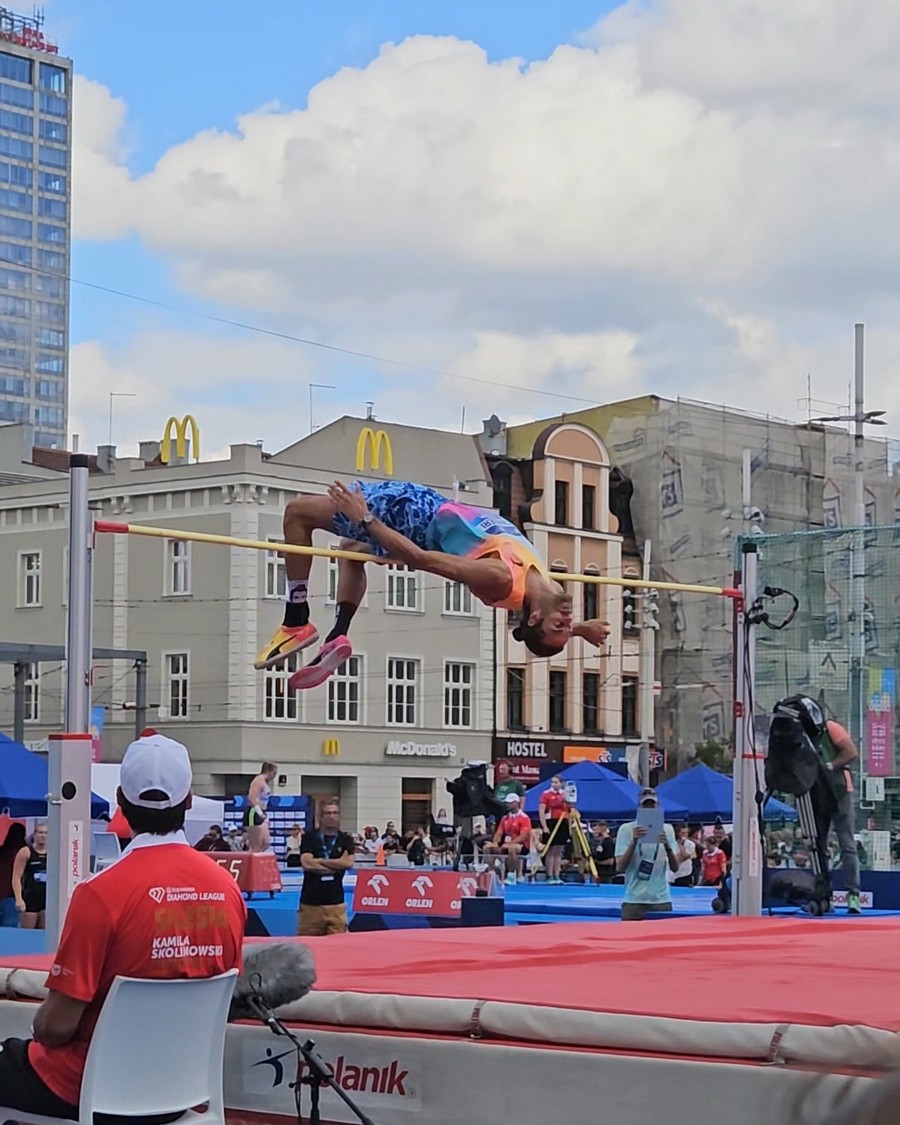
We spent the day after our Mysłowice visit in Katowice at the Museum of History. En route to the museum we walked past the main square (Rynek) and saw some television setup and a huge banner on a building promoting the Diamond League track and field meet at the Silesian stadium in Chorzów, being held the next day when we were leaving Katowice. We were still kicking ourselves after not planning for it to begin with, when we walked back through the Rynek in the afternoon and found they were having three events! – the men’s high jump, women’s shot put, and women’s long jump. We parked ourselves in a small area near some bleachers no more than about 25 ft from the high jump pit; what a treat to see that event so close, with top contenders Mutaz Essa Barshim (Qatar), Gianmarco Tamberi (Italy), and JuVaughn Harrison (US). It was also fun to see the effect that Tamberi had on some teenage girls in the audience. 🙂
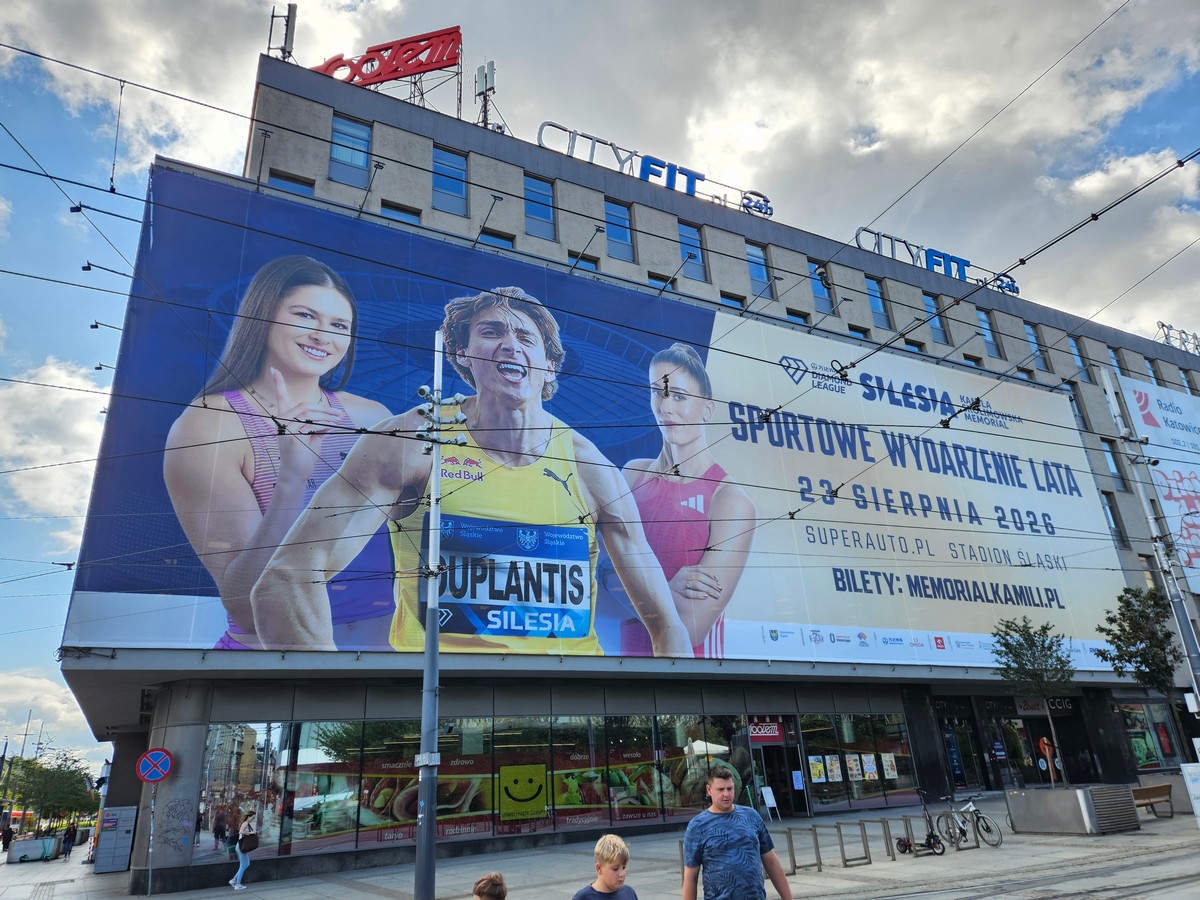
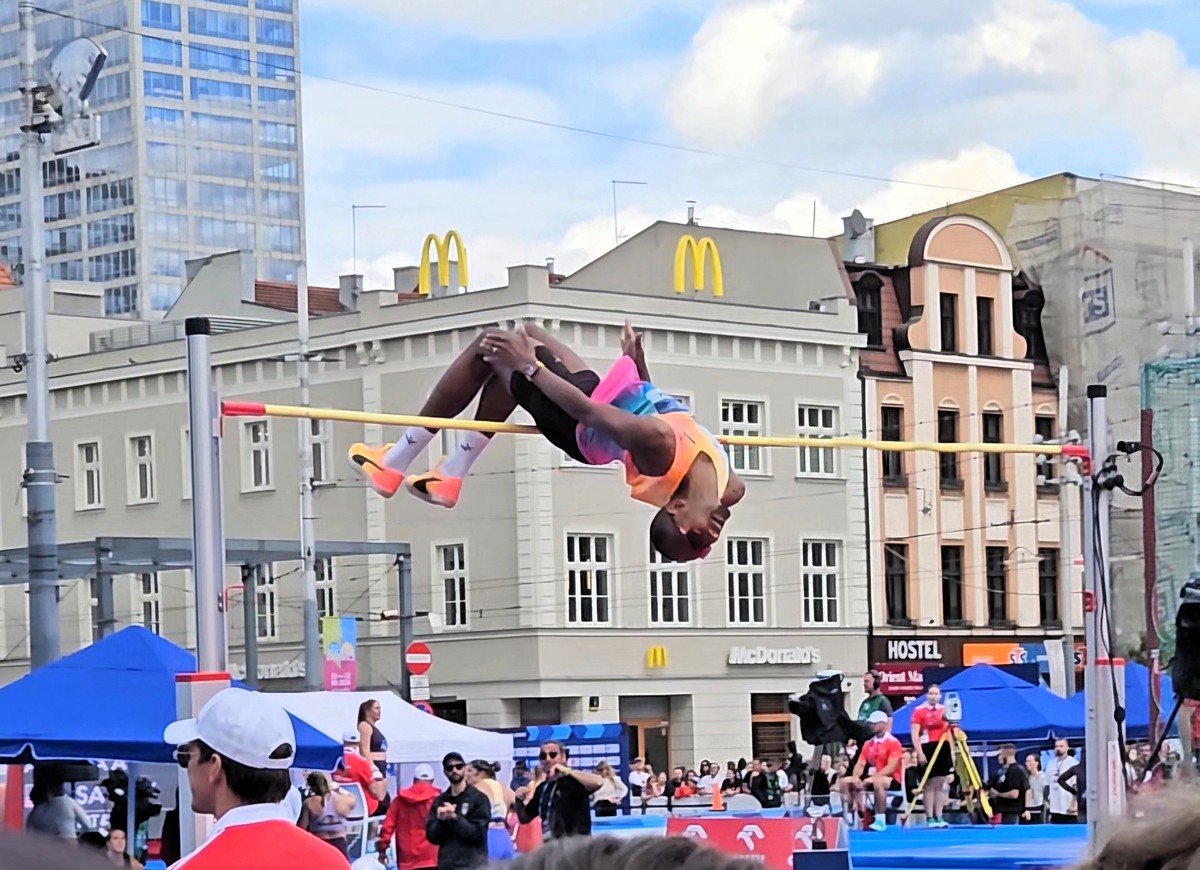
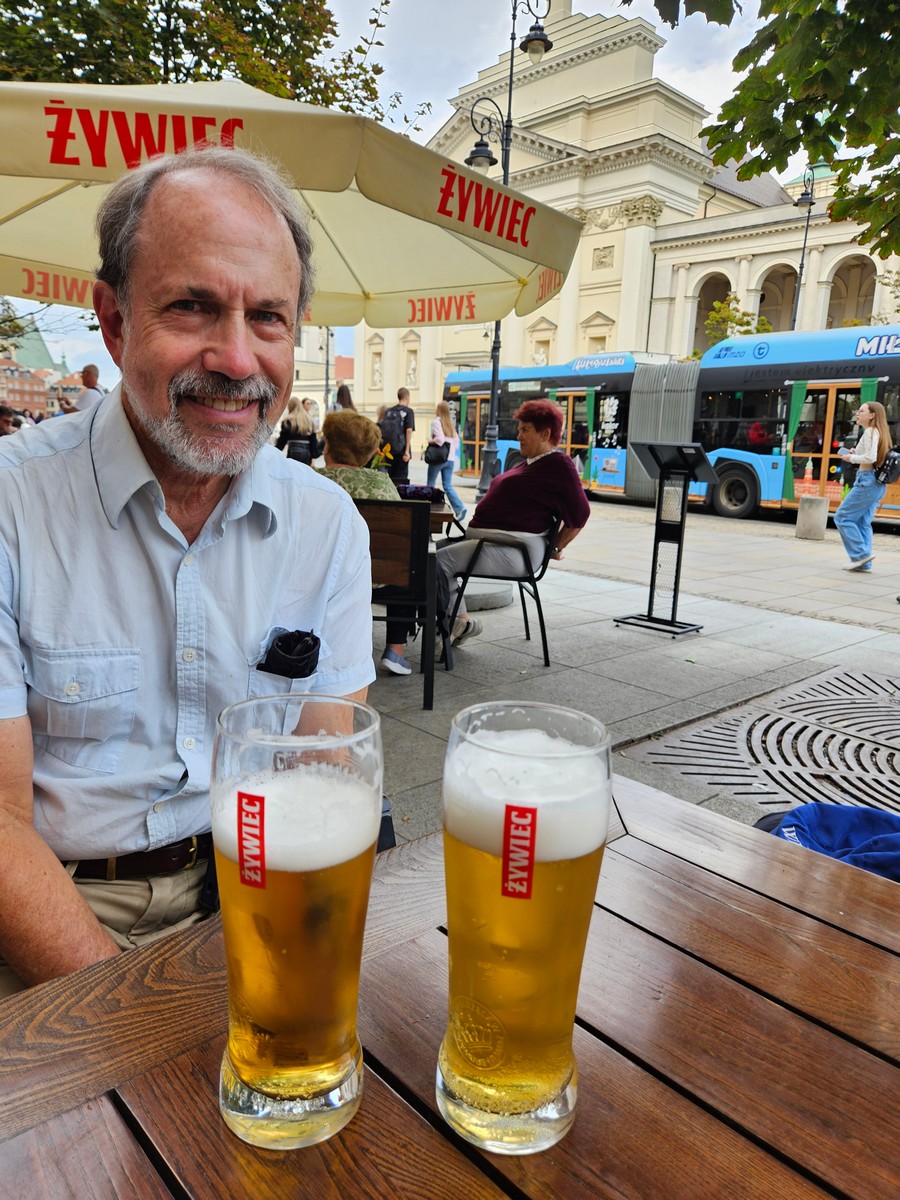
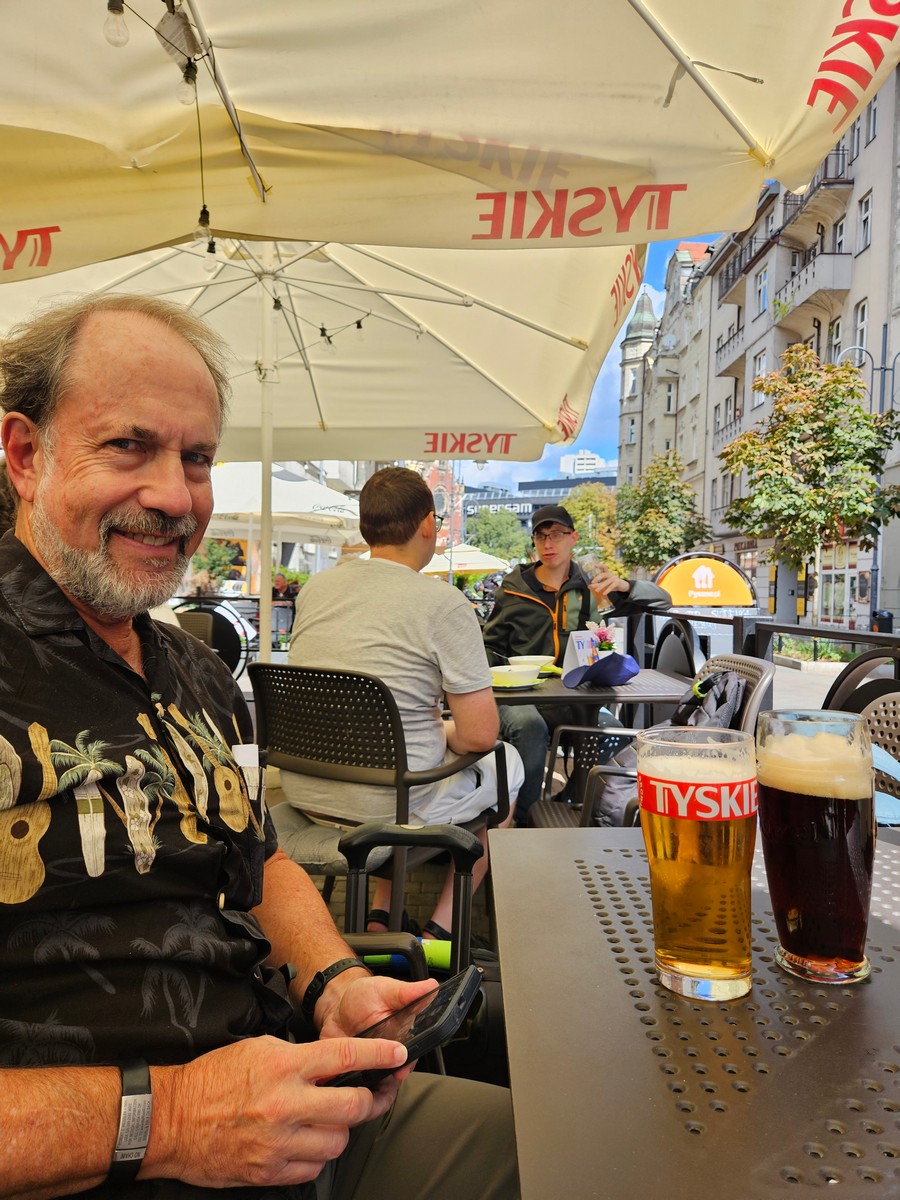
The following day it was back to Warsaw by train, after enjoying a last Żywiec beer at a pub near the station. This time we stayed at a hotel across the street from the airport terminal, as we had a relatively early flight the next morning. The flights home went well, despite having only a one-hour layover in Helsinki (most of which we spent in line at passport control). By the time we arrived in Dallas, we were resolved not to bother trying to drive home immediately when we got to Tucson, so we crashed at a hotel near the Tucson airport and drove on home the next day.
Again, the photo galleries follow, and also check out Liza’s food blog.
Click an album to open it, then click any photo to view a larger image and optionally start a slide-show.
Hotels
Helsinki: Hotel Finn
Tallinn: My City Hotel
Riga: St Peter’s Boutique Hotel
Vilnius: Shakespeare Boutique Hotel
Warsaw: Motel One Warsaw-Chopin
Katowice: Vienna House Easy by Wyndham
Warsaw: Marriott Courtyard Airport