Counterclockwise Through Space and (Deep) Time
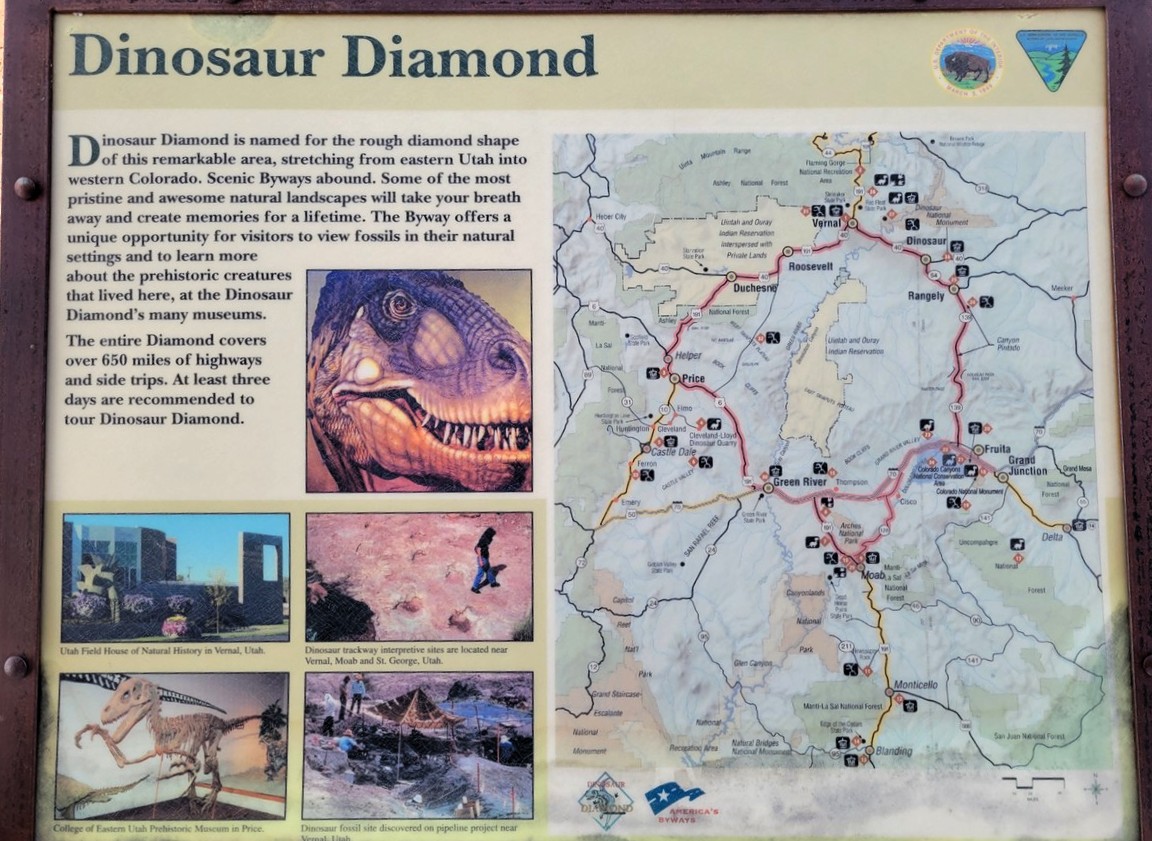
In late March 2026, we flew to Salt Lake City to embark on a driving trip through eastern Utah and adjacent Colorado to see paleontological sites, museums, interesting geology and sweeping, rusty landscapes on the Colorado Plateau. The outline of the trip roughly traced the Dinosaur Diamond National Scenic Byway. The journey took us through Price and Moab in Utah, then Grand Junction, Colorado, before returning to Utah at Vernal, and finally back to Salt Lake for the flight home. This is Robert’s account of the trip.
To skip the narrative and go straight to the photos – including Buddy Bison! – click here. Click any photo below to view a larger version.
A late flight from Tucson on Friday, March 20 ensured a very late arrival at our motel just north of Provo after procuring our rental car, a Mazda CX-50 AWD. [Liza was quite annoyed at the Thrifty Rental Car counter when the agent aggressively pushed the expensive insurance coverage on us. He met his match.] The next day after the typical uninspired motel breakfast, we headed southeast through the Wasatch Front Range and Price to Castle Dale to visit the Museum of the San Rafael. For such an out-of-the-way location, the museum was quite engaging with Allosaur and other dinosaur exhibits mainly associated with the fossils recovered from the nearby Cleveland Lloyd Dinosaur Quarry (now Jurassic National Monument which was not yet open for the season), plus the wildlife and Fremont archeological artifacts of the area. Our day was capped off by dinner at the Groggs Pinnacle Brewing restaurant a few miles north of Price where we stayed at the Legacy Inn.

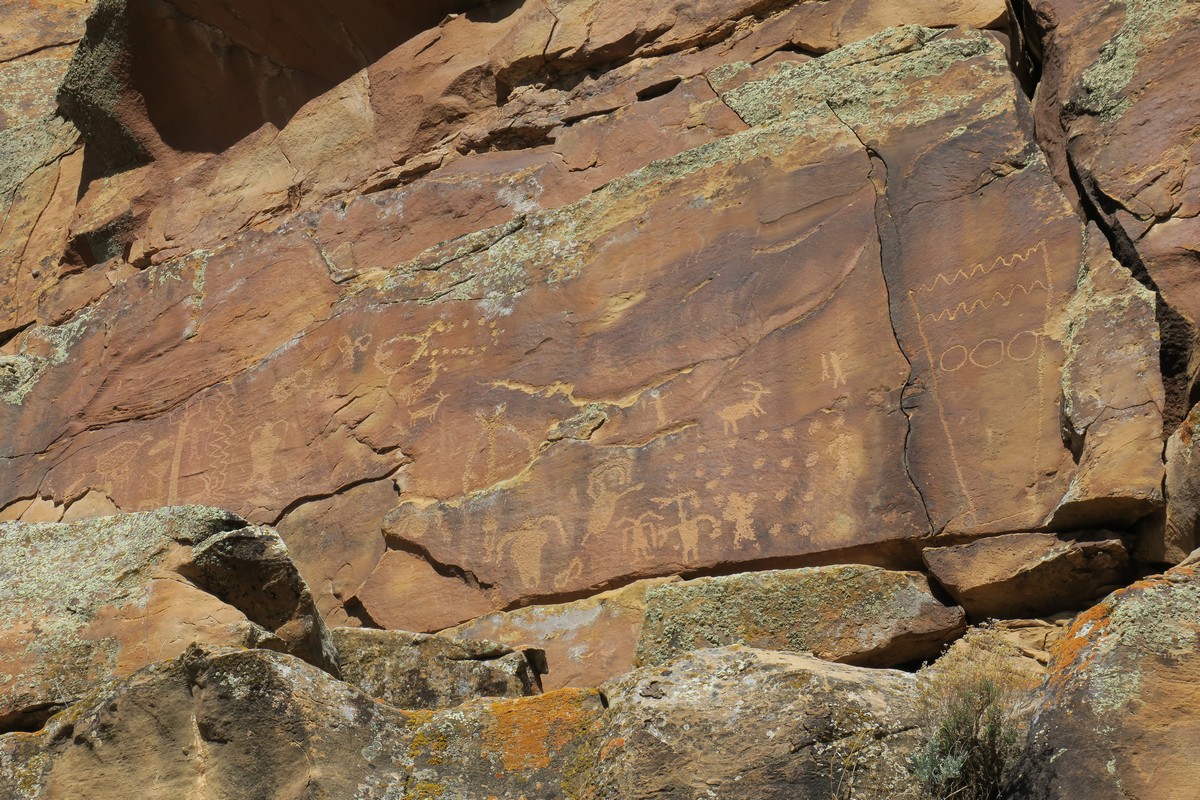
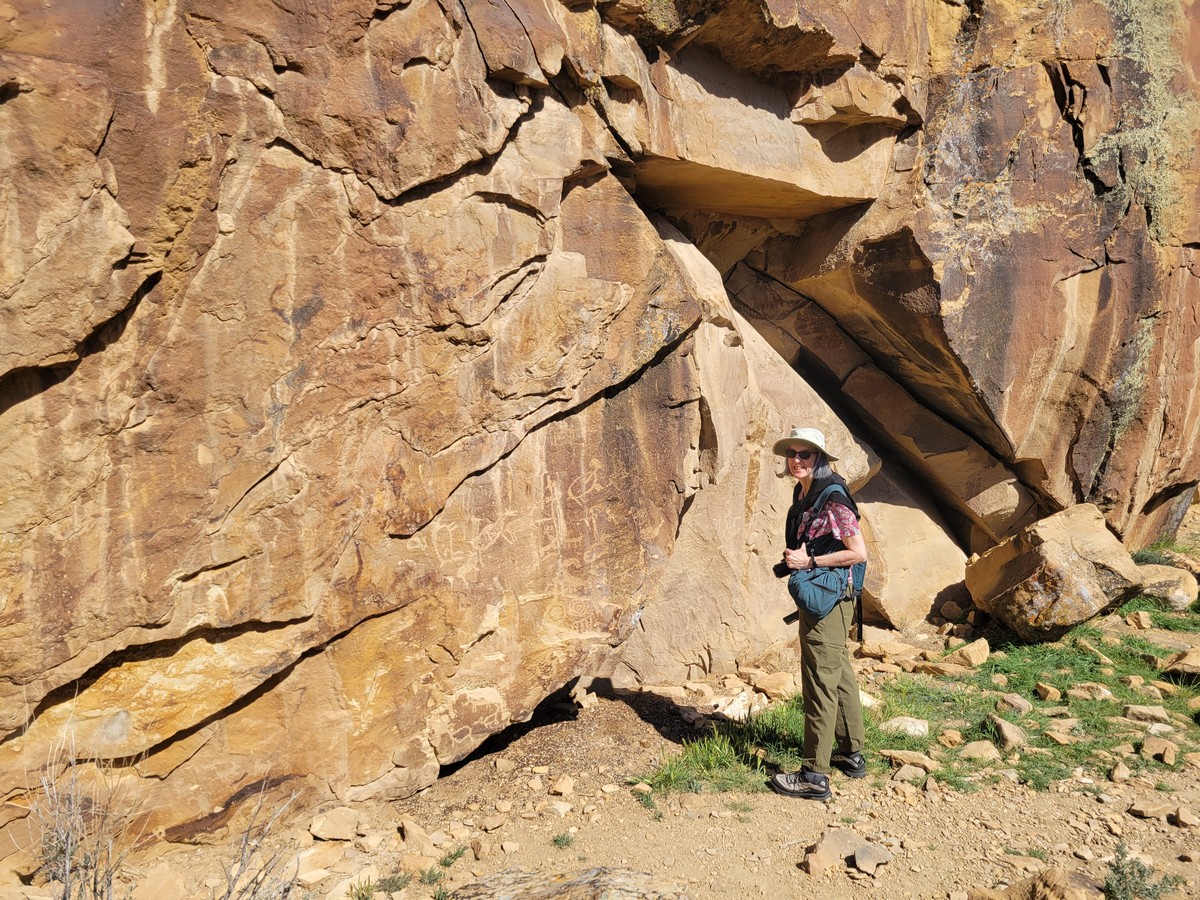
The next morning we visited the Prehistoric Museum of Utah State University Eastern in town. This too was an enjoyable collection of dinosaur fossils, paleontology exhibits, and archaeology of Fremont and Ute cultures. After relaxing in our room for a short time with womens’ and mens’ college basketball tournament action, we headed out of town for the afternoon to visit Nine-mile Canyon, a lesser known location of pictographs and petroglyphs of ancient people (occasionally accompanied by the inevitable scratches of modern civilization).
On Monday, March 23, we left Price for Moab on Highway 6/191 accompanied by the Book Cliffs along the way. We took a lengthy detour along I-70 into the San Rafael Swell, a vast, arching anticline of Mesozoic rock with Permian Kaibab Limestone exposed at the reef. We made stops at various viewpoints along I-70 first on the north side of the Interstate (west bound), then on the south side (returning east bound). We were rewarded with dramatic flat irons of the San Rafael Reef just before launching through a narrow canyon carved into the reef for the highway. Further west, we made stops within the swell itself at Black Dragon Canyon, Chimney Rock, and Eagle Canyon, before returning eastward to Ghost Rocks and finally the dramatic view looking eastward at Spotted Wolf Viewpoint over the funnel back through the reef and out of the swell.


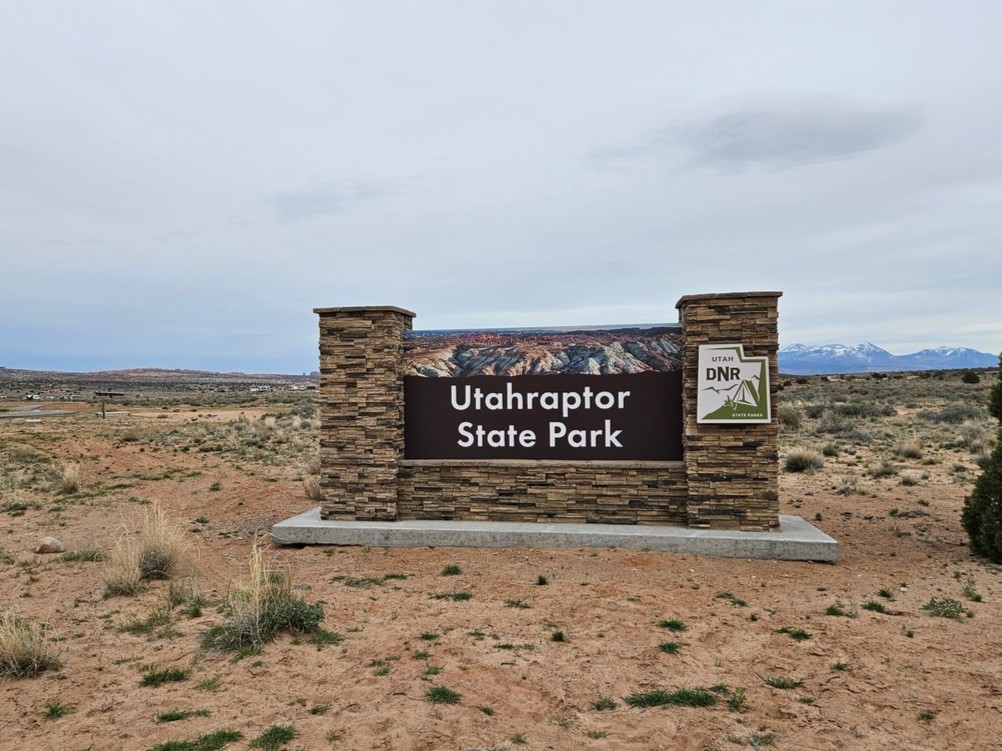
Along I-70, we traveled further east before turning south on Highway 191 toward Moab. Before reaching our destination that day, we stopped at Utahraptor State Park. The attraction there was mainly the visitor center with exhibits rather than the fossil site itself, but we also walked briefly through the site of the Moab Isolation Center, a remote WWII-era detention facility used to incarcerate 55 Japanese-American citizens (without due process) who were considered troublemakers at larger detention sites like Manzanar. We arrived at the Comfort Suites in Moab and, after dropping our luggage, headed over to nearby Antica Forma for an enjoyable pizza and salad dinner along with draft beer.

The next day was reserved for a return visit to Arches National Park, whose smooth Entrada Sandstone walls and arches are even more familiar after featuring in the opening scenes of the movie Indiana Jones and the Last Crusade. We headed straight to the Devil’s Garden and secured a parking space near the trailhead for Landscape Arch. The late morning temperatures were warm and comfortable for this hike and the scenery was punctuated with narrow canyon walls filled with bird song (particularly Canyon and Rock Wrens with White-throated Swifts soaring overhead).
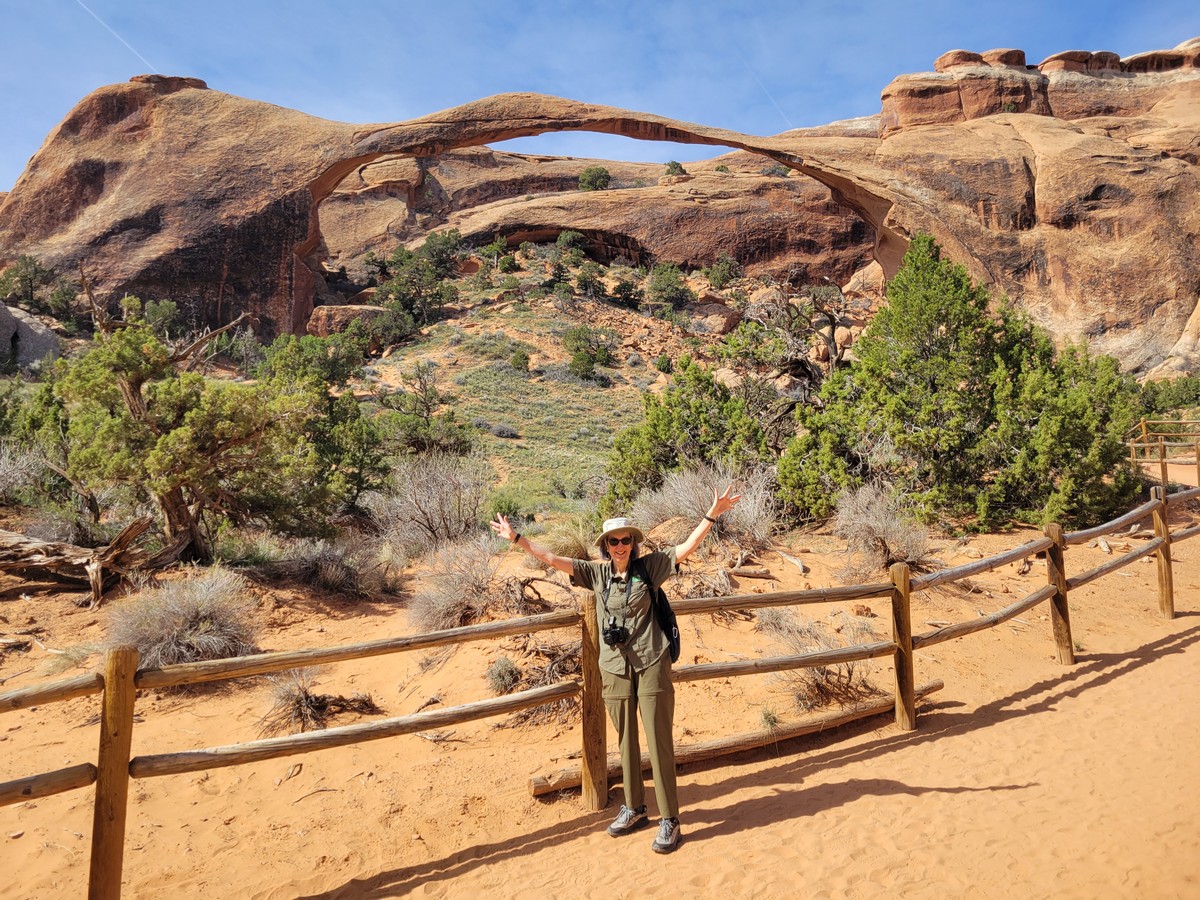
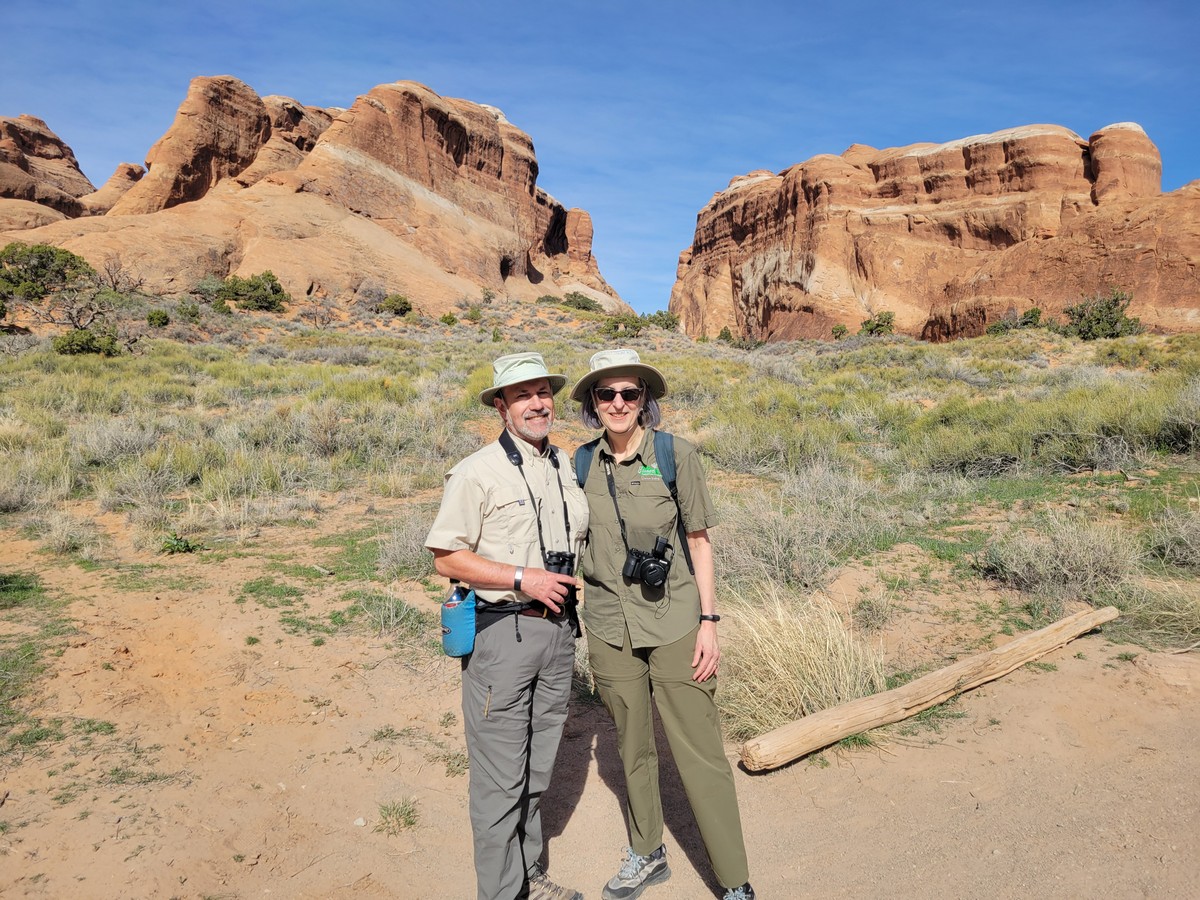
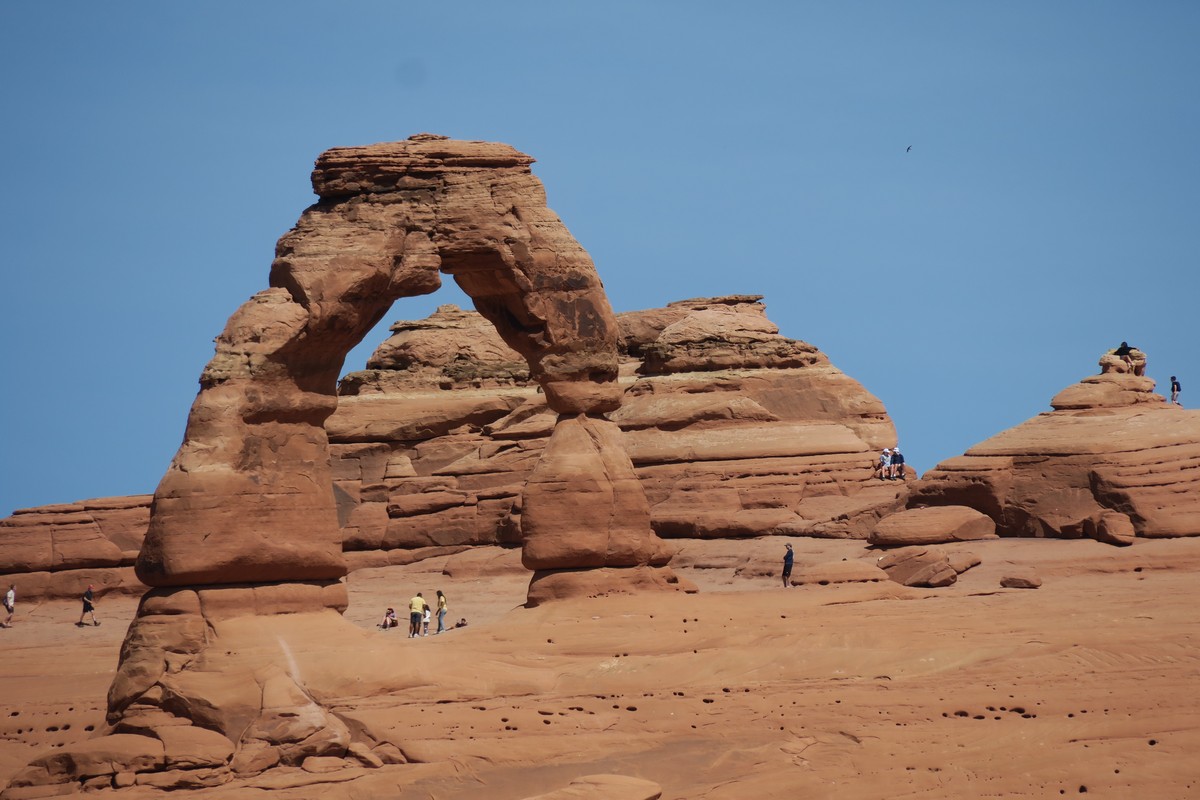
Afterwards we drove to the Delicate Arch Viewpoint parking area for the short uphill hike to the distant view of the arch speckled with hikers like ants (the middle of the day is not the best time for the longer hike to the arch itself, even in spring weather). During the return drive, the distant profile of the La Sal Mountains provided a snowy backdrop to the sandstone landscape in the foreground. This is a National Park that never fails to impress! With a little time in the later afternoon, we browsed the exhibits on uranium mining in the Moab Museum. A short walk brought us to dinner at the Trailhead Public House in the center of town.
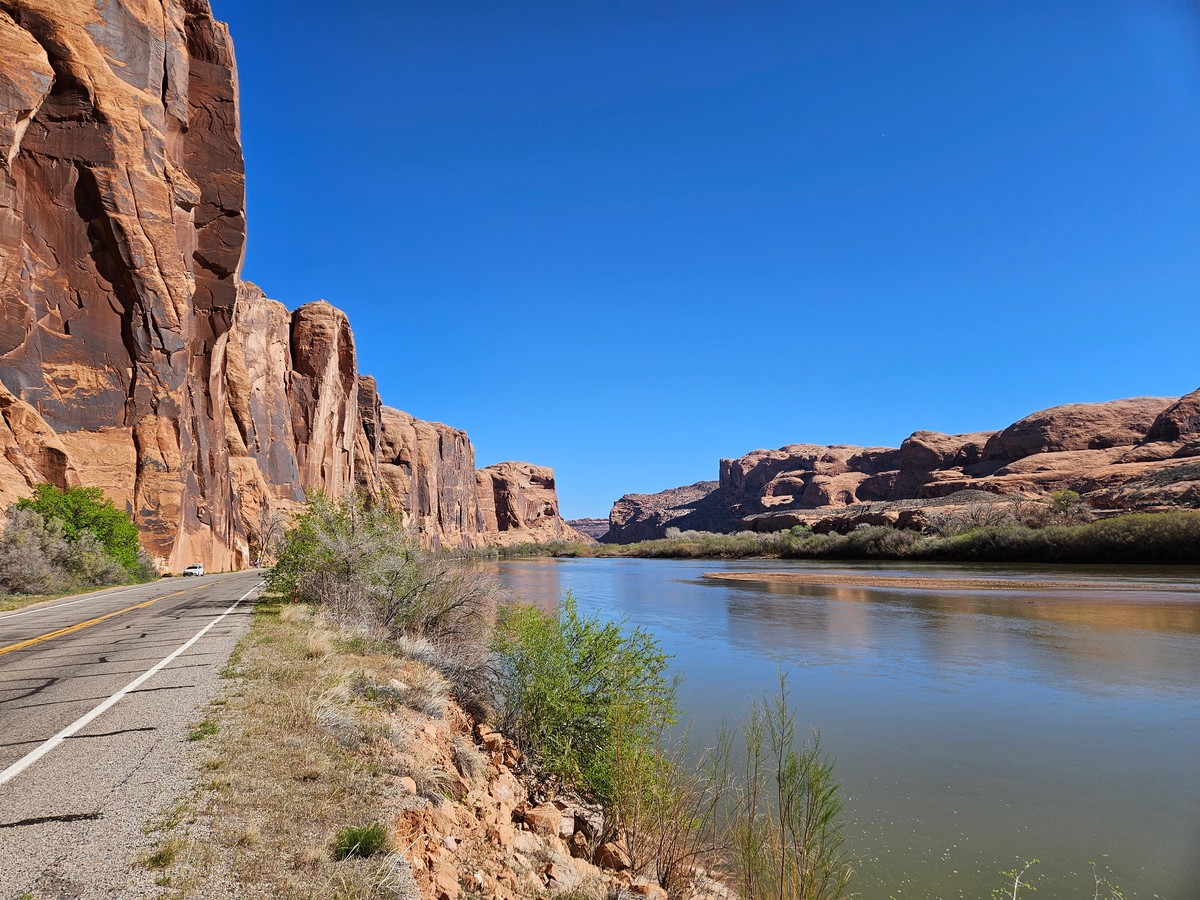
On Wednesday, March 25, we left Moab for a drive along the Colorado River canyon. First we traveled downriver to a dinosaur tracksite, pictographs and Jug Handle Arch, before returning upriver and heading to Colorado on Highway 128 and I-70. Just over the state boundary, we stopped at the BLM trailhead for the “Trail Through Time” at the site of the Mygatt-Moore Quarry on the rainbow-like slopes of the Jurassic Morrison Formation.
We continued toward Grand Junction, but detoured in Fruita to take the scenic Rimrock Drive through Colorado National Monument. The ascent to the Saddlehorn Visitor Center is the most dramatic part of the drive with tunnels and winding curves through a vertical landscape of Wingate Sandstone capped near the top with the subtle zigzag crossbedding of Entrada Sandstone. With the sun behind us, we made our way from viewpoint to viewpoint, eventually exiting the east entrance to the monument and arriving at our hotel Tru by Hilton in the center of the city. A short walk brought us to dinner at Rockslide Brewing with a kicked-up menu of bar food and enjoyable brews. The center of Grand Junction is a delightful pedestrian zone with only modest traffic impinging on the relaxed people scene.
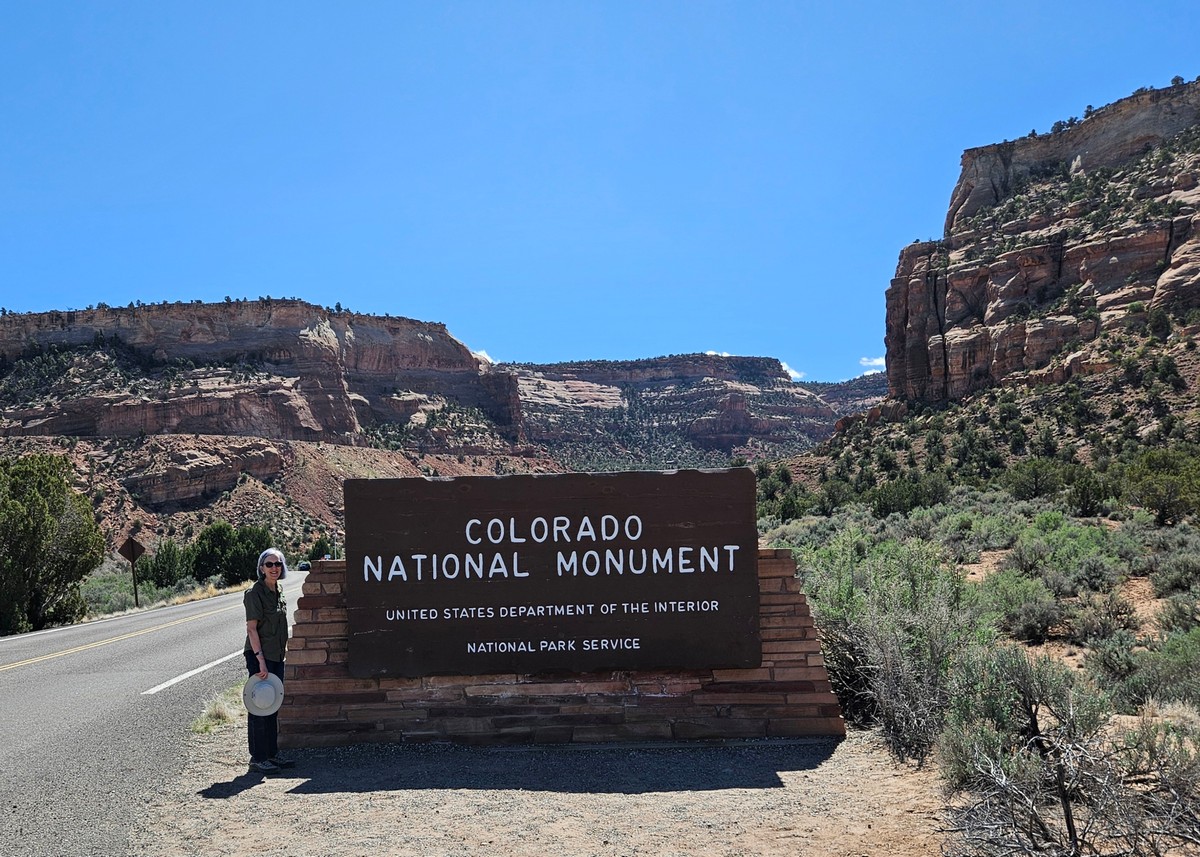
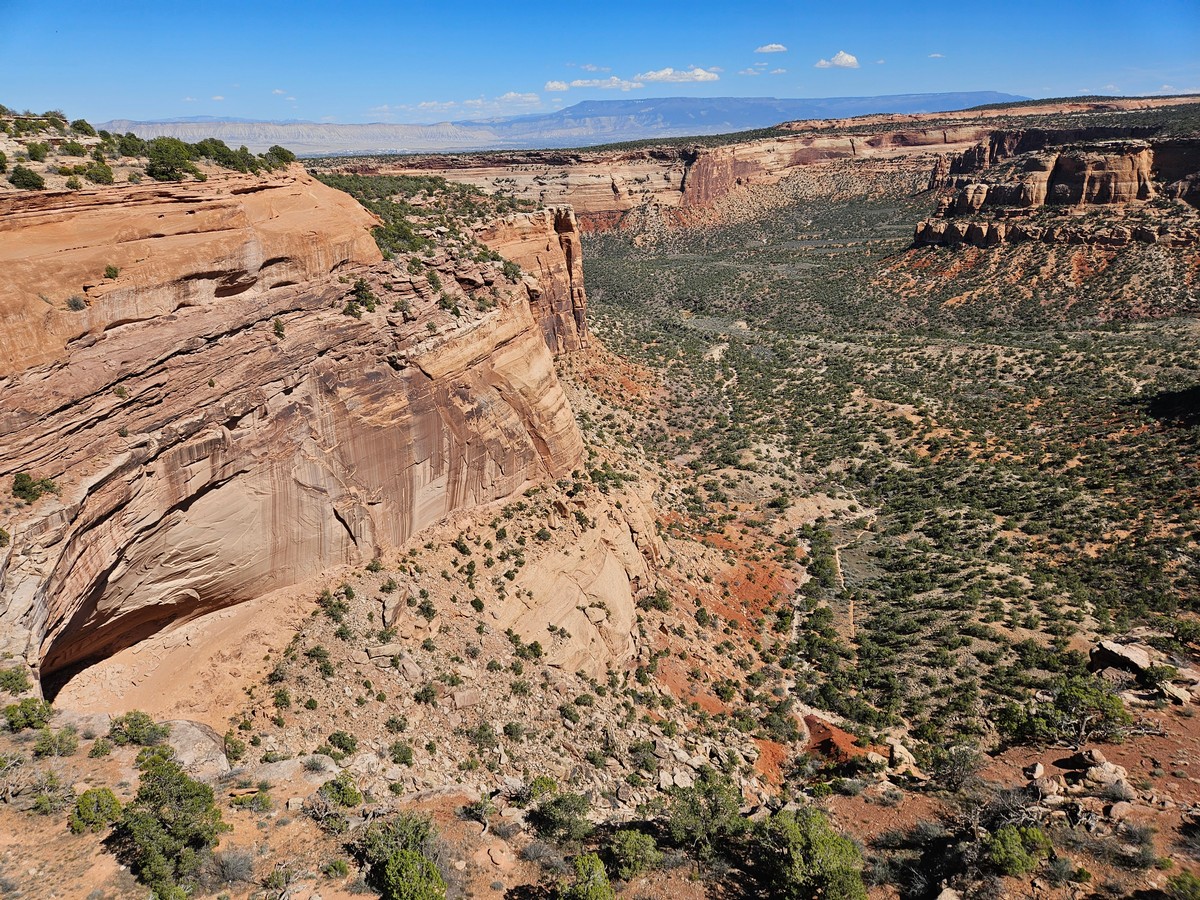
The following day we headed back into the monument again to take the rim drive in reverse, this time heading west with the morning sun behind us. We chose different viewpoints this time with an emphasis on those facing northwest. Once we reached the visitor center near the west end, we took the Alcove Nature Trail to a miniature box canyon at the end, a refreshingly cool spot in an arid landscape. Shortly after leaving the vicinity of the Visitor Center, we encountered a soaring Bald Eagle, an unexpected photo op for a bird more likely along the Colorado River far below. Once outside the monument, we made brief visits to a couple sites in the adjacent McInnis Canyons National Conservation Area managed by the Bureau of Land Management, namely Dinosaur Hill and the Fruita Paleo Site, also in the Morrison Formation. Our final stop of the day before returning to Grand Junction was the Fruita Dinosaur Journey Museum with still more impressive exhibits of theropods like Utahraptor and dromaeosaurs, sauropods and a Stegosaurus (with a “thagomizer” set of tail spikes; paleontologists adopted the name after a Gary Larson “Far Side” cartoon). Back in the city, we had a relaxing wine tasting at Carlson Vineyards tasting room before heading to dinner at Tacoparty for some imaginative takes on a familiar food.
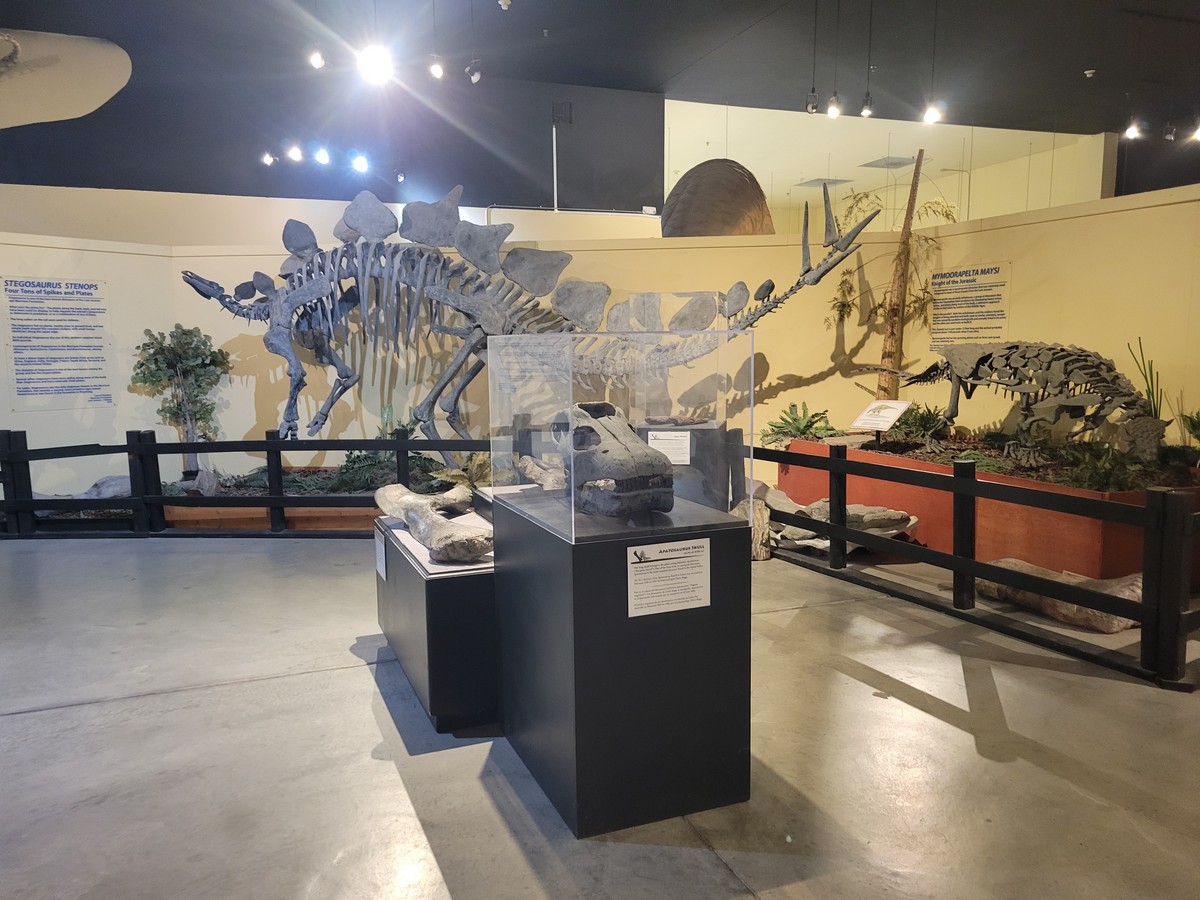
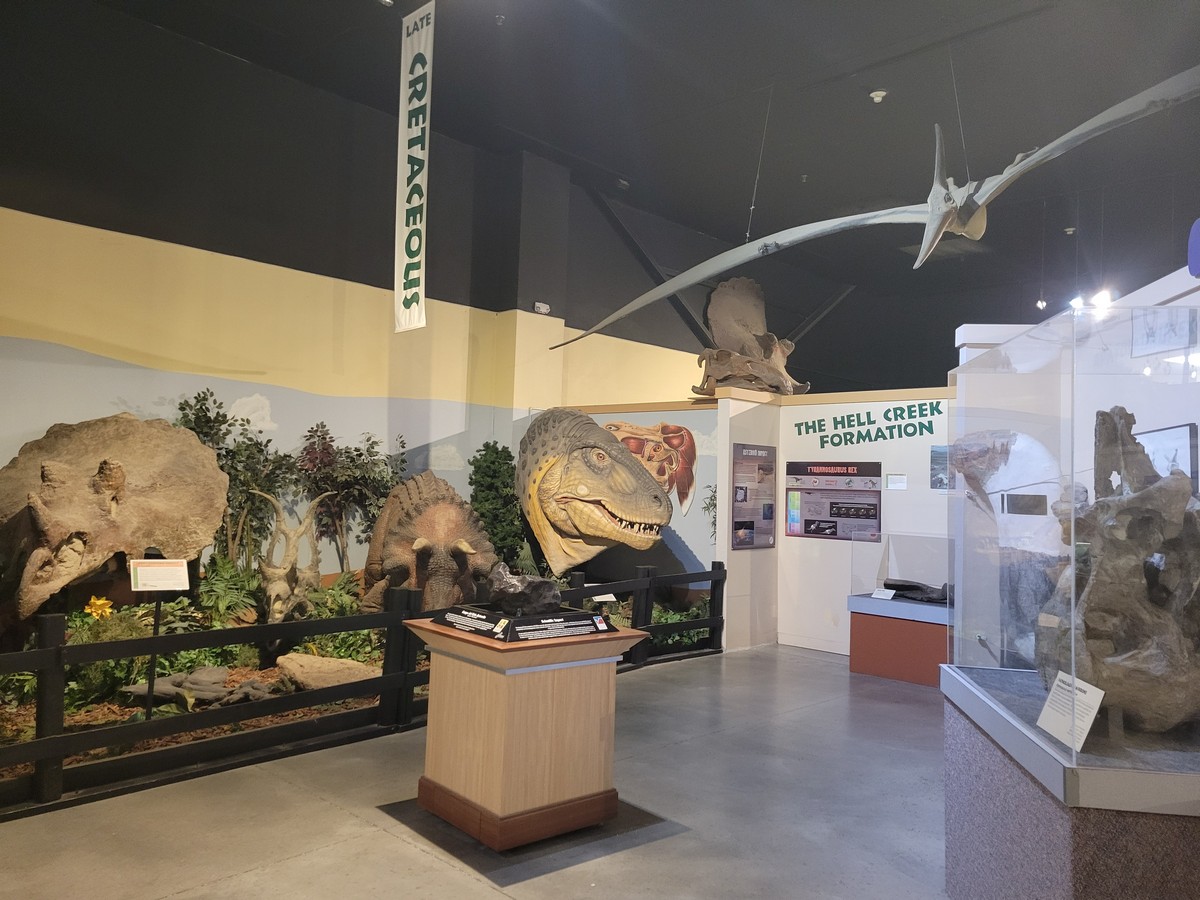
March 27, a Friday, marked our return to Utah… toward the end of the day. We left Grand Junction headed north over Douglas Pass through the Douglas River valley and the the BLM’s Canyon Pintado dotted with portal signs of various interpretive pictograph sites before reaching the (closed) Canyon Visitor Center of Dinosaur National Monument for the Harpers Corner Road scenic drive to dramatic overlooks of the Yampa and Green River with Steamboat Rock near the confluence of those rivers. Returning to Highway 40, we returned to Utah and arrived in Vernal at the Dinosaur Inn. With another Antica Forma restaurant next door, we enjoyed pizza and creole shrimp with okra for dinner with local beer from Vernal Brewing.
We divided the next day with the morning spent in Dinosaur National Monument and its renowned Quarry Exhibit Hall, followed by an afternoon visit to the Utah Field House of Natural History in Vernal. The Quarry Exhibit Hall is the ultimate paleontology experience with numerous large fossil bones still embedded in the uptilted Wall of Bones in the Morrison Formation stone. Stegosaurus plates, sauropod vertebra, and even a Camarasaurus skull still connected to the neck are among the overwhelming collection of Jurassic fossils. Some of the fossils were close enough to touch, an experience encouraged by the interpretive signs.

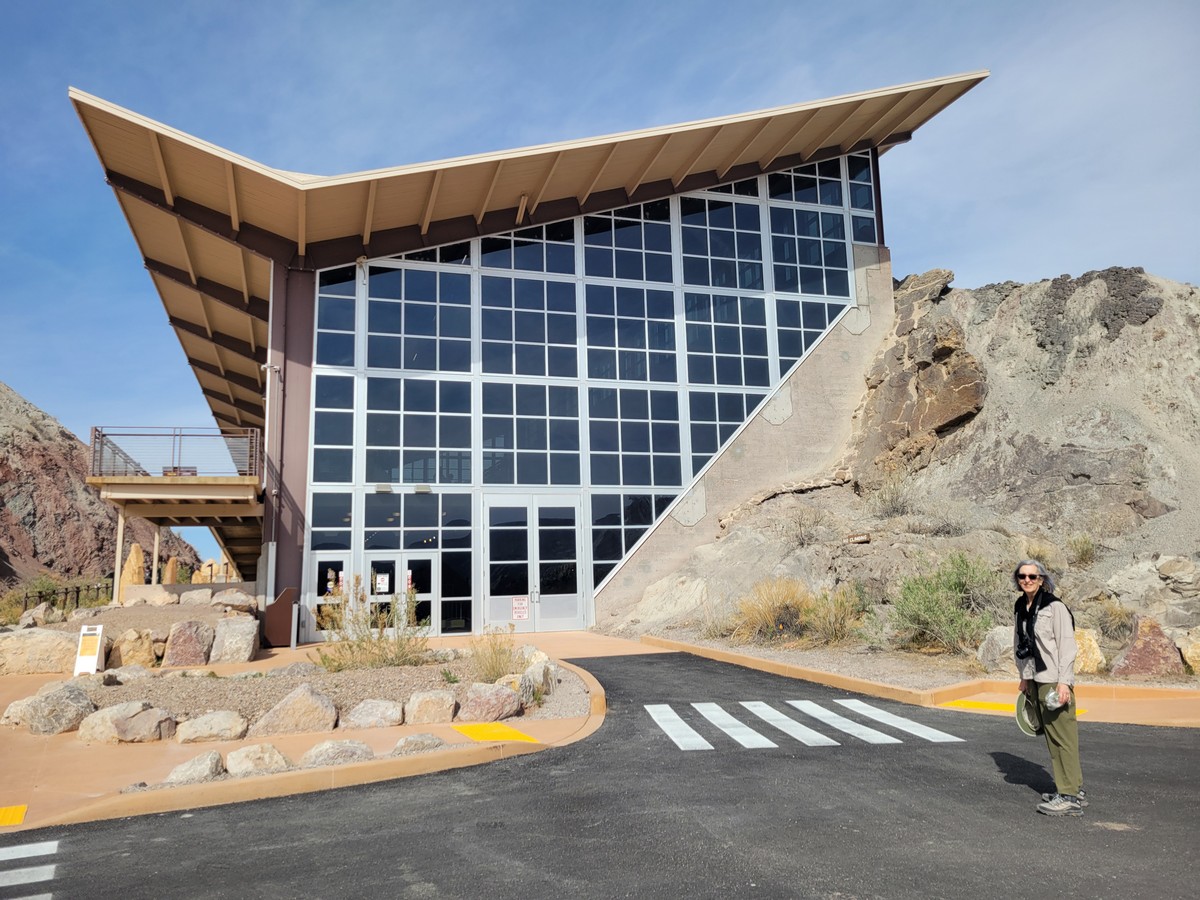

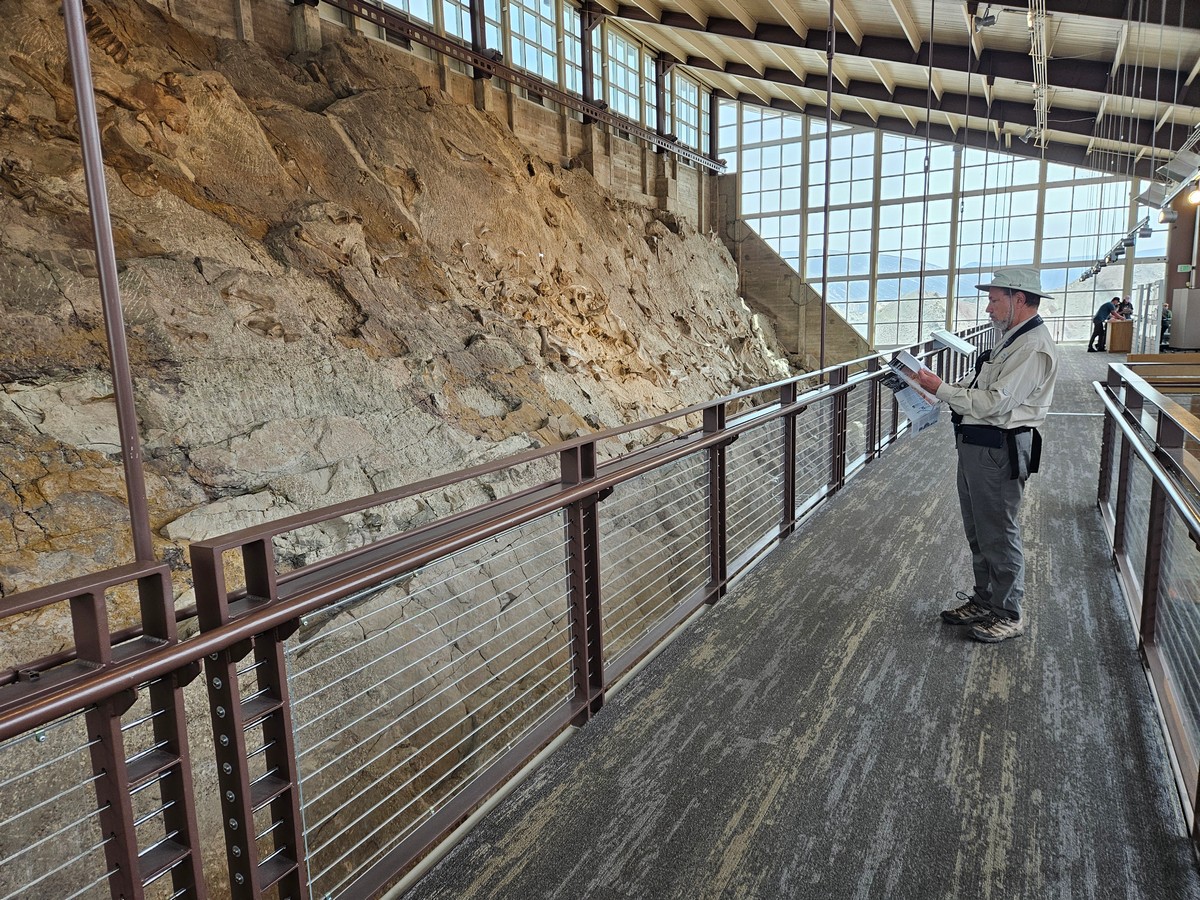
It was fortunate that we did not choose to visit the prior fall since the hall was closed for parking lot renovation. In the process of digging up the parking lot, another Diplodocus skeleton was discovered! It took a month to extract all the fossil bones of this “parking lot Diplodocus” before work on the parking lot could resume. Some of those bones are on display in the Utah Field House in Vernal.
After walking a short trail to more Jurassic fossils outdoors (with a pair of Rock Wrens nearby), we drove the Tour of Tilted Rocks out to views of Split Mountain and the Green River.
Once we returned to Vernal, our afternoon at the Utah Field House was a terrific complement to our earlier experience. Visitors are greeted by an enormous Diplodocus skeleton in the main entrance hall of the museum. (The skeleton is a replica of what Andrew Carnegie took to display in Pennsylvania. Amusingly much of it is now considered incorrect – the tail is too short, the legs placed too far apart, wrong foot, wrong skull; a great video on the top floor, rather hidden, explains all this.)
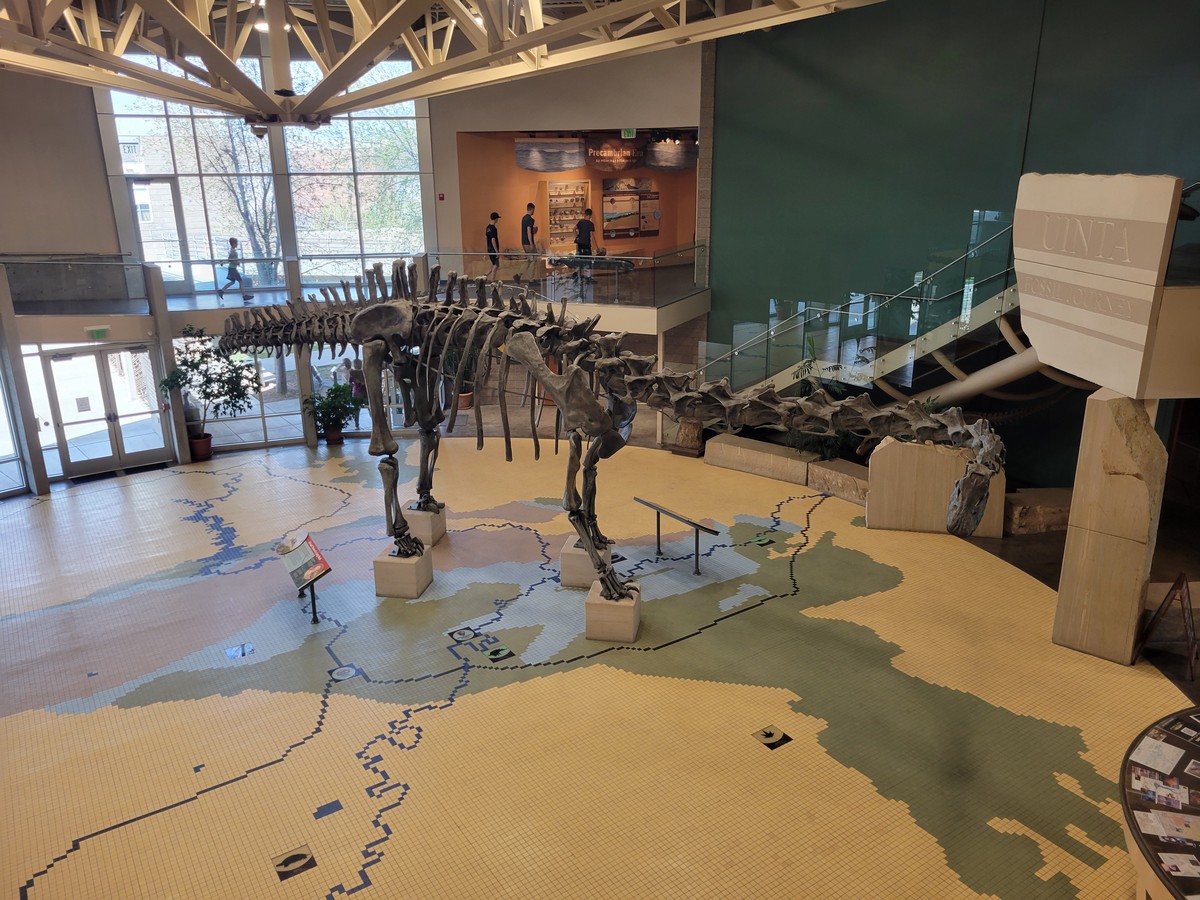
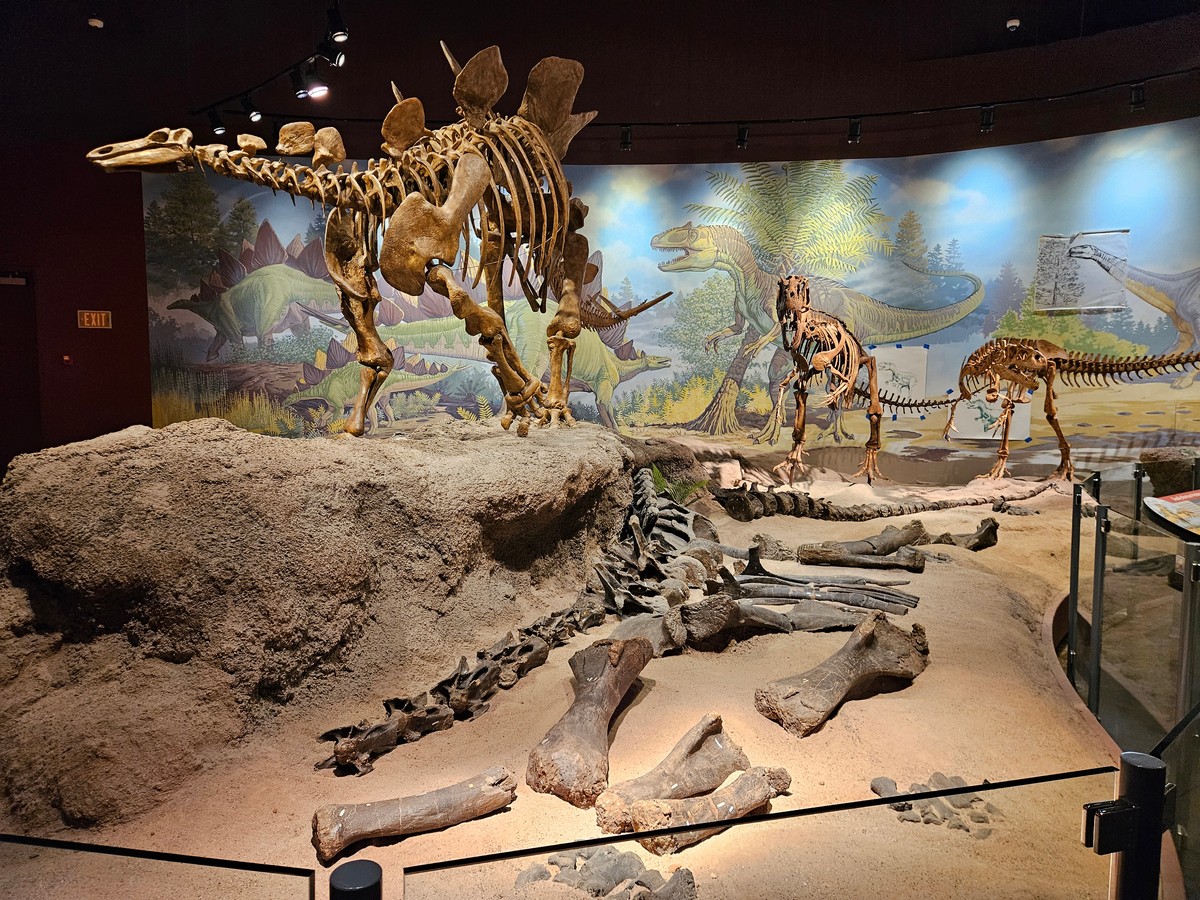
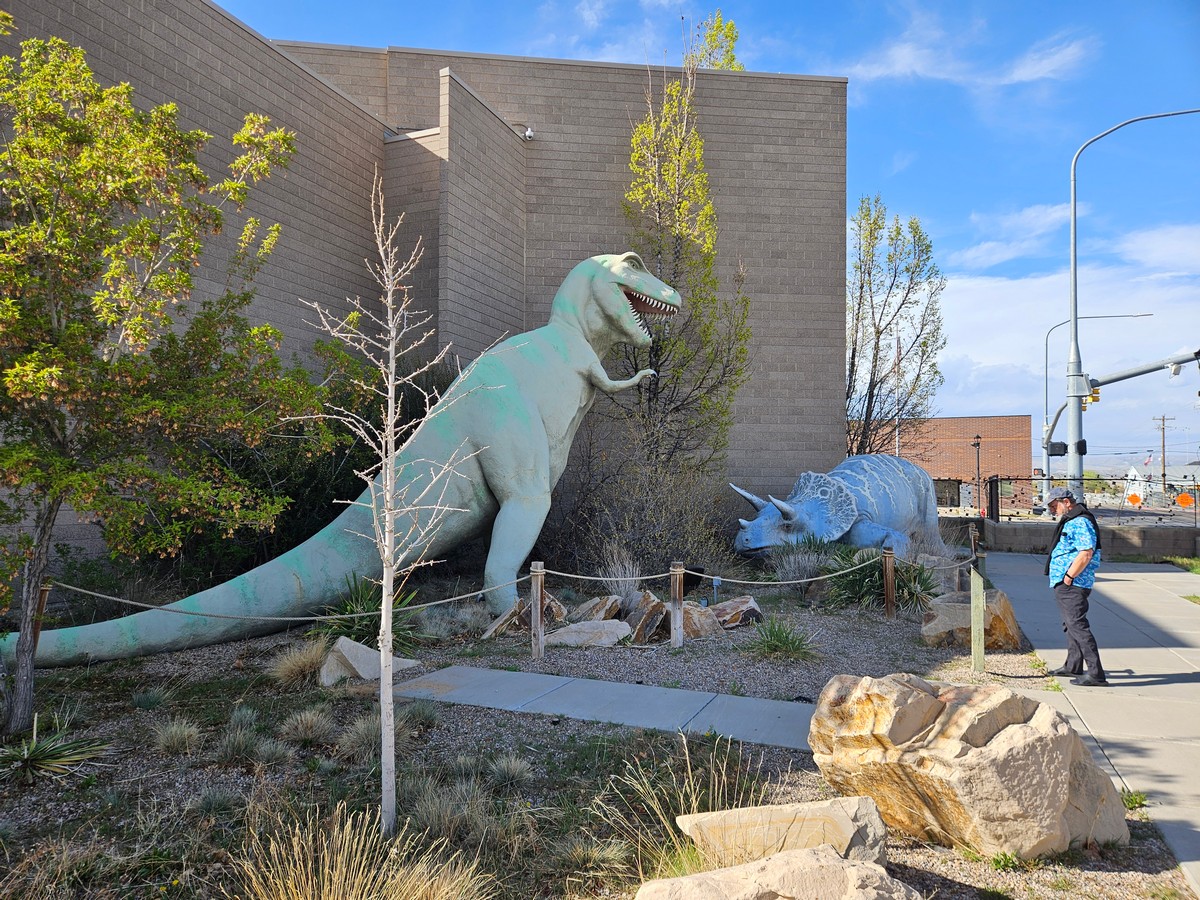
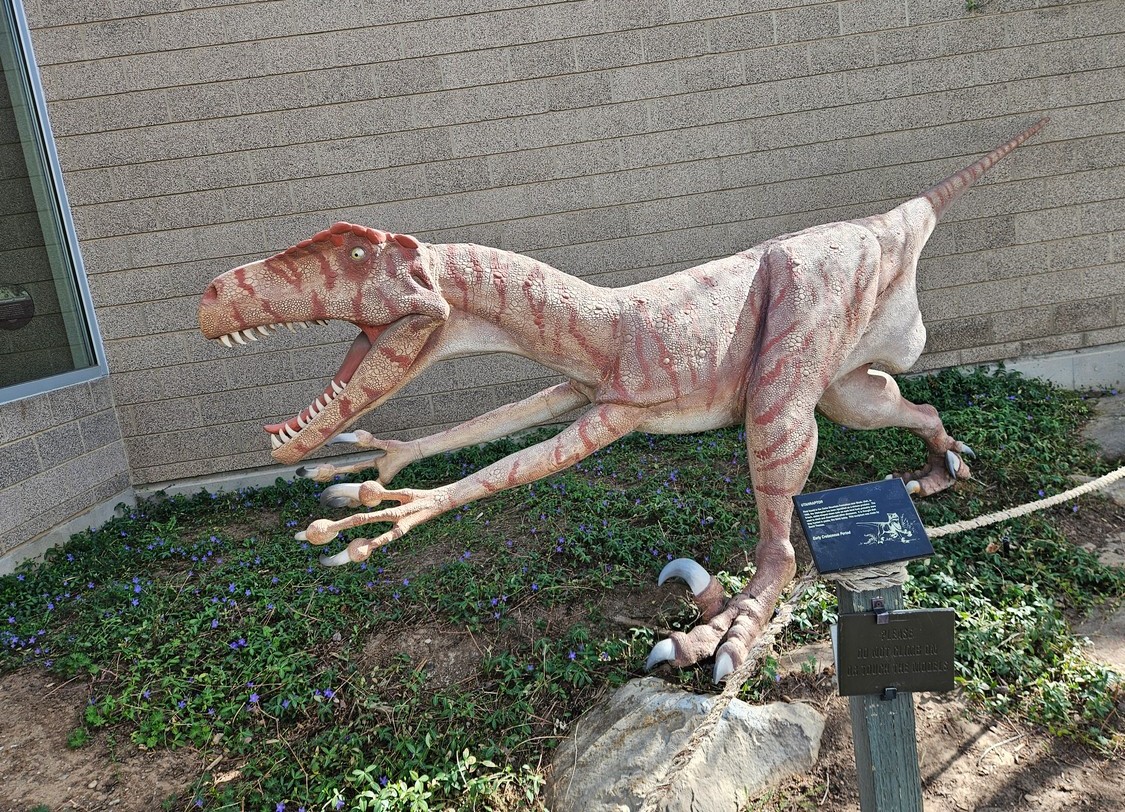
The exhibits take you through time from Precambrian rocks, through Paleozoic formations and fossils, on to Mesozoic dinosaurs, pterosaurs and marine reptiles, to Pleistocene mammals like mammoths, mastodons, sabre-toothed cats and ground sloths. A short walk across the street after our visit brought us to dinner at Vernal Brewing where the entree portions were large and the brews were smooth and refreshing. Part of Robert’s chicken skillet pie became breakfast biscuits and gravy the next morning.
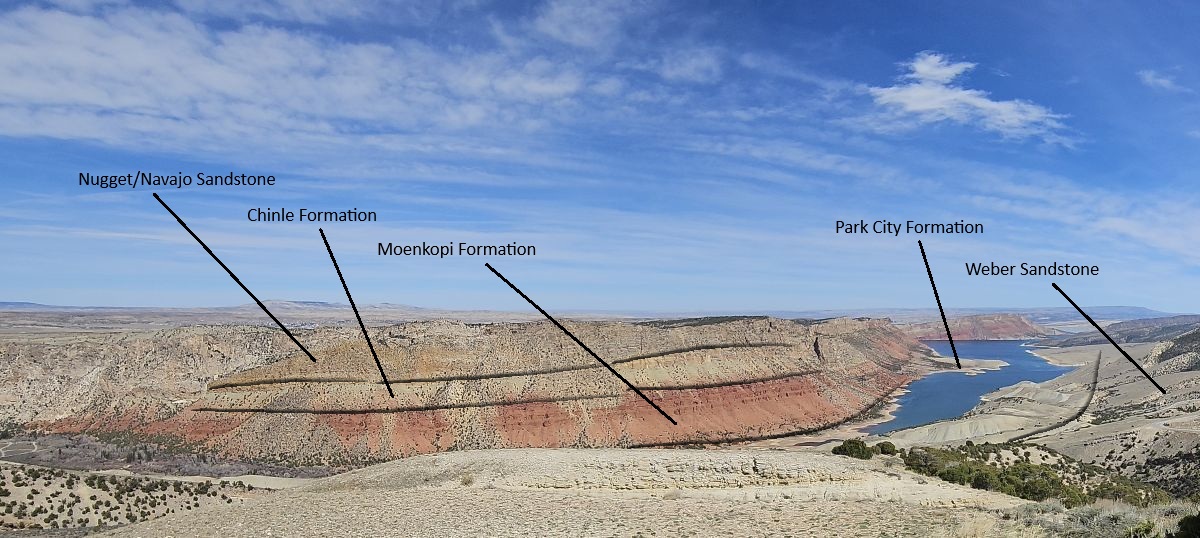
On Sunday morning, we departed Vernal heading north along Highway 191 with signs marking the successive rock formations encountered as we headed over the Uinta Mountains. Over 8,000 feet, we stopped to walk the Aspen Nature Trail with a visit to a beaver pond and enjoying Mountain Chickadee, Hairy Woodpecker and the sounds of Red-breasted Nuthatch along the way. After crossing the 8,500 foot pass, we descended to the Flaming Gorge Dam flanked by deep purplish red cliffs of the Precambrian Uinta Mountain Group. Backtracking to Highway 44, we visited the area of the Red Canyon Visitor Center for views of the gorge and the distant snow-capped peaks of the High Uintas. A Red-breasted Nuthatch was busy exploring a Ponderosa Pine near the parking lot.
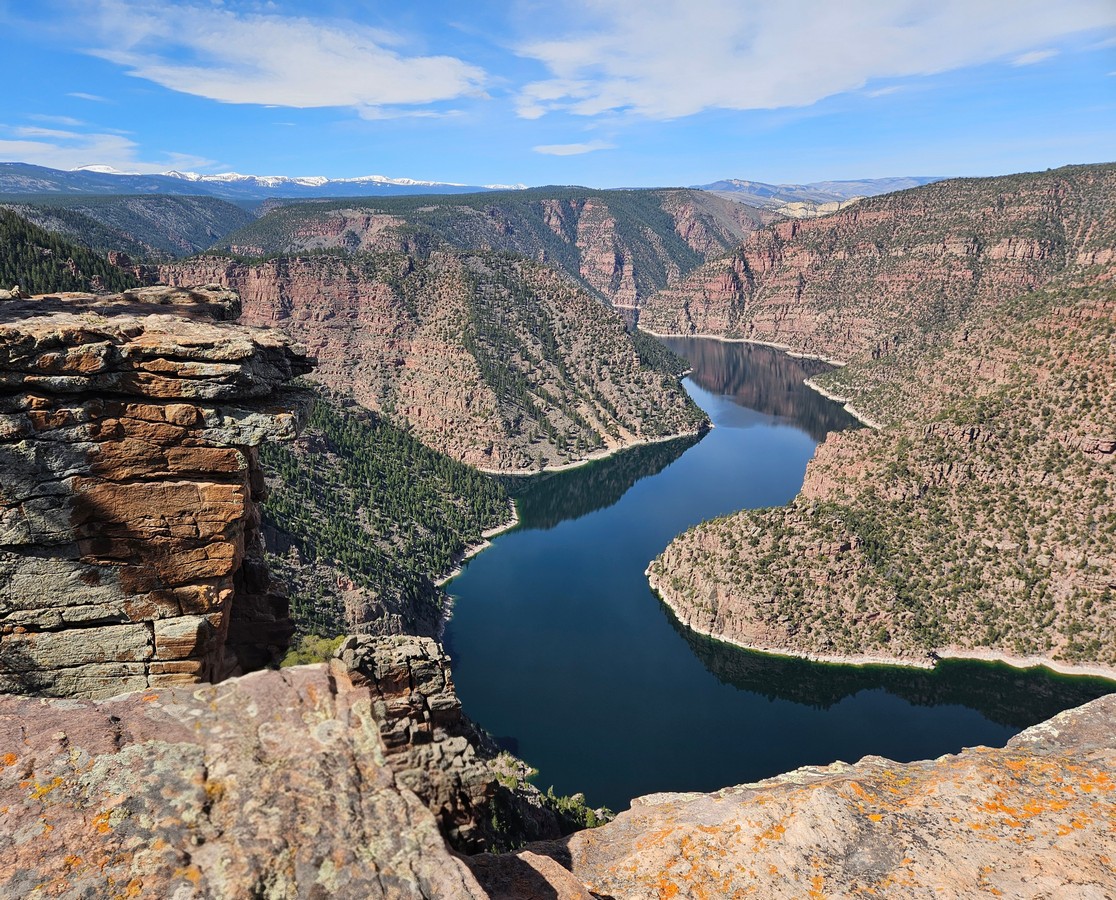

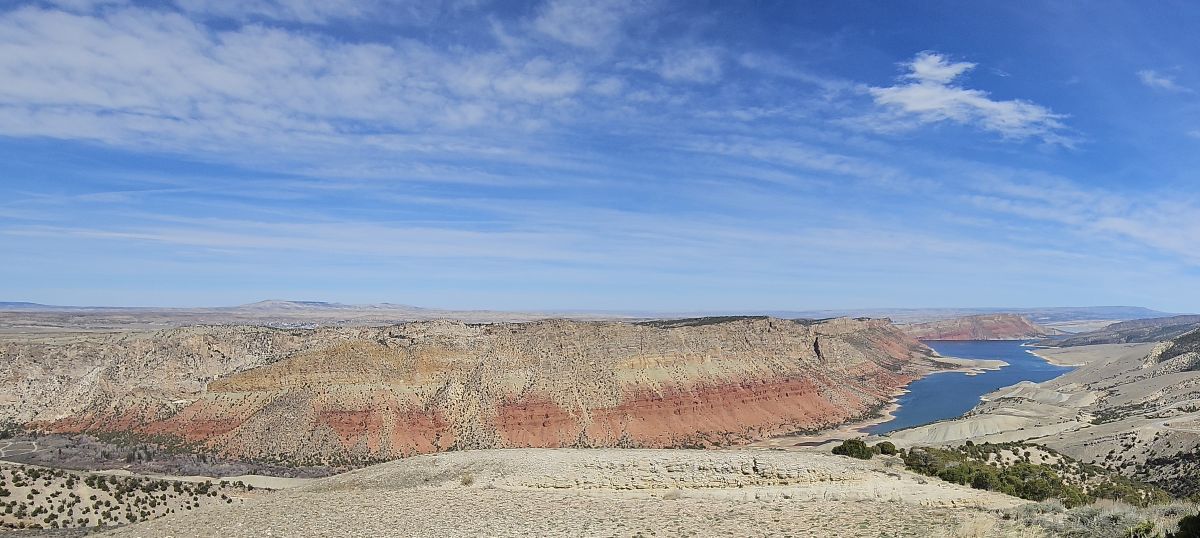
We then returned to Highway 44, then detoured to take the loop through the Sheep Creek Geological Area. At the North Uinta Fault, a thrust fault, the Precambrian rocks meet the much younger Pennsylvanian limestone and sandstone. Motion on the fault severely deformed these layers, folding and tilting them near vertical. Once through the fault, the canyon was lined with the scenic walls of Weber Sandstone and ever younger rock formations. Once we rejoined the main highway, we continued to our final destination for the day, the Holiday Inn Express near Park City, just east of Salt Lake City in the Wasatch Mountains. Our final dinner of the trip was a short walk away at Park City Brewing where we split a burger and rice bowl, and enjoyed satisfying craft beer.
The final morning of the trip, Monday, March 30, we left Park City for Salt Lake. With a little extra time remaining, we took the opportunity to visit the Natural History Museum of Utah on the university campus. This fine museum of paleontology, archaeology, and geology was an appropriate end to our trip with superb exhibits including skyscraping Barosaurus skeleton, Allosaurus, huge, imposing Tyrannosaurus Rex skull, and massive mammoth and mastodon teeth and bones. Like the Field House in Vernal, this museum was arranged as a journey through deep time. And like all trips, time was finally up for this one and we headed to the airport for the flight home (with views of the Grand Canyon again out the window!).
Click an album to open it, then click any photo to view a larger image and optionally start a slide-show.